
Young stars ejecting plasma could give us clues into the Sun’s past Kyoto, Japan — Down here on Earth we don’t usually notice, but the Sun is frequently ejecting huge masses of plasma into space. These are called coronal mass ejections (CMEs). They often occur together with sudden brightenings called flares, and sometimes extend far enough to disturb Earth’s magnetosphere, generating space weather phenomena including auroras or geomagnetic storms, and even damaging power grids on occasion. Scientists believe that when…

The invention concerns a device with which it is possible to examine the furcation area of the tooth root. For that, a spirally wounded tube is provided with glass fiber and a flush pipe. This makes the visual information out of the furcation area transferable. Moreover, the examined area can also be cleaned with the flush pipe.
Using cutting-edge first-principles calculations, researchers at the University of California, Santa Barbara (UCSB) have demonstrated the mechanism by which…
Whether an alloy has a random arrangement of atoms or an arrangement that is ordered can have large effects on a material's properties. In a paper published…
Composite materials are nowadys used in many technical fields. Blades of wind power plants or aircraft parts, for example, are made out of these materials. In order to detect possible cracks or fractures, however, an immense effort is necessary. Conventional methods of material testing such as ultrasound, X-ray or thermography are very time-consuming, if they are possible to employ whatsoever. Other methods such as the use of strain gauges or glass fiber based systems can take measurements permanently, but they can only indirectly detect a fracture in the material. The invention is a novel, continuous measuring method, which is also suitable in particular for large-area applications such as, for example, wind turbine blades. The sensor consists of a braid of wires whose breaking behavior corresponds to that of the fibers in the composite material. The crossing points are connected via diodes. An electronic evaluation unit can switch between electrical paths through specific diodes so that the defective part can be identified in the breaking event.
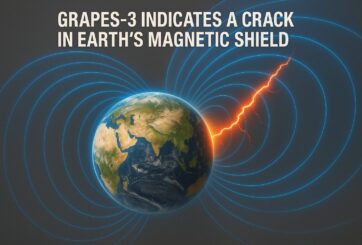
The burst occurred when a giant cloud of plasma ejected from the solar corona, and moving with a speed of about 2.5 million kilometers per hour struck our…
The production of recombinant proteins is a multi-billion dollar industry. In order to lower production costs, companies are very active in developing methods for increasing protein yield. However, current techniques are cumbersome, time consuming and consequently relatively expensive.
An innovative method, invented by a scientist at RWTH Aachen, is now about to close this gap in biotechnology. Briefly, the retention time of any target RNA can be significantly increased, leading to a substantially enhanced protein production. The astonishingly straightforward method can be applied in a wide variety of industry branches in white, red and green biotechnology.
Scientists of the Heinrich-Heine-University developed a rugged low-cost gas detector. The concept of detection based on the specific light emission of compounds excited electronically by an electric arc. The detection enables a wide range of measurments starting from pure gases down to gas traces (<1 ppm). Signals are achieved in tenths of seconds. At present, the invention is primarily concerned with monitoring operational states of fuel cells and appearing degradation processes in MEAs by detecting either nitrogen in the hydrogen flow or hydrogen within the cathode flow field. Granted US Patent und EP patent application, DE application for hydrogen detection. On behalf of the Heinrich-Heine-University of Düsseldorf, PROvendis offers interested companies the opportunity to obtain a licence for using the presented technology or for continuing the development of the method.
However, finding out precisely what quasiparticles arise inside a material and how they influence one another is not a simple task, but more akin to a large…
Itaconic acid is one of the top bio-based chemical building blocks and thus a promising platform compound for the production of polymers, coatings, chemical compounds and biofuels. It is an important monomer for the synthesis of, e.g. poly-acrylates, rubber, colours, additives, adhesives, emulsifying agents, lipids, pharmaceuticals, herbicides and biodegradable polymers for the packaging industry. The offered innovative production process of itaconic acid uses genes encoding for the biosynthesis pathway of unicellular fungi from the family of Ustilaginaceae, in particular Ustilago maydis. By modification of these genes the efficiency of itaconic acid production can be markedly improved and enables a more reliable process with less risk of batch failure.
As another advantage over A. terreus, which is also classified as a toxin-producing animal pathogenic fungus in certain countries which is limiting its applicability at industrial scale, the species Ustilago maydis has a history of safe use.
It's a paradox that has long vexed researchers in the field of optics.
The Freiburg mathematician Prof. Dr. Sebastian Goette will receive a total of 650,000 US dollars in funding over the coming four years for his involvement in…
The moon, Earth's closest neighbor, is among the strangest planetary bodies in the solar system. Its orbit lies unusually far away from Earth, with a…
For the first time, researchers at West Virginia University (WVU) have directly measured the complicated 3D patterns of flowing plasma as it strikes the walls…
Researchers at Aalto University and the University of Jyväskylä have developed a new method of measuring microwave signals extremely accurately. This method…
So-called monolayers are at the heart of the research activities. These “super materials” (as the prestigious science magazine “Nature” puts it) have been…
Researchers at General Atomics (GA) have invented a new kind of gamma ray camera that can image beams of energetic electrons inside ultra-hot fusion plasma.
 Feedback


