
New study reveals how human astroviruses bind to humans cells and paves the way for new therapies and vaccines Human astroviruses are a leading viral cause of the stomach bug—think vomiting, diarrhea, and fever. It often impacts young children and older adults, leading to vicious cycles of sickness and malnutrition, particularly for those in low and middle income countries. It’s very commonly found in wastewater studies, meaning it’s frequently circulating in communities. As of now, there are no vaccines for…

Janelia researchers unveil comprehensive collection of rhodamine-based fluorescent dyes. When Senior Scientist Jonathan Grimm came to Janelia 13 years ago, he didn’t know much about fluorescence or fluorescent dyes. But as an organic chemist who had been working in drug discovery at Merck, he certainly knew a thing or two about medicinal chemistry. On a whim, Grimm and Janelia Senior Group Leader Luke Lavis decided to try using a mainstay medicinal chemistry reaction Grimm had picked up in the pharmaceutical industry…
Bonn researchers take the lead in developing classification criteria for gene variants that can lead to hereditary colorectal cancer. Genetic confirmation of the suspected diagnosis of “hereditary colorectal cancer” is of great importance for the medical care of affected families. However, many of the variants identified in the known genes cannot currently be classified with certainty with regard to their causative role in tumor formation. Under the leadership of the Institute of Human Genetics at the University Hospital Bonn (UKB),…
MHH project investigates differences in neurological symptoms between multiple sclerosis and the rare Sjögren’s syndrome. Different diseases can cause similar symptoms. For treatment, however, it is important to know which cause is responsible for the symptoms. This is because a medication that helps against one disease may be ineffective or even harmful for another. This is precisely the problem that arises in the treatment of multiple sclerosis (MS) and Sjögren’s syndrome. Both are autoimmune diseases caused by an overregulation of…
The findings may offer insight into disease growth and the mechanics of antibiotic resistance. Dental plaque, gut bacteria and the slippery sheen on river rocks are all examples of biofilms, organized communities of microorganisms that colonize our bodies and the world around us. A new study led by Penn State researchers reveals exactly how growing biofilms shape their environments and fine-tune their internal architecture to fit their surroundings. The findings may have implications for a wide variety of applications, from…
Seattle Hub for Synthetic Biology launched by Allen Institute, Chan Zuckerberg Initiative, and the University of Washington will turn cells into recording devices to unlock secrets of disease. First-of-its-kind research initiative will develop technologies to reveal how changes in cells and genes over time influence human health and disease. The Allen Institute, the Chan Zuckerberg Initiative (CZI), and the University of Washington (UW) today announced the launch of the Seattle Hub for Synthetic Biology, a landmark collaboration that will build…
Advanced control of prosthetic hands. Artificial hands can be operated via app or with sensors placed in the muscles of the forearm. New research at the Technical University of Munich (TUM) shows: a better understanding of muscle activity patterns in the forearm supports a more intuitive and natural control of artificial limbs. This requires a network of 128 sensors and artificial intelligence based techniques. Modern prostheses offer access to multiple grip patterns, which can be controlled by detecting muscle activity…
New Insights from Single-Cell Genomics. To mechanistically understand the root causes of lung disease, and identify drugs that target specific pathways, the scientists around Prof. Herbert Schiller and Dr. Gerald Burgstaller from Helmholtz Munich are collecting deep molecular insights from patient samples and combining these with experimental interventions in the laboratory. A new combination of methods now enabled them to study mechanisms directly in human lung tissue, thereby accelerating drug development for novel therapies. This groundbreaking work is now published…
A new organoid model of the dopaminergic system sheds lights on its intricate functionality and potential implications for Parkinson’s disease. The model, developed by the group of Jürgen Knoblich at the Institute of Molecular Biotechnology (IMBA) of the Austrian Academy of Sciences, replicates the dopaminergic system’s structure, connectivity, and functionality. The study, published on December 5 in Nature Methods, also uncovers the enduring effects of chronic cocaine exposure on the dopaminergic circuit, even after withdrawal. A completed run, the early…
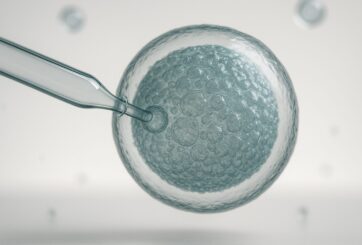
International Team publishes results in “Nature Chemistry“. A groundbreaking study published in “Nature Chemistry” reveals a remarkable leap in the synthesis of artificial cells using synthetic materials, achieved by an international team led by Dr. Andrea Belluati, Prof. Nico Bruns (both TU Darmstadt) and Dr. Sètuhn Jimaja (University of Fribourg). These cells, crafted through a process called biocatalytic polymerization-induced self-assembly (bioPISA), represent a significant advancement in the field of synthetic biology. Artificial cells are microscopic structures that emulate the properties…
In patients affected by myelodysplastic neoplasms, the body does not produce enough functional blood cells. Patients suffer from anaemia – a lack of red blood cells and haemoglobin – which can progress to acute leukaemia. Imetelstat, a new agent beyond the current standard of care, may help to avoid blood transfusions, which can be a burden for MDS patients, especially over a long period of time. This effect was demonstrated in a clinical trial at 118 sites in 17 countries…
Bayreuth researchers have found ways to control tiny particles in liquids using magnetic patterns. The research results have now been published in the renowned journal „Nature Communications“ under the title „Simultaneous and independent topological control of identical microparticles in non-periodic energy landscapes“. Overall, the simultaneous and independent transport of colloidal particles over magnetic patterns can be of great use in various fields of science and technology to produce customised materials, improve biomedical applications, perform laboratory tests or investigate fundamental scientific…
Bacterial hijack mechanisms as advanced genetic tools. Researchers have uncovered the intricate molecular mechanism used by parasitic phytoplasma bacteria, known for inducing ‘zombie-like’ effects in plants. This detailed revelation opens new horizons for groundbreaking applications in biotechnology and even in biomedicine. The team led by Professor Saskia Hogenhout at the John Innes Centre, in partnership with The Sainsbury Laboratory, has employed X-ray crystallography to unveil the structure and functional mechanism of SAP05. This molecule plays a crucial role in bridging…
Study reveals how snot facilitates infection. New study shows thicker mucus supercharges bacteria’s ability to self-organize into swarms to spread infection. Sniffles, snorts and blows of runny noses are the hallmarks of cold and flu season — and that increase in mucus is exactly what bacteria use to mount a coordinated attack on the immune system, according to a new study from researchers at Penn State. The team found that the thicker the mucus, the better the bacteria are able…
The molecules, known as acenes, could be useful as organic light-emitting diodes or solar cells, among other possible applications. Chains of fused carbon-containing rings have unique optoelectronic properties that make them useful as semiconductors. These chains, known as acenes, can also be tuned to emit different colors of light, which makes them good candidates for use in organic light-emitting diodes. The color of light emitted by an acene is determined by its length, but as the molecules become longer, they…
To speed up their growth, leukemia cells typically activate the recycling of cellular structures – enabling them to dispose of defective components and better supply themselves with building materials. Researchers at Goethe University Frankfurt have now shown that leukemia cells with a very common mutation activate specific genes that are important for this recycling process. Their findings, published in the journal Cell Reports, open up new therapeutic options for the future. In a recent study, scientists led by Professor Stefan…
…offering hope for new therapeutic avenues for many diseases. Team’s approach reveals crucial role played by a specific enzyme in the folding process. While we often think of diseases as caused by foreign bodies—bacteria or viruses—there are hundreds of diseases affecting humans that result from errors in cellular production of its proteins. A team of researchers led by the University of Massachusetts Amherst recently leveraged the power of cutting-edge technology, including an innovative technique called glycoproteomics, to unlock the carbohydrate-based…
 Feedback


