
New study reveals how human astroviruses bind to humans cells and paves the way for new therapies and vaccines Human astroviruses are a leading viral cause of the stomach bug—think vomiting, diarrhea, and fever. It often impacts young children and older adults, leading to vicious cycles of sickness and malnutrition, particularly for those in low and middle income countries. It’s very commonly found in wastewater studies, meaning it’s frequently circulating in communities. As of now, there are no vaccines for…

Hereditary blindness caused by a progressive degeneration of the light-sensing cells in the eye, the photoreceptors, affects millions of people worldwide….
Using a comprehensive approach, researchers in the teams of F.-Ulrich Hartl and Matthias Mann at the Max Planck Institute of Biochemistry in Martinsried near…
“The sugar part of our biomembranes are as crucial to our health as our DNA, and yet we know almost nothing about it,” said Virgil Percec, a professor of…
A study published April 30 in Cell Reports shows, for the first time, that a unique array of sensory receptors in the wing provides feedback to a bat during…
It can be difficult in our everyday lives to appreciate the extraordinary range of wavelengths in the electromagnetic spectrum. Electromagnetic radiation—from…
Writing in the May 7 online issue of American Journal of Geriatric Psychiatry, researchers at University of California, San Diego School of Medicine and…
Implications from the Michigan State University research could help with the determination of truth in child abuse cases, potentially resulting in very…
The team of Prof. Urs Jenal at the Biozentrum of the University of Basel has now identified the central switch for reproduction in bacteria. While cell cycle…
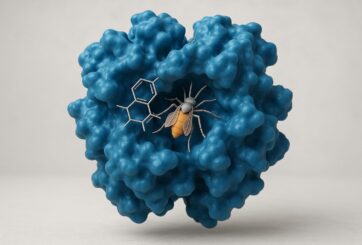
Scientists from BASF Crop Protection and the University of Göttingen in Germany have found a new insecticide target protein. The discovery marks the first…
With the threat of multidrug-resistant bacterial pathogens growing, new ideas to treat infections are sorely needed. Researchers at University of California,…
Led by chemistry professor Kenneth Suslick, the researchers published their results in the journal Advanced Science.
A key challenge in neuroscience research is identifying organizational principles of how the brain integrates sensory information from its environment to…
“Sugar itself isn't toxic, so it's been a mystery why high blood sugar can have such a profound effect on the body,” says Gerald Hart, Ph.D. , director of the…
But also mammals do have a magnetic sense. The most famous representative is the subterraneous mole-rat which probably employs the magnetic sense to navigate…
A group of scientists led by Assistant Professor Dr. Martin van der Laan has decoded the molecular basis for the characteristic structures inside of…
 Feedback


