
New study reveals how human astroviruses bind to humans cells and paves the way for new therapies and vaccines Human astroviruses are a leading viral cause of the stomach bug—think vomiting, diarrhea, and fever. It often impacts young children and older adults, leading to vicious cycles of sickness and malnutrition, particularly for those in low and middle income countries. It’s very commonly found in wastewater studies, meaning it’s frequently circulating in communities. As of now, there are no vaccines for…

This work sheds light on how sensory stimulus information is integrated from the peripheral nervous system into the brain’s cortical networks. Nerve fibers on the eye surface are involved in many relevant physiological processes, from detecting and transmitting external stimuli to maintaining the integrity of the cornea. However, research on the sensory system of the ocular surface has focused mainly on the peripheral axons of the trigeminal ganglia neurons, leaving information processing in the central nervous system unknown. Now, a…
Recent findings reveal how secondary structure in helical polymers influences their aggregation and size control. Light-triggered release offers tailored solutions for controlled substance delivery. Scientists have taken a significant step towards the development of tailor-made chiral nanocarriers with controllable release properties. These nanocarriers, inspired by nature’s helical molecules like DNA and proteins, hold immense potential for targeted drug delivery and other biomedical applications. The study, led by Professors Emilio Quiñoá and Félix Freire at the Center for Research in Biological Chemistry and Molecular Materials (CiQUS), highlights…
A Czech-Bavarian research team is developing an artificial intelligence that specialises in gastroscopy. The AI is intended to assist doctors with diagnoses. During a gastroscopy, the oesophagus, stomach and duodenum are examined using an endoscope. This is a thin, flexible tube with a light and a camera at the tip. The endoscope is passed through the mouth and into the stomach. Doctors can use the camera images to assess the state of health and take tissue samples if necessary. Gastroscopies…
… with potential in drug research developed. A research team from Kiel has described a method for directly converting carbon-hydrogen bonds in carboxylic acids into carbon-fluorine bonds. Carboxylic acids are one of the most important substance classes in chemistry and are a component of many drugs such as aspirin and ibuprofen. To tailor the properties of carboxylic acids, fluorine atoms can be introduced into the molecular structure. However, this requires complex, multi-step synthetic routs. An internationally composed team of researchers…
Research team at Göttingen University discovers important function of antisense non-coding RNA. The function of non-coding RNA in the cell has long been a mystery to researchers. Unlike coding RNA, non-coding RNA does not produce proteins – yet it exists in large quantities. A research team from the University of Göttingen has now discovered an important function of antisense RNA (asRNA): the researchers found that asRNA acts as a “superhighway” in cell transport and thus accelerates gene expression. The results…
G protein-coupled receptors (GPCRs) are found throughout the human body and are involved in many complex signalling pathways. Despite their importance in many biological processes, the central mechanism of G protein-coupling and the associated signal transmission is not yet understood. A team of researchers from Leipzig University has succeeded in understanding the mechanism of signal transmission through an adrenaline-binding receptor at the atomic level. In the future, researchers may be able to use these results to better avoid side effects…
Scientists at the Victor Chang Cardiac Research Institute in Australia have produced a first of its kind integrated map of heart cells which unlocks the process of cardiac fibrosis – a major cause of heart failure. The discovery opens new avenues to develop targeted drugs to prevent scarring damage caused after a heart attack. During and after a heart attack, the heart’s muscles are damaged leading to the formation of scar tissue which lacks the elasticity and contractility of healthy heart…
Similar to smokers, cannabis users nearly twice as likely to need hospitalization, intensive care when infected with the virus. As the deadly disease that came to be known as COVID-19 started spreading in late 2019, scientists rushed to answer a critical question: Who is most at risk? They quickly recognized that a handful of characteristics — including age, smoking history, high body mass index (BMI) and the presence of other diseases such as diabetes — made people infected with the…
… with Components from Basic Research at the FMP Enters Clinical Phase. Groundbreaking innovations by researchers at the Leibniz-Forschungsinstitut für Molekulare Pharmakologie (FMP) provided the basis for the development of an antibody-drug conjugate (ADC) by the company Tubulis, which is now being used in a Phase I/IIa trial in tumour patients. Thanks to an innovative linker chemistry known as P5 technology, the active substance is delivered safely to its target and can also develop its effect over a long period…
Researchers at The Jackson Laboratory reveal that hematopoietic stem cells age differently in genetically identical mice, offering new pathways for interventions to preserve health with aging. Our bone marrow—the fatty, jelly-like substance inside our bones—is an unseen powerhouse quietly producing 500 billion new blood cells every day. That process is driven by hematopoietic stem cells that generate all of the various types of blood cells in our bodies and regenerating themselves to keep the entire assembly line of blood production…
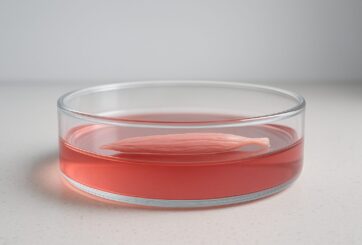
Muscles grown from stem cells taken from patients with limb girdle muscular dystrophy 2B (LGMD2B) respond positively to potential treatments. Biomedical engineers at Duke University have developed a new technique to better understand and test treatments for a group of extremely rare muscle disorders called dysferlinopathy or limb girdle muscular dystrophies 2B (LGMD2B). The approach grows complex, functional 3D muscle tissue from stem cells in the laboratory, creating a platform that replicates patient symptoms and treatment responses. In its debut…
Direct reciprocity facilitates cooperation in repeated social interactions. Traditional models suggest that individuals learn to adopt conditionally cooperative strategies if they have multiple encounters with their partner. However, most existing models make rather strong assumptions about how individuals decide to keep or change their strategies. They assume individuals make these decisions based on a strategy’s average performance. This in turn suggests that individuals would remember their exact payoffs against everyone else. In a recent publication, researchers from the Max Planck…
Scientists in Germany have revealed how an unstructured protein traps cancer-promoting molecules. Each second of our lives, cells in our body grow and divide to ensure we stay healthy. However, this process has a dark side: if cell growth and divisions become excessive, that may cause cancer. To keep a safe balance, our cells are equipped with several molecular mechanisms to limit their own growth and division. EMBL Hamburg’s Wilmanns Group, in collaboration with research groups from the Center for…
…opens doors to unprecedented biological insights. Groundbreaking research has revealed a new way to measure incredibly minute forces at the nanoscale in watery solutions, pushing the boundaries of what scientists know about the microscopic world. The significant nanotechnology advance was achieved by researchers from Beihang University in China with RMIT University and other leading institutions including the Australian National University and University of Technology Sydney. The new technique, involving a super-resolved photonic force microscope (SRPFM), is capable of detecting forces in water as small as 108.2…
The endosymbiont Symbiodolus clandestinus, living inside insect cells, has remained undiscovered until now. Scientists at the Max Planck Institute for Chemical Ecology report its discovery in at least six insect orders. Using fluorescence in situ hybridisation, they showed that Symbiodolus is present in all life stages and tissues of infected insects. The symbiont is abundant in reproductive organs of adult females, eggs, and larvae, suggesting transovarial transmission. The interactions with host insects are not yet understood, but Symbiodolus likely impacts…
Looking under the microscope, a group of cells slowly moves forward in a line, like a train on the tracks. The cells navigate through complex environments. A new approach by researchers involving the Institute of Science and Technology Austria (ISTA) now shows how they do this and how they interact with each other. The experimental observations and the following mathematical concept are published in Nature Physics. Snapshots of the cell railroad. Cells stretch away from a fish scale (left) into…
 Feedback


