
New study reveals how human astroviruses bind to humans cells and paves the way for new therapies and vaccines Human astroviruses are a leading viral cause of the stomach bug—think vomiting, diarrhea, and fever. It often impacts young children and older adults, leading to vicious cycles of sickness and malnutrition, particularly for those in low and middle income countries. It’s very commonly found in wastewater studies, meaning it’s frequently circulating in communities. As of now, there are no vaccines for…

Meet a microscopic gymnast.
A team from the University of Leicester has for the first time published a detailed description of a protein linked to many types of cancer.
Liang Fang and his colleagues in Walter Birchmeier's group at the Max Delbrück Center for Molecular Medicine (MDC), working with colleagues on the Berlin-Buch…
A decades-long mystery of how the cell's powerhouse, and its energy currency of calcium ion flow, is maintained under different physiological conditions has…
Once they open up a patient's skull, there's no time to send tissue samples to a pathology lab — where they are typically frozen, sliced, stained, mounted on…
The contents in our genetic information are actually silent (meaning inactive) and first have to be made to “speak”. Like the read head in a tape recorder, RNA…
Usually, plants are eaten by animals and humans. With carnivorous plants, however, it's the other way round: They have specialised in animals as an extra…
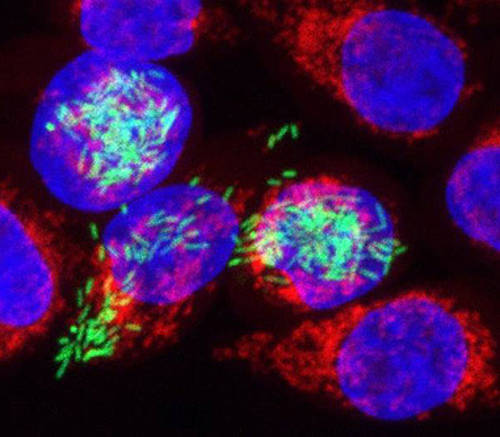
The study led by Professor Jörg Vogel from the Würzburg Institute of Molecular Infection Biology also involved researchers from Leipzig and Cologne. The…
Lead investigator Dr. Guadalupe Sabio explains that the results, described in Nature Communications, not only increase our understanding of the mechanisms used…
Nerve damage from neurodegenerative disease and spinal cord injury has largely been considered irreversible, but Dartmouth researchers report progress in the…
New findings expose how mitochondria might instigate lupus-like inflammation.
Chronic kidney disease is a serious global health problem. In Italy alone some 3.5 million people suffer from the condition, which in severe cases can lead to…
The bird, described in the current issue of the journal Avian Research, has been named Himalayan forest thrush Zoothera salimalii. The scientific name honors…
“This is a real bombshell in the field of neuroscience,” says Terry Sejnowski, Salk professor and co-senior author of the paper, which was published in eLife….
Articular cartilage is tissue that is found on all the joint surfaces in the body. Since the tissue is not supplied with any blood vessels, it has a low…
A multicenter research team has identified a biomarker that predicts which stage II colon cancer patients may benefit from chemotherapy after surgery to…
 Feedback


