
New study reveals how human astroviruses bind to humans cells and paves the way for new therapies and vaccines Human astroviruses are a leading viral cause of the stomach bug—think vomiting, diarrhea, and fever. It often impacts young children and older adults, leading to vicious cycles of sickness and malnutrition, particularly for those in low and middle income countries. It’s very commonly found in wastewater studies, meaning it’s frequently circulating in communities. As of now, there are no vaccines for…

Biosynthesis of cyanobacterin opens up new class of natural compounds for applications in medicine and agriculture. The fact that Nature is an excellent chemist is demonstrated by the abundance of molecules, so-called natural products, which it produces biosynthetically. These natural products are also of central importance to us humans. They are used in many ways in our everyday lives, especially as active agents in medicine and agriculture. Prominent examples are antibiotics such as penicilins isolated from molds, the anti-cancer drug…
Study describes mechanism by which breast cancer suppresses insulin production, impairing blood sugar regulation and causing diabetes, which, in turn, promotes tumor growth. Breast cancer and type 2 diabetes would seem to be distinctly different diseases, with commonality only in their commonality. Breast cancer is the second most diagnosed malignancy after some types of skin cancer; approximately 1 in eight U.S. women will develop invasive breast cancer over the course of their lifetime. More than 10 percent of the U.S….
Based on a new model, scientists show that the seed scales of pine cones move due to a complex interplay of multiple tissues that respond in different ways to moisture. The research team thus challenges the previous assumption that the actuation is due to the moisture-induced mechanical behavior of a simple bilayer system. The results could be used to create biomimetic flap systems with improved function, for example for adaptive building facades. Pine cones open when dry and close when…
MHH involved in international study on acute myeloid leukaemia (AML). Acute myeloid leukaemia (AML) is a malignant disease in which the precursor cells of the haematopoietic system multiply uncontrollably. This form of blood cancer is caused by genetic changes in the bone marrow that occur in the course of life. Therefore, it is mainly older people who are affected. If left untreated, AML leads to death within a few weeks. But now there is hope. The combination of two drugs…
When biological tissue is created in the laboratory, nothing should be left to chance: At TU Wien, a method was developed to guide individual cells to the right place with laser precision. It is one of the biggest problems with producing artificial tissue: How can the individual cells be directed to the right place, for example when a blood vessel is to be created at a very specific location? This feat has now been achieved at TU Wien (Vienna): The…
Even intensive whaling did not rob the fin whale of its genomic diversity. Fin whales are the second largest living creatures on our planet, surpassed only by blue whales. Industrial whaling has significantly reduced their numbers; the species is considered endangered according to the Red List. A new study by scientists from the LOEWE Centre for Translational Biodiversity Genomics (TBG), the Senckenberg Biodiversity and Climate Research Centre (SBiK-F) and Icelandic and Swedish research institutions shows the consequences of their decimation…
Another success for Oldenburg’s hearing research: Collaborative Research Centre at the University of Oldenburg to receive funding for another four years. Smart hearing aids that adapt to the individual needs of the user: for the last four years, the researchers of the Collaborative Research Centre (CRC) Hearing Acoustics have been working towards this goal. Now the German Research Foundation (DFG) has extended the funding of the project. Led by Prof. Dr. Volker Hohmann, a hearing researcher at the University of…
When coated onto plastic tubing, the catalysts could act on chemicals flowing through, helping to synthesize drugs and other compounds. Chemical reactions that are driven by light offer a powerful tool for chemists who are designing new ways to manufacture pharmaceuticals and other useful compounds. Harnessing this light energy requires photoredox catalysts, which can absorb light and transfer the energy to a chemical reaction. MIT chemists have now designed a new type of photoredox catalyst that could make it easier…
Study shows how meiotic cohesin complexes affect chromosome structure and genomic integrity – and the long-term implications of their effects on the stem cell genome. Chromosomes undergo precise structural changes at a molecular level during the different phases of cell division. These changes occur at a high level of accuracy to prevent genome instability. Genome instability resulting from broken, missing, or rearranged chromosomes has been found to be the root cause of cell death, carcinogenesis, and congenital disorders. Studying genomic…
Jia lab develops next generation system for imaging organoids. Biomedical researchers develop and use organoids as a tool for studying human development and disease. These little lab-grown cultures mimic human organs and provide a sharp view of tissue development, drug interaction, and other biochemical functions, offering an innovative approach to personalized medicine. “Getting detailed 3D images of these miniature models of organs, and getting a good look at how they change under different conditions or stimulation, can tell us a…
An interactive web portal developed by scientists at KAUST offers a platform for cancer researchers to interrogate how RNA splicing in noncoding parts of genes fuels the growth of different types of tumors. The new resource, named SpUR (short for Splicing in Untranslated Regions) and freely available online, details more than 1,000 splicing events found frequently in cancers in noncoding regions of mRNA located just downstream of protein-coding stop signals. The sites and expression levels of these events are catalogued and…
Researchers can now image cells, motions of molecules in 6D. Research from the lab of Matthew Lew at Washington University in St. Louis offers entirely new ways to see the very small. The research — two papers by PhD students at the McKelvey School of Engineering — was published in the journals Optica and Nano Letters. They have developed novel hardware and algorithms that allow them to visualize the building blocks of the biological world beyond three dimensions in a…
A recently developed catalyst for breaking down plastics continues to advance plastic upcycling processes. In 2020, a team of researchers led by Ames Laboratory scientists developed the first processive inorganic catalyst to deconstruct polyolefin plastics into molecules that can be used to create more valuable products. Now, the team has developed and validated a strategy to speed up the transformation without sacrificing desirable products. The catalyst was originally designed by Wenyu Huang, a scientist at Ames Lab. It consists of…
Light and molecules behave in very special ways in optical cavities. Don’t think this is important to you? It may be soon. A research team from the Norwegian University of Science and Technolgy (NTNU) is studying a topic called optical cavities and how the light trapped in them interacts with atoms, molecules and other particles. The technology could prove valuable for the development of energy-efficient chemical processes or drug synthesis, for example. The work of Professor Henrik Koch and PhD…
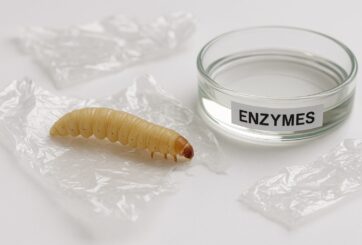
A CSIC research team has revealed that this insect’s saliva contains enzymes able to set off polyethylene degradation in a short space of time. A team of CSIC researchers has discovered that wax worm saliva degrades plastic; a discovery with numerous applications for treating or recycling plastic waste. Back in 2017, the team discovered that this worm species (the lepidopteran Galleria mellonella) is able to break down plastic (polyethylene), and now they have discovered just how it does this: its…
Researchers from the group of Eva van Rooij used advanced sequencing technology to better understand the heart disease arrhythmogenic cardiomyopathy, in which heart muscle tissue is replaced by fat cells. Using explanted human hearts, they found regions in which heart muscle was actively degenerated and identified a new gene, ZBTB11, that drives heart muscle cell degradation. The results were published in Cardiovascular Research on 17 May 2022. Arrhythmogenic cardiomyopathy (ACM) is a familial heart disease in which heart muscle tissue is replaced…
 Feedback


