
New study reveals how human astroviruses bind to humans cells and paves the way for new therapies and vaccines Human astroviruses are a leading viral cause of the stomach bug—think vomiting, diarrhea, and fever. It often impacts young children and older adults, leading to vicious cycles of sickness and malnutrition, particularly for those in low and middle income countries. It’s very commonly found in wastewater studies, meaning it’s frequently circulating in communities. As of now, there are no vaccines for…

Infections with the “old” omicron subvariants BA.1 and BA.2 provide little protection against the SARS-CoV-2 subvariant BA.5 causing a “summer wave” of cases in Germany. The Omicron subvariants BA.1 and BA.2 of SARS-CoV-2 have dominated the COVID-19 pandemic in early 2022. In many countries, these viruses are now outcompeted by emerging subvariants, with BA.5 being responsible for the current uptick of cases in Germany. However, it is at present largely unclear whether the “new” Omicron subvariants BA.2.12.1, BA.4, and BA.5…
Fraunhofer accelerates the energy transition. Until now, the most common way to dispose of green waste and sewage sludge has been to compost or incinerate it. However, using these materials to produce the valuable energy source hydrogen would make far more sense. A team of researchers at the Fraunhofer IPA is working towards this very goal. CO2 capture is key to this development: The CO2 that is generated during the production of hydrogen from waste is separated and then used…
Basis for the development of a new class of antibiotics. Researchers from University Hospital Frankfurt and Goethe University Frankfurt have unravelled how bacteria adhere to host cells and thus taken the first step towards developing a new class of antibiotics. The adhesion of bacteria to host cells is always the first and one of the decisivesteps in the development of infectious diseases. The purpose of this adhesion by infectious pathogens is first to colonize the host organism (i.e., the human…
Scientists from McGill University have developed a gentler, more precise technique using low-power visible light. Laser cutting techniques are usually powered by high energy beams, so hot that they melt most materials. Now scientists from McGill University have developed a gentler, more precise technique using low-power visible light. The new process called ‘cold photo-carving’ uses a fraction of the energy required in traditional laser cutting techniques. “We engineered crystal building blocks that can be cut by low-power light with amazing…
Fraunhofer project FibroPaths®: More than 100 million individuals worldwide suffer from organ fibrosis, a pathological proliferation of connective tissue in an organ, such as the lung, heart and liver. Hardly any causal treatments are available to date. The unmet medical need is partly due to the fact that the existing disease models for fibrosis research are insufficient and little predictive. Coordinated by the Fraunhofer Institute for Toxicology and Experimental Medicine ITEM, four Fraunhofer institutes have joined forces in the FibroPaths®…
New device has the potential to provide an alternative to opioids and other highly addictive drugs. A Northwestern University-led team of researchers has developed a small, soft, flexible implant that relieves pain on demand and without the use of drugs. The first-of-its-kind device could provide a much-needed alternative to opioids and other highly addictive medications. The biocompatible, water-soluble device works by softly wrapping around nerves to deliver precise, targeted cooling, which numbs nerves and blocks pain signals to the brain….
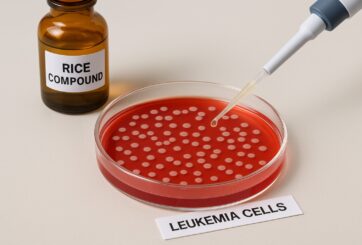
Rice, MD Anderson study highlights potential of mitochondria-targeted chemotherapies. Researchers from Rice University and the University of Texas MD Anderson Cancer Center have discovered potential new drugs that work in concert with other drugs to deliver a deadly one-two punch to leukemia. The potential drugs are still years away from being tested in cancer patients, but a recently published study in the journal Leukemia highlights their promise and the innovative methods that led to their discovery. In previous studies, the…
New tumor diagnostic method. If breast cancer is suspected, doctors carry out a biopsy. However, this is invasive, painful and costly. It also takes several days to get the results. In the future, diagnosis could be made via a liquid biopsy of a patient’s blood — a gentle, cost-effective method that would deliver the results within just a few hours. A team of researchers at the Fraunhofer Institute for Applied Polymer Research IAP is working alongside partners on this innovative…
Chemoproteomics draw the target landscape of HDAC drugs. Histone deacetylase (HDAC) inhibitors are a class of drugs used in oncology. An international research team involving scientists at the Technical University of Munich (TUM), Cornell University in Ithaca (USA), the German Cancer Research Center (DKFZ) in Heidelberg and Martin Luther University of Halle-Wittenberg has now investigated the effects of some HDAC drugs in more detail. The scientists researched whether those epidrugs affect proteins other than the HDACs which they are designed…
… against pathogens and cancers. A new atlas of tissue-resident memory T cells offers hope for new therapies based on protective ‘first responders’. Scientists exploring how our immune system responds to pathogens and cancers have ramped up their attention to CD8+ T cells, which are deployed in response to infections and malignancies and equipped to remember the identities of malicious invaders. While some of these critical “memory” cells circulate throughout the body, others are known to remain lodged within bodily…
… and other vital parameters from the ear canal. The prototype tested in the terraXcube extreme environment simulator is particularly suitable for emergency interventions. During an emergency medical intervention, measuring vital parameters is not always possible. Victims are often uncooperative, spaces uncomfortable and the equipment one can carry very limited, just think of a helicopter rescue or the scene of a car accident. Eurac Research in collaboration with the companies Minnova Med and Kerr Srl has patented a space-saving, noninvasive…
Team surrounding Alexander Haas launches “A Guide to the Tadpoles of Borneo”. Important, yet often neglected: Tadpoles play a critical role in the ecology of aquatic habitats. On 279 pages, a new book presents descriptions for 99 species from the southeast Asian island of Borneo, covering all species commonly found, as well as representatives of the more cryptic ones. LIB-scientist Alexander Haas and his team of international collaborators worked over 20 years on its completion and just released “A Guide…
A research team lead by scientists from the Max Planck Institute for Biology, Tübingen, has now made substantial progress in understanding how gut bacteria succeed in their human hosts on a molecular level. They investigated how bacteria produce inositol lipids, substances vital for many cellular processes in humans and other eukaryotes but hitherto rarely observed in bacteria. The results, now published in the journal Nature Microbiology, indicate that inositol lipids have implications for the symbiosis between the bacteria and their…
Five-hundred million years ago, it was relatively safe to go back in the water. That’s because creatures of the deep had not yet evolved jaws. In a new pair of studies in eLife and Development, scientists reveal clues about the origin of this thrilling evolutionary innovation in vertebrates. In the studies, Mathi Thiruppathy from Gage Crump’s laboratory at USC, and collaborator J. Andrew Gillis from the University of Cambridge and the Marine Biological Laboratory, looked to embryonic development as way to gain insight…
Single gene previously linked to rare syndrome of epilepsy, autism and developmental disability. A single gene that was previously found to be the driving force in a rare syndrome linked to epilepsy, autism and developmental disability has been identified as a linchpin in the formation of healthy neurons. Duke researchers say the gene, DDX3X, forms a cellular machine called a helicase, whose job it is to split open the hairpins and cul-de-sacs of RNA so that its code can be…
Suppressing enzyme that removes oxygen from methionine sparks metastatic spread of cancer. Pancreatic cancer, though rare, is one of the deadliest of cancers, killing nearly 50,000 people yearly and doing so quickly, primarily because it metastasizes rapidly through the body. Barely one in 10 people survive beyond five years. But a discovery by chemists at the University of California, Berkeley, suggests a new way to slow or stop metastatic spread of pancreatic and perhaps other cancers. In last week’s issue…
 Feedback


