
New study reveals how human astroviruses bind to humans cells and paves the way for new therapies and vaccines Human astroviruses are a leading viral cause of the stomach bug—think vomiting, diarrhea, and fever. It often impacts young children and older adults, leading to vicious cycles of sickness and malnutrition, particularly for those in low and middle income countries. It’s very commonly found in wastewater studies, meaning it’s frequently circulating in communities. As of now, there are no vaccines for…

MHH professor receives “ERC Proof of Concept Grant” to revolutionise drug safety / Novel immune cells to benefit millions of people. Medicines that are injected must be continuously tested for impurities as part of their production and release, as these can cause fever or even blood poisoning. Until now, this has mostly been done using animal tests, animal products or the so-called monocyte activation test (MAT). But the use of animal tests and products must be avoided – also because…
Hydrogen (H2) is currently discussed as an ideal energy carrier in a world requiring renewable energies. Hydrogen has the highest gravimetric energy density of all chemical fuels (141 MJ/kg), which is three times higher than gasoline (46 MJ/kg). However, its low volumetric density restricts its widespread use in transportation applications — as current storage options require a lot of space. At ambient temperature, hydrogen is a gas, and one kilogram of hydrogen occupies a volume of 12000 liters (12 cubic…
Lactate, a metabolic byproduct produced during exercise, could augment current immunotherapies. A new study by UT Southwestern’s Simmons Cancer Center scientists suggests that lactate, a metabolic byproduct produced by cells during strenuous exercise, can rejuvenate immune cells that fight cancer. The finding, published in Nature Communications, could eventually be used to develop new strategies to augment the anti-tumor effect of cancer immunotherapies, the study authors said. “The lactate that we usually think of as a waste product appears to have a previously…
Chip mimics inhalation and exhalation, allowing scientists to study flow patterns in the bronchial network. Alveoli are the basic functional units of the human respiratory system, acting as tiny air sacs that exchange gases. Air inhaled through the mouth and nose flows into the lungs through the branched structure of the bronchial tubes, and the alveoli appear in the deep sections of this network. To fully understand and treat respiratory diseases, it is important to determine the flow pattern of…
Ultrasound color Doppler twinkling may aid the detection of certain biopsy markers in metastatic axillary nodes that resume normal morphology after neoadjuvant systemic therapy. According to ARRS’ American Journal of Roentgenology (AJR), ultrasound color Doppler twinkling may aid the detection of certain biopsy markers in metastatic axillary nodes that resume normal morphology after neoadjuvant systemic therapy. Noting that certain breast biopsy markers exhibited actionable twinkling (i.e., sufficient confidence to rely solely on twinkling for target localization) in cadaveric breast, “twinkling…
Research led by Sanford Burnham Prebys professor Francesca Marassi, Ph.D., is helping to reveal the molecular secrets of macular degeneration, which causes almost 90% of all age-related vision loss. The study, published recently in the Biophysical Journal, describes the flexible structure of a key blood protein involved in macular degeneration and other age-related diseases, such as Alzheimer’s and atherosclerosis. “Proteins in the blood are under constant and changing pressure because of the different ways blood flows throughout the body,” says…
A Greifswald research team from the Centre of Excellence ZIK plasmatis at the Leibniz Institute for Plasma Science and Technology e.V. (INP) was able to demonstrate for the first time in laboratory experiments the inactivation of corona viruses by physical plasma. The new method promises innovative therapies for the corona pandemic and other infectious diseases. Physical plasma, the so-called fourth state of matter, has been finding its way into medicine for several years. Clinical successes are increasingly being recorded, particularly…
Aphids are one of the least welcome garden visitors. These small insects can cause all the more damage in agriculture. But how do they actually choose their host plants? What are the basic mechanisms behind this? Researchers from the Universities of Bonn and Kassel now present two novel models that can be used to analyze aphid color vision and thus how the animals respond to plants. This opens up new possibilities for future research on this topic – but may…
UCSC scientists reported three crystal structures of periodic rippled beta sheets, a novel protein structure with potential applications in biomedicine and materials science. An unusual protein structure known as a “rippled beta sheet,” first predicted in 1953, has now been created in the laboratory and characterized in detail using x-ray crystallography. The new findings, published in July in Chemical Science, may enable the rational design of unique materials based on the rippled sheet architecture. “Our study establishes the rippled beta…
A molecular atlas of an Australian dragon’s brain sheds new light on over 300 million years of brain evolution. These days, dragons are keeping Game of Thrones fans on their toes. But they are also providing important insights into vertebrate brain evolution, as revealed by the work of Max Planck scientists on the brain of the Australian bearded dragon Pogona vitticeps. Vertebrate evolution took a major turn 320 million years ago when early tetrapods (animals with four limbs) transitioned from…
Less risk, less costs: New method for the detection of alcohols combines zero- to ultralow-field nuclear magnetic resonance with the SABRE-Relay hyperpolarization technique. Nuclear magnetic resonance (NMR) is an analytical tool with a wide range of applications, including the magnetic resonance imaging that is used for diagnostic purposes in medicine. However, NMR often requires powerful magnetic fields to be generated, which limits the scope of its use. Researchers working at Johannes Gutenberg University Mainz (JGU) and the Helmholtz Institute Mainz…
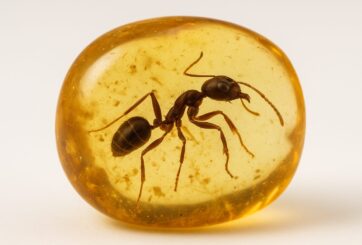
International research team uses micro-computed tomography to scan 20-million-year-old amber. An international team of scientists has discovered a previously unknown extinct ant species encased in a unique piece of amber from Africa. Using the X-ray light source PETRA III at the German Electron Synchrotron (DESY) in Hamburg the researchers, from Friedrich Schiller University Jena, the University of Rennes in France, the University of Gdansk in Poland, as well as the Helmholtz-Zentrum Hereon in Geesthacht, Germany, had examined the critical fossil…
People generate their own oxidation field and change the indoor air chemistry around them. People typically spend 90 percent of their lives inside, at home, at work or in transport. Within these enclosed spaces, occupants are exposed to a multitude of chemicals from various sources, including outdoor pollutants penetrating indoors, gaseous emissions from building materials and furnishings, and products of our own activities such as cooking and cleaning. In addition, we are potent mobile emission sources of chemicals that enter…
Heidelberg scientists demonstrate how injuries are converted to regeneration signals at the molecular level. The phenomenon of regeneration was discovered over 200 years ago in the freshwater polyp Hydra. Until now, however, it was largely unclear how the orderly regeneration of lost tissues or organs is activated after injury. In its investigations of Hydra, an interdisciplinary research team at Heidelberg University was able to show how wound healing signals released upon injury are converted into specific signals of pattern formation…
Changes known as epigenetic modifications play an important role in cancer development, among other things. Being able to analyze them quickly and reliably could, for example, contribute significantly to the further development of personalized therapy. A research team from the Institute of Physiology at the University of Freiburg has now succeeded in characterizing the chemical changes in proteins that are typical for epigenetic modifications using nanopore analysis. The researchers have published their research results in the Journal of the American…
Researchers from Osaka University and collaborating partners have used single-molecule electron-transfer kinetics to identify point mutations in mRNA. This development might facilitate treatment of glioma and other diseases. Standard medical imaging readily detects most solid brain cancers, one third of which are gliomas. Unfortunately, two complex surgeries are often necessary. But now, researchers from Japan may have devised a way to perform the initial biopsy, lab tests, and subsequent tumor removal during one surgical procedure. During the first operation for…
 Feedback


