
Gastroenterology puts new X-ray system into operation. Great joy at the Clinic for Gastroenterology, Hepatology, Infectiology and Endocrinology: a new X-ray system has now been put into operation. The state-of-the-art device called Artis zee is characterised by many technical innovations that benefit both patients and staff. “The system offers us even better options for diagnosing and treating diseases of the gastrointestinal tract, thereby strengthening patient care at the highest level,” says Clinic Director Professor Dr Heiner Wedemeyer. The new device…
Certain types of light have proven to be an effective, minimally invasive treatment for cancers located on or near the skin when combined with a light-activated drug. But deep-seated cancers, surrounded by tissue, blood and bone, have been beyond the reach of light’s therapeutic effects. To bring light’s benefits to these harder-to-access cancers, engineers and scientists at the University of Notre Dame have devised a wireless LED device that can be implanted. This device, when combined with a light-sensitive dye,…
A project that combines low-field magnetic resonance imaging with hyperpolarization will be presented at the 73rd Lindau Nobel Laureate Meeting on July 5. Max Planck scientists will present a low-field magnetic resonance imaging (MRI) scanner for the development of novel MRI methods at the 73rd Meeting of Nobel Laureates in Lindau. As part of an associated scientific event, two researchers from the Max Planck Institute for Biological Cybernetics in Tübingen, Germany, will present a model of a new low-field MRI…
A team of researchers led by the University of California San Diego has developed a soft, stretchy electronic device capable of simulating the feeling of pressure or vibration when worn on the skin. This device, reported in a paper published in Science Robotics, represents a step towards creating haptic technologies that can reproduce a more varied and realistic range of touch sensations. The device consists of a soft, stretchable electrode attached to a silicone patch. It can be worn like…
Hand prostheses that restore tactile sensitivity to amputees. Sensors capable of detecting diseases prior to outbreaks. These applications could soon become part of conventional treatment thanks to microchips implanted in the body. At Fraunhofer IZM, the Technologies for Bioelectronics working group is busy developing ultra-thin biocompatible coatings for bioelectronics implants. The core aim is to enable decade-long functionality of miniature implants without the need for surgical interventions. Compared to current forms of diagnosis and treatment that are based on conventional…
The National Institute of Standards and Technology is helping to develop standards and safety protocols that would allow pharmacies to print drugs onsite at a dosage best for you. Chocolate-flavored pills for children who hate taking medicine. Several drugs combined into one daily pill for seniors who have trouble remembering to take their medications. Drugs printed at your local pharmacy at personalized dosages that best suit your health needs. These are just a few potential advantages of 3D drug printing, a…
This work sheds light on how sensory stimulus information is integrated from the peripheral nervous system into the brain’s cortical networks. Nerve fibers on the eye surface are involved in many relevant physiological processes, from detecting and transmitting external stimuli to maintaining the integrity of the cornea. However, research on the sensory system of the ocular surface has focused mainly on the peripheral axons of the trigeminal ganglia neurons, leaving information processing in the central nervous system unknown. Now, a…
A Czech-Bavarian research team is developing an artificial intelligence that specialises in gastroscopy. The AI is intended to assist doctors with diagnoses. During a gastroscopy, the oesophagus, stomach and duodenum are examined using an endoscope. This is a thin, flexible tube with a light and a camera at the tip. The endoscope is passed through the mouth and into the stomach. Doctors can use the camera images to assess the state of health and take tissue samples if necessary. Gastroscopies…
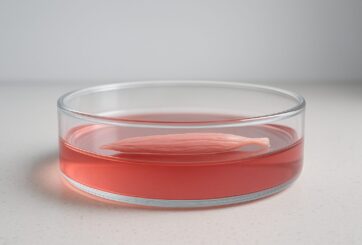
Muscles grown from stem cells taken from patients with limb girdle muscular dystrophy 2B (LGMD2B) respond positively to potential treatments. Biomedical engineers at Duke University have developed a new technique to better understand and test treatments for a group of extremely rare muscle disorders called dysferlinopathy or limb girdle muscular dystrophies 2B (LGMD2B). The approach grows complex, functional 3D muscle tissue from stem cells in the laboratory, creating a platform that replicates patient symptoms and treatment responses. In its debut…
…opens doors to unprecedented biological insights. Groundbreaking research has revealed a new way to measure incredibly minute forces at the nanoscale in watery solutions, pushing the boundaries of what scientists know about the microscopic world. The significant nanotechnology advance was achieved by researchers from Beihang University in China with RMIT University and other leading institutions including the Australian National University and University of Technology Sydney. The new technique, involving a super-resolved photonic force microscope (SRPFM), is capable of detecting forces in water as small as 108.2…
When low doses of cancer drugs are administered continuously near malignant brain tumours using so-called iontronic technology, cancer cell growth drastically decreases. Researchers at Linköping University, Sweden, and the Medical University of Graz, Austria, demonstrated this in experiments with bird embryos. The results, published in the Journal of Controlled Release, is one step closer to new types of effective treatments for severe cancer forms. Malignant brain tumours often recur despite surgery and post-treatment with chemotherapy and radiation. This is because…
…receives FDA approval for a clinical trial. The Federal Drug Administration approved a clinical trial to test the effectiveness of an electronic grid that records brain activity during surgery, developed by engineers at the University of California San Diego. The device with nanoscale sensors records electrical signals directly from the surface of the human brain in record-breaking detail. The grid’s breakthrough resolution could provide better guidance for planning and performing surgeries to remove brain tumors and treat drug-resistant epilepsy. The…
Researchers at the Johns Hopkins Kimmel Cancer Center’s Sol Goldman Pancreatic Cancer Research Center have developed a 3D genomic profiling technique to identify small precancerous lesions in the pancreas — called pancreatic intraepithelial neoplasias (PanINs) — that lead to one of the most aggressive, deadly pancreatic cancers. Published May1 in Nature, the results provide the most detailed 3D map of precancerous lesions in the human pancreas to date, laying a foundation for future early detection of pancreatic ductal adenocarcinoma (PDAC) and other types of…
Patch reads and sends data on blood glucose, lactates and other critical biomarkers, including indicators of acute cardiac disease. Researchers at two Ontario universities have developed a pain-free, wearable sensor that can continuously monitor levels of blood sugar, lactates and other critical health indicators for weeks at a time, sending results to a smartphone or other device. The Wearable Aptalyzer, created by a team featuring researchers from McMaster University and the University of Waterloo, uses an array of tiny hydrogel…
EU project develops portable diagnostic device for the early detection of deep vein thrombosis. Deep vein thrombosis (DVT) is a significant health risk. In about half of patients, the blood clot breaks away from the vein wall and travels to the lungs, where it can cause a pulmonary embolism. Approximately 25% of people who suffer a pulmonary embolism die as a result. The danger: In up to two-thirds of all cases of thrombosis, people have no symptoms. This makes early…
Researchers at the Keck School of Medicine of USC are co-leading an effort to develop advanced electronic bandages and other tools to improve chronic wound monitoring and healing. Chronic wounds, which include diabetic ulcers, surgical wounds, pressure injuries, and other problems, are deadlier than many people realize. Patients with chronic wounds have a five-year survival rate around 70%, worse than that of breast cancer, prostate cancer and other serious diseases. Treating wounds is also expensive, costing an estimated $28 billion…
 Feedback


