
Epstein-Barr virus (EBV) affects more than 90 percent of the population worldwide and was the first human virus found to be associated with cancer. Now,…
Vanderbilt investigators now report new insights to the workings of calprotectin — including a detailed structural view of how it binds the metal manganese….
Their results could contribute to the development of new antibiotics that control multi-resistant bacteria. Scientists have uncovered the atomic structure of…
Each fall millions of monarch butterflies from across the eastern United States begin a southward migration in order to escape the frigid temperatures of their…
The process is safer, simpler and less expensive than previous methods to convert the greenhouse gas associated with climate change to a useful product, said…
A national research team, led by scientists at the Indiana University School of Medicine, reported the results of the study in an article in Molecular…
The study led by University of Melbourne researcher Dr Michelle Hall, is the first to show that the larger the male fairy wren, the lower the pitch of his…
Peters and colleagues for the past four years have been studying the genes linked to colorectal cancer through the Genetics and Epidemiology of Colorectal…
Why certain catalyst materials work more efficiently when they are surrounded by water instead of a gas phase is unclear. RUB chemists have now gleamed some…
When gluing things together, both surfaces usually need to be dry. Gluing wet surfaces or surfaces under water is a challenge. In the journal Angewandte…
In a study published online Feb. 20 in PLOS One, Cornell biomedical engineers and Weill Cornell Medical College physicians described how 3-D printing and…
Many scientists believe that these base pairs were part of life from the very beginning and that RNA was one of the first polymers of life. But there is a…
A protein called complement factor H (CFH) is responsible for regulating part of our immune system called the complement cascade. Genetic alterations in CFH…
Researchers from Göttingen and Bonn have now shed light on this microscopic process. The study published in “Angewandte Chemie” might help to work out…
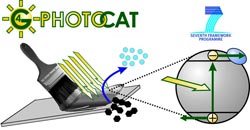
Only light, aerial oxygen, and a catalyst are needed to remove pollutants from water. RUB researchers led by Prof. Radim Beránek collaborate with colleagues…
Previous studies have shown that the more gradual the change, the better the chances for “evolutionary rescue” – the process of mutations occurring fast enough…
 Feedback


