
Self-assembling molecules could help in cancer therapy. Treatment of cancer is a long-term process because remnants of living cancer cells often evolve into aggressive forms and become untreatable. Hence, treatment plans often involve multiple drug combinations and/or radiation therapy in order to prevent cancer relapse. To combat the variety of cancer cell types, modern drugs have been developed to target specific biochemical processes that are unique within each cell type. However, cancer cells are highly adaptive and able to develop…
Solid-aqueous interfaces are ubiquitous and essential in a diverse range of natural and man-made systems and processes, from mineral formation, rock weathering, metal corrosion, to the intricate functioning of biological membranes and ion channels. In all these systems and processes, water and water-borne ions play decisive roles and underpin the interfacial chemical reactivities, but oftentimes, a fundamental understanding of such roles and effects is lacking. Water is regarded a ‘green’ medium that is abundantly available, environmentally benign and inexpensive, so…
Research team succeeds in creating novel metal-organic frameworks. Discovered 25 years ago, metal-organic frameworks (MOFs) quickly gained the aura of a “miracle material” due to their particular properties: their large inner surfaces and tuneable pore sizes facilitate improved applications, for example in materials separation and gas storage. While previous representatives were mainly based on transition metals like copper and zinc, a team at the Helmholtz-Zentrum Dresden-Rossendorf (HZDR) has explored more exotic parts of the periodic table: they investigated analogous compounds…
Professor Sabrina Jabs from the Cluster of Excellence “Precision Medicine in Chronic Inflammation” (PMI) investigated the function of a new disease gene with international cooperation. The starting point of the research was the search for host factors, that are necessary for RNA viruses such as SARS-CoV-2 to replicate. For this purpose, genome-wide CRISPR/Cas knock-out screens in human cell cultures were used to investigate which cells survive after infection with certain viruses. “In other words, in the cell culture, we switched…
New method converts carbon dioxide into chemical. A team of researchers led by Meenesh Singh at University of Illinois Chicago has discovered a way to convert 100% of carbon dioxide captured from industrial exhaust into ethylene, a key building block for plastic products. Their findings are published in Cell Reports Physical Science. While researchers have been exploring the possibility of converting carbon dioxide to ethylene for more than a decade, the UIC team’s approach is the first to achieve nearly 100% utilization of carbon dioxide…
Just two weeks after announcing the development of a mouse embryo model, complete with beating hearts and the foundations for a brain and other organs, from mouse stem cells, researchers in the laboratory of Magdalena Zernicka-Goetz, Bren Professor of Biology and Biological Engineering, have published new findings about another mouse embryo model reaching similar developmental stages, but created out of only mouse embryonic stem cells. This modification has simplified the protocol and makes the embryo model easier to be adopted in other laboratories….
Ecosystem changes can be more accurately predicted by emissions of chiral compounds. Worldwide, plants emit about 100 million tonnes of monoterpenes into the atmosphere each year. These volatile organic molecules include many fragrances such as the molecule pinene – known for its pine fresh scent. Since these molecules are highly reactive and can form tiny aerosol particles that can grow into nuclei for clouds droplets, natural emissions play an important role in our climate. Therefore, it is important for climate…
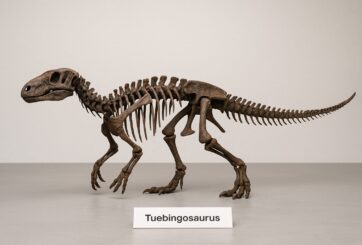
Tuebingosaurus maierfritzorum lived in the Swabian Alb region – paleontologists reclassify 100-year-old discovery. Paleontologists at the University of Tübingen’s Senckenberg Centre for Human Evolution and Palaeoenvironment have discovered a hitherto unknown genus and species of dinosaur. Tuebingosaurus maierfritzorum lived about 203 to 211 million years ago in the region now known as Swabian Alb and was a herbivore. The new species displays similarities with the large long-necked dinosaurs known as sauropods, and was identified when already-known dinosaur bones were re-examined….
Tuberculosis is one of the leading causes of death worldwide, with an estimated 1.4 million deaths and ten million people infected annually. Resistant and multidrug-resistant (MDR) variants of the tuberculosis pathogen Mycobacterium tuberculosis pose a major threat to tuberculosis control and global health. Rapid detection of these patient-specific resistance patterns is therefore crucial for targeted treatment and successful control of the transmission of antibiotic-resistant tuberculosis bacteria—a goal that DZIF scientists have now taken a major step towards. Mutations in the…
Hydrogen (H2) is currently discussed as an ideal energy carrier in a world requiring renewable energies. Hydrogen has the highest gravimetric energy density of all chemical fuels (141 MJ/kg), which is three times higher than gasoline (46 MJ/kg). However, its low volumetric density restricts its widespread use in transportation applications — as current storage options require a lot of space. At ambient temperature, hydrogen is a gas, and one kilogram of hydrogen occupies a volume of 12000 liters (12 cubic…
Research led by Sanford Burnham Prebys professor Francesca Marassi, Ph.D., is helping to reveal the molecular secrets of macular degeneration, which causes almost 90% of all age-related vision loss. The study, published recently in the Biophysical Journal, describes the flexible structure of a key blood protein involved in macular degeneration and other age-related diseases, such as Alzheimer’s and atherosclerosis. “Proteins in the blood are under constant and changing pressure because of the different ways blood flows throughout the body,” says…
Aphids are one of the least welcome garden visitors. These small insects can cause all the more damage in agriculture. But how do they actually choose their host plants? What are the basic mechanisms behind this? Researchers from the Universities of Bonn and Kassel now present two novel models that can be used to analyze aphid color vision and thus how the animals respond to plants. This opens up new possibilities for future research on this topic – but may…
UCSC scientists reported three crystal structures of periodic rippled beta sheets, a novel protein structure with potential applications in biomedicine and materials science. An unusual protein structure known as a “rippled beta sheet,” first predicted in 1953, has now been created in the laboratory and characterized in detail using x-ray crystallography. The new findings, published in July in Chemical Science, may enable the rational design of unique materials based on the rippled sheet architecture. “Our study establishes the rippled beta…
A molecular atlas of an Australian dragon’s brain sheds new light on over 300 million years of brain evolution. These days, dragons are keeping Game of Thrones fans on their toes. But they are also providing important insights into vertebrate brain evolution, as revealed by the work of Max Planck scientists on the brain of the Australian bearded dragon Pogona vitticeps. Vertebrate evolution took a major turn 320 million years ago when early tetrapods (animals with four limbs) transitioned from…
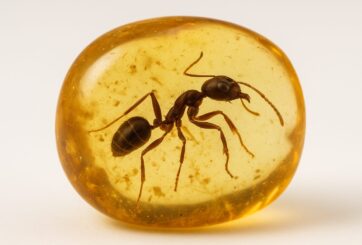
International research team uses micro-computed tomography to scan 20-million-year-old amber. An international team of scientists has discovered a previously unknown extinct ant species encased in a unique piece of amber from Africa. Using the X-ray light source PETRA III at the German Electron Synchrotron (DESY) in Hamburg the researchers, from Friedrich Schiller University Jena, the University of Rennes in France, the University of Gdansk in Poland, as well as the Helmholtz-Zentrum Hereon in Geesthacht, Germany, had examined the critical fossil…
People generate their own oxidation field and change the indoor air chemistry around them. People typically spend 90 percent of their lives inside, at home, at work or in transport. Within these enclosed spaces, occupants are exposed to a multitude of chemicals from various sources, including outdoor pollutants penetrating indoors, gaseous emissions from building materials and furnishings, and products of our own activities such as cooking and cleaning. In addition, we are potent mobile emission sources of chemicals that enter…
 Feedback


