
Researchers of the University of Freiburg have discovered that septins – a part of the cytoskeleton – form a barrier to the penetration of Pseudomonas aeruginosa. The process is dependent on the LecA molecule on the surface of the bacteria. The team working with cell biologists Prof. Dr. Winfried Römer and Dr. Carsten Schwan of the University of Freiburg and the Excellence Cluster the CIBSS – Centre for Integrative Biological Signalling Studies are using high-resolution live cell imaging and atomic…
A “hub and spoke” system enables plant cells to efficiently coordinate cellular trafficking, particularly for cellular recycling, the so-called autophagy process. Specialized vesicles, the autophagosomes, engulf harmful molecules and carry them to the vacuole, where they are degraded. During this journey, the autophagosomes mature using molecular mechanisms about which little is known in plants. Now, researchers from the Gregor Mendel Institute of Molecular Plant Biology of the Austrian Academy of Sciences (GMI) characterize the mechanism by which autophagy uses the…
The function of the human brain is exceptional, driving all aspects of our thoughts and creativity. Yet the part of the human brain – the neocortex – responsible for such cognitive functions has a similar overall structure to other mammals. Through close collaboration between The University of Queensland (UQ), The Mater Hospital and the Royal Brisbane and Women’s Hospital, researchers have discovered the human brain’s enhanced processing power may stem from differences in the structure and function of our neurons….
After University of Missouri researchers started examining the impact of smoke on plant growth after a wildfire, their surprising discovery could one day lead to new farming practices. Richard Ferrieri never thought a simple bottle of liquid smoke would change the trajectory of his team’s research. Originally, Ferrieri and a team of researchers at the University of Missouri focused on studying how soil, saturated by the intense smoke caused by wildfires, alters plant growth. But after they began their research,…
Using bacteria of the Bartonella henselae species, researchers from Goethe University, Frankfurt University Hospital, the Paul Ehrlich Federal Institute for Vaccines and Biomedicines in Langen, and the University of Oslo demonstrated for the first time that antibodies can prevent certain surface proteins of bacterial pathogens from entering host cells. The findings are important for the development of new drugs against highly resistant infectious agents. Infections, especially those with highly resistant pathogens, pose a significant threat to human health. It is…
Better than opiates: Researchers at FAU use adrenaline receptors for highly-effective analgesics. New substances that activate adrenalin receptors instead of opioid receptors have a similar pain relieving effect to opiates, but without the negative aspects such as respiratory depression and addiction. This is the result of research carried out by an international team of researchers led by the Chair of Pharmaceutical Chemistry at Friedrich-Alexander-Universität Erlangen-Nürnberg (FAU). Their findings, which have now been published in the renowned scientific journal Science, are…
The Unc5-GPC3 complex: proteins and a glyidic envelope. During brain development, neurons have to migrate long distances through complex environments until they reach their final destination. In order to find guidance, they must establish several interactions —which are still hard to study— between their receptors and the surrounding molecules. Now, a paper published in the prestigious journal Cell has identified how two different proteins, the neuronal receptor Unc5 and the molecule Glipican 3 (GPC3), collaborate decisively in the guidance of…
Many of the drugs we utilize in modern medicine are naturally produced by microbes. Penicillin, an antibiotic derived from certain molds, is one of the most notable natural products due to its recognition as one of the biggest advances in medicine and human health. As DNA sequencing has become cheaper and faster, scientists now have access to hundreds of thousands of microbial genomes and the natural products they produce. However, Doug Mitchell (MMG), the John and Margaret Witt Professor of…
This is the main conclusion of a new study involving ICM-CSIC that proves that these microorganisms contribute directly to the export and sequestration of carbon in the deep ocean. A new study recently published in The ISME journal in which the Institut de Ciències del Mar (ICM-CSIC) has participated has revealed that diazotrophs, a group of marine cyanobacteria that are able to convert nitrogen gas (N2) from the atmosphere into nutrients for primary producers in the ocean, contribute directly to…
Why are cancers of the adrenal glands1 more common among women? Why are prognoses worse for them? A team of scientists led by a CNRS researcher answers these questions in an article published on 14 October 2022 in Science Advances. They demonstrate that, in male mice, there is greater recruitment of immune cells known as macrophages, which can eliminate tumour cells. Hence, aggressive tumour progression is scarcely seen in male mice; while in female miles, macrophages do not slow the growth…
Changing the trafficking of the glucagon receptor in the liver regulates its metabolic signaling. Helmholtz Munich researchers identify a novel mechanism to modify glucagon receptor signaling outcomes by altering its intracellular localization. A group of researchers from the Helmholtz Munich Institute for Diabetes and Cancer (IDC) have unraveled a new strategy to alter glucagon receptor signaling in the liver by changing its intracellular trafficking. Glucagon is a peptide hormone, that is responsible for glucose balance and thus the regulation of…
Cancer cells use an unusual mechanism to migrate into new tissue and form metastases there. The same process probably also keeps some immune cells on their toes. This is the result of a recent study led by the University of Bonn. According to the study, certain structures, the centrioles, increase in number. This makes it easier for them to maintain their direction and thus migrate more quickly to the lymph nodes, where they activate other immune cells. The results have…
Photosystem I in plants shows a hitherto unknown face / Molecular examination with maximum precision. Researchers from Münster and Stockholm show for the first time that photosystem I in plants can also occur as dimers. They have examined this protein complex in a previously unseen degree of precision. Photosynthesis is the most important basis of life on Earth. In it, plants and single-cell algae use the energy of sunlight and convert this energy into sugar and biomass. In this process,…
Researchers discover a hidden order in seemingly random connections between neurons. In the brain, our perception arises from a complex interplay of neurons that are connected via synapses. But the number and strength of connections between certain types of neurons can vary. Researchers from the University Hospitals Bonn, Mainz and Munich, together with a research team from the Max Planck Institute for Brain Research in Frankfurt, as part of the DFG-funded Priority Program “Computational Connectomics” (SPP2041), have now discovered that…
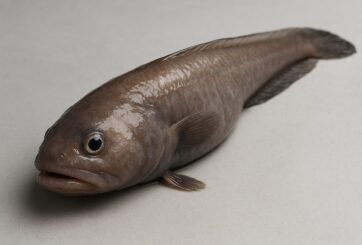
A new small blue snailfish is changing our understanding of the world’s deepest fishes. In 2018, an international team of scientists studied the Atacama Trench, an expansive trench that runs along the west coast of South America as a deep underwater valley that mirrors the Andes Mountains. The team, including Newcastle University scientists, deployed free-falling landers to sample the sparse deep-sea creatures around cameras and traps with bait. Two lander systems from Newcastle University recorded three types of hadal snailfish…
Frontera, Stampede2 supercomputing simulations help reveal traffic mechanisms through the nuclear pore complex. Students learn about the nucleus in ninth grade biology — it’s the inner sanctum of biological cells, where the genome resides with the blueprints for cells to make proteins that are the building-blocks of life. Apertures called nuclear pore complexes (NPC) perforate the otherwise iron-clad membrane and act like crossing guards for macromolecular traffic in and out of the nucleus. If the crossing-guard misfires, it can cause human diseases such as…
 Feedback


