
Using 3D technology and interdisciplinary expertise, a research team has explored Buddhist temples in the remote Dolpo region of Nepal and digitized them for posterity In the high-altitude and extremely remote region of Dolpo in north-west Nepal, there are numerous Buddhist temples whose history dates back to the 11th century. The structures are threatened by earthquakes, landslides and planned infrastructure projects such as the Chinese Belt and Road Initiative. There is also a lack of financial resources for long-term maintenance….
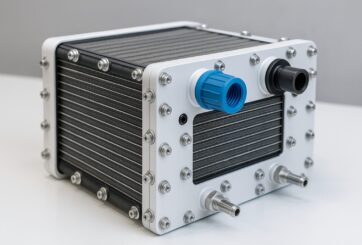
These devices could pack three times as much energy per pound as today’s best EV batteries, offering a lightweight option for powering trucks, planes, or ships. Batteries are nearing their limits in terms of how much power they can store for a given weight. That’s a serious obstacle for energy innovation and the search for new ways to power airplanes, trains, and ships. Now, researchers at MIT and elsewhere have come up with a solution that could help electrify these…

Introducing a severe impacts approach to guide adaptation to pluvial floods in residential and public buildings The risk of heavy rainfall and severe flooding increases with climate change. But property owners – regardless of size – often underestimate their own responsibility and are unaware of what preventive measures they can take themselves. In a new scientific article, researchers from Linköping University, Sweden, show how to go about preventive work. Many property owners believe that it is the municipality’s responsibility to…
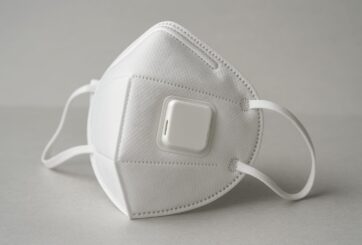
Tokyo, Japan—The COVID-19 pandemic increased public awareness of the importance of mask use for personal protection. However, when the mesh size of mask fabrics is small enough to capture viruses, which are usually around one hundred nanometers in size, the fabric typically also restricts air flow, resulting in user discomfort. But now, researchers from Japan have found a way to avoid this. In a study published this month in Materials Advances, researchers from the Institute of Industrial Science, The University…
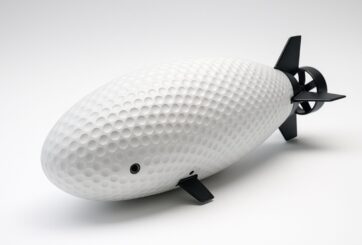
A spherical prototype that can change its surface from smooth to dimpled cuts through drag and generates lift Captions // Photos on Flickr // Video on Youtube Underwater or aerial vehicles with dimples like golf balls could be more efficient and maneuverable, a new prototype developed at the University of Michigan has demonstrated. Golf ball dimples cut through pressure drag—the resistance force an object meets when moving through a fluid—propelling the ball 30% further than a smooth ball on average….
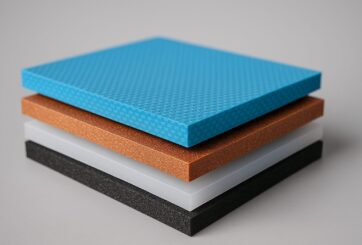
CHAMPAIGN, Ill. — Millions of years of evolution have enabled some marine animals to grow complex protective shells composed of multiple layers that work together to dissipate physical stress. In a new study, engineers have found a way to mimic the behavior of this type of layered material, such as seashell nacre, by programming individual layers of synthetic material to work collaboratively under stress. The new material design is poised to enhance energy-absorbing systems such as wearable bandages and car…

Triboelectric nanogenerators (TENGs) are a transformative class of next-generation devices for energy conversion and self-powered sensing. Selecting appropriate triboelectric and conductive materials is crucial for optimizing TENG performance. In recent years, MXenes, especially Ti3C2 MXene, have become highly promising candidates for both triboelectric and conductive materials in TENGs. Although many studies (including research and review articles) have focused on TENG construction and performance, there is a significant gap in the literature: a comprehensive summary of MXene applications from a materials…
Oxygen defect engineering enables efficient sulfone production using molecular oxygen at low temperature Sulfones, a class of sulfur-containing compounds, are chemically derived from the selective oxidation of sulfides. While these compounds form the core of the pharmaceuticals, solvents and polymer industries, their chemical synthesis is often hindered by high reaction temperatures and extreme reaction conditions. Additionally, these also require costly additives and harsh solvents for production. Against this backdrop, a team of researchers from Japan introduced a new catalyst design,…
Developing next-generation energy storage technologies that enable high power and capacity simultaneously A research team led by Dr. Bon-Cheol Ku and Dr. Seo Gyun Kim of the Carbon Composite Materials Research Center at the Korea Institute of Science and Technology (KIST) and Professor Yuanzhe Piao of Seoul National University (SNU) has developed a high-performance supercapacitor that is expected to become the next generation of energy storage devices. The technology developed by the researchers overcomes the limitations of existing supercapacitors by…
TUM researchers develop new material for solid-state batteries The team led by Prof. Thomas F. Fässler from the Chair of Inorganic Chemistry with a Focus on Novel Materials partially replaced lithium in a lithium antimonide compound with the metal scandium. This creates specific gaps, so-called vacancies, in the crystal lattice of the conductor material. These gaps help the lithium ions to move more easily and faster, resulting in a new world record for ion conductivity. Since the measured conductivity far…
Iron-based magnetic nanomaterials have emerged as candidates in biomedicine due to their unique physicochemical properties. Beyond their established role as clinical MRI contrast agents, they have shown potential in drug delivery, magnetic hyperthermia, and the treatment of iron deficiency. Macrophages are also primary targets for these nanomaterials in vivo. The biological effects of iron-based nanomaterials are closely linked to the plasticity and phenotypic shifts of macrophages. However, the underlying mechanisms by which these materials influence macrophage-mediated immune regulation remain unclear….
Greater coordination among states could save the region up to $3.25 billion per year in energy system costs A new study led by researchers at the University of California San Diego offers a first-of-its-kind look at how deeper coordination among Western U.S. states could lower the cost of decarbonizing the electric grid—and speed up the clean energy transition. Published in the journal Nature Communications, the paper models how 11 Western states—including California, Arizona, and New Mexico—might build out clean energy…
Iron-rich hematite, commonly found in rocks and soil, turns out to have magnetic properties that make it a promising material for ultrafast next-generation computing In 2023, EPFL researchers succeeded in sending and storing data using charge-free magnetic waves called spin waves, rather than traditional electron flows. The team from the Lab of Nanoscale Magnetic Materials and Magnonics, led by Dirk Grundler, in the School of Engineering used radiofrequency signals to excite spin waves enough to reverse the magnetization state of…
Queensland University of Technology QUT researchers have identified a new material which could be used as a flexible semiconductor in wearable devices by using a technique that focuses on the manipulation of spaces between atoms in crystals. In a study published in the prestigious journal Nature Communication, the researchers used “vacancy engineering” to enhance the ability of an AgCu(Te, Se, S) semiconductor, which is an alloy made up of silver, copper, tellurium, selenium and sulphur, to convert body heat into…
Power inverters are the beating heart in the drive train of modern electric cars. They turn the electrical energy from the batteries into something that engines can actually use. Fraunhofer IZM has now redefined what this key component is possible of doing: Using the newest developments in power electronics, the „Dauerpower“ inverter was born that can handle enormous amounts of power with low inductance and in a tiny body – with peak efficiency measured at 98.7%. Let’s roll! Modern electric…
The EFRE project G.O.A.L. (1.6-14) “Gallium Oxide Application Laboratory for Power Electronics”, which was launched in September 2024, completes the value chain created at the IKZ in the field of gallium oxide technology development. In addition to the existing Cz volume crystal growing and wafering sections, the epitaxy module in the form of a 3×2” MOVPE from AIXTRON has now been added. This expansion creates the prerequisite for establishing IKZ in the EU as the only supplier of 2 inch…
Imagine if phones never got hot no matter how many apps were running. Picture a future where supercomputers use less energy, electric cars charge faster, and life-saving medical devices stay cooler and last longer. In a study published in Nature Materials, a team of engineers at the University of Virginia and their collaborators revealed a radical new way to move heat, faster than ever before. Using a special kind of crystal called hexagonal boron nitride (hBN), they found a way…
 Feedback


