
The brain’s structure has columnar features, which are hypothesized to arise from nerve cells (neurons) stemming from the same parent cell, initially forming radial units. How exactly this process unfolds at the molecular level remains unexplained, however. Now, an important insight comes from Makoto Sato and colleagues from Kanazawa University who show how, in the fly brain, a gene known as Dscam regulates how neurons from one lineage repel each other, and project their axons to different columns. (Axons or…
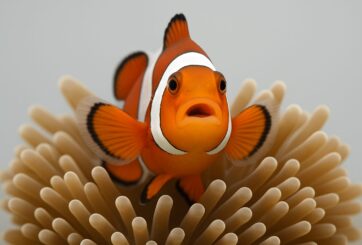
Human intervention is putting marine ecosystems under increasing pressure. On coral reefs, rising water temperatures, ocean acidification, pollution from plastic waste or overfishing threaten the organisms living there – be they fish, sea cucumbers or corals. But how does the direct physical presence of humans under water actually change the behaviour and ecology of animals on coral reefs? Off the coast of the island state of Vanuatu in the South Pacific, researchers from the Leibniz Centre for Tropical Marine Research…
An ultrashort pulse laser opens a new pathway toward petahertz electron technology. In modern information technology (IT), data are processed and carried by motion of electrons in a CPU. In the electric circuits, the electrons move in a desired direction by an applied electric field. A frequency of the on-off switching of the electron motion, which is referred to as a “CPU clock” for example, is an order of gigahertz (109 Hz). On the other hand, an oscillating field of…
Scientists from the Skolkovo Institute of Science and Technology (Skoltech), Institute of Solid State Chemistry and Mechanochemistry (ISSC SB RAS), Pirogov Medical University and Yerevan State University have predicted new hard and superhard ternary compounds in the tungsten-molybdenum-boron system using computational methods. Their research was published in the journal Chemistry of Materials. According to Alexander Kvashnin, a senior research scientist at Skoltech and a co-author of the paper, the study is a natural follow-on to lengthy research into binary systems….
Many production facilities (e.g. plastic manufacturers, pharma companies, and others) use nanocatalysts that contain palladium–an expensive component that is not sustainably produced. A chemist from RUDN University found a way to reduce palladium consumption and to make its manufacture more eco-friendly. He developed a catalyst based on a substance that comes from plant waste. Using his invention, manufacturers could cut palladium consumption in half. Moreover, new catalysts can be reused multiple times without any decrease in efficiency. The results of…
Quantum bits, or qubits, can hold quantum information much longer now thanks to efforts by an international research team. The researchers have increased the retention time, or coherence time, to 10 milliseconds – 10,000 times longer than the previous record – by combining the orbital motion and spinning inside an atom. Such a boost in information retention has major implications for information technology developments since the longer coherence time makes spin-orbit qubits the ideal candidate for building large quantum computers….
The approach has potential applications in improving optical communications and making currency harder to counterfeit. By shining white light on a glass slide stippled with millions of tiny titanium dioxide pillars, researchers at the National Institute of Standards and Technology (NIST) and their collaborators have reproduced with astonishing fidelity the luminous hues and subtle shadings of “Girl With a Pearl Earring,” Dutch artist Johannes Vermeer’s masterpiece. The approach has potential applications in improving optical communications and making currency harder to…
The hemoglobin in the red blood cells ensures that our body cells receive sufficient oxygen. When the blood pigment is broken down, “heme” is produced, which in turn can influence the protein cocktail in the blood. Researchers at the University of Bonn have now discovered in complex detective work that the “activated protein C” (APC) can be commandeered by heme. At the same time, APC can also reduce the toxic effect of heme. Perspectively, the findings may provide the basis…
Approach to electromagnetic stimulation of nervous tissue Today, a large number of diseases are treated with medication. This is often associated with side effects that can be serious for people who are already ill. A new therapeutic approach, known under the keyword “bioelectronic medicine”, provides for the therapy of diseases by means of electrostimulation. Since April 2019, the Fraunhofer Institute for Biomedical Engineering IBMT has been contributing its many years of expertise in the field of intelligent miniaturized active implants…
Scientists reveal key steps in the formation of the recycling centers of the cell Autophagosomes first form as cup-shaped membranes in the cell, which then grow to engulf the cellular material designated for destruction. The formation of these membranes is catalyzed by a complex machinery of proteins. “We have a very good knowledge of the factors involved in autophagosomes formation”, explains group leader Sascha Martens, “but how they come together to initiate the formation of these membranes has so far…
City of Hope scientists have combined two potent immunotherapies — an oncolytic virus and chimeric antigen receptor (CAR) T cell therapy — to target and eradicate solid tumors that are otherwise difficult to treat with CAR T therapy alone, according to a new Science Translational Medicine study. In preclinical research that could lead to a clinical trial for patients with intractable solid tumors, City of Hope scientists genetically engineered an oncolytic virus to enter tumor cells and force their expression…
Cosmologists have zoomed in on the smallest clumps of dark matter in a virtual universe – which could help us to find the real thing in space. An international team of researchers, including Durham University, UK, used supercomputers in Europe and China to focus on a typical region of a computer-generated universe. The zoom they were able to achieve is the equivalent of being able to see a flea on the surface of the Moon. This allowed them to make…
A team of astronomers have identified the first direct evidence that groups of stars can tear apart their planet-forming disc, leaving it warped and with tilted rings. This new research suggests exotic planets, not unlike Tatooine in Star Wars, may form in inclined rings in bent discs around multiple stars. The results were made possible thanks to observations with the European Southern Observatory’s Very Large Telescope (ESO’s VLT) and the Atacama Large Millimeter/submillimeter Array (ALMA). Our Solar System is remarkably…
Habanero peppers provide ecofriendly way to synthesize silver nanoparticles Distinctive thermal and electrical characteristics make silver nanoparticles perfect for optics and biosensing applications. One increasingly popular application for the nanoparticles is as an antibacterial coating. Silver nanoparticle coatings are used in fabrics, footwear, computer keyboards, and orthopedic and other biomedical devices. The process of synthesizing the silver nanoparticles involves chemical reduction of silver nitrate salt (AgNO3). A pair of reagents breaks down the AgNO3 molecules, releasing silver ions that are…
Material could be used in smart textiles, medical devices and more As anyone who has ever straightened their hair knows, water is the enemy. Hair painstakingly straightened by heat will bounce back into curls the minute it touches water. Why? Because hair has shape memory. Its material properties allow it to change shape in response to certain stimuli and return to its original shape in response to others. What if other materials, especially textiles, had this type of shape memory?…
A biologist from RUDN University found the most beneficial concentration of tryptophan for rainbow trout. When added to the diet of the fish, this amino acid supports the immune system and reduces the oxidative stress in the intestinal tract caused by the overpopulation of fish farms. The results of the study were published in the Aquaculture magazine. The fish in fish farms is under constant stress because of overpopulation, transportation, malnutrition, and low quality of water. All these factors have…
 Feedback


