
Building a satellite with artificial intelligence on board that is trained in space: For this project, Professor Hakan Kayal from Würzburg is receiving 2.6 million euros from the German Federal Ministry for Economic Affairs and Energy. Suddenly, circular holes were visible on the surface of Mars that were not there before. On photos of Saturn’s moon Enceladus, geysers were discovered that hurl powerful fountains of steam towards space. And on the images sent to Earth by the Mars rover Curiosity,…
To illustrate the effects of climate change on nature at a glance, scientists at the Technical University of Munich (TUM) are now presenting Green Warming Stripes for the first time. Annette Menzel, Professor of Ecoclimatology at the TUM, explains in an interview how we can interpret them and what they mean. We understand that Green Climate or Warming Stripes can illustrate nature’s responses to global warming, but how can we decode the colored stripes? Blue colors represent years with cold…
How seagrass can help to remove carbon dioxide from the atmosphere. Oceans are among the largest carbon stores on our planet. An important factor are marine plants such as seagrass meadows, mangrove forests and salt marshes, which sequester carbon in the soil. In the German Baltic Sea, for example, seagrass meadows currently store around 3 to 12 megatons. This is significantly more than was previously known, as the first results from Dr. Angela Stevenson from GEOMAR Helmholtz Center for Ocean…
Nanothin antimicrobial coating could prevent and treat potentially deadly infections. Researchers have developed a new superbug-destroying coating that could be used on wound dressings and implants to prevent and treat potentially deadly bacterial and fungal infections. The material is one of the thinnest antimicrobial coatings developed to date and is effective against a broad range of drug-resistant bacteria and fungal cells, while leaving human cells unharmed. Antibiotic resistance is a major global health threat, causing at least 700,000 deaths a…
What makes them different is that they can be easily recycled. Researchers at the Laboratory of Cluster Catalysis at St Petersburg University have synthesised polymers from biomass. What makes them different is that they can be easily recycled. Today, our life is simply unthinkable without polymers. Plastics, fibres, films, paint and lacquer coating – they are all polymers. We use them both in our everyday life and in industry. Yet the goods made from polymers, e.g. bottles, bags, or disposable…
Researchers present results of experiments with atom interferometry on a sounding rocket / Further rocket missions set to follow. Extremely precise measurements are possible using atom interferometers that employ the wave character of atoms for this purpose. They can thus be used, for example, to measure the gravitational field of the Earth or to detect gravitational waves. A team of scientists from Germany has now managed to successfully perform atom interferometry in space for the first time – on board…
Research could help scientists better estimate Earth’s carbon budget. A team led by University of Minnesota researchers has discovered that deep-sea bacteria dissolve carbon-containing rocks, releasing excess carbon into the ocean and atmosphere. The findings will allow scientists to better estimate the amount of carbon dioxide in Earth’s atmosphere, a main driver of global warming. The study is published in The ISME Journal: Multidisciplinary Journal of Microbial Ecology, a peer-reviewed scientific journal that is part of the Nature family of…
It’s an example of how surprising properties can spontaneously emerge in complex materials — a phenomenon scientists hope to harness for novel technologies. Creating a two-dimensional material, just a few atoms thick, is often an arduous process requiring sophisticated equipment. So scientists were surprised to see 2D puddles emerge inside a three-dimensional superconductor – a material that allows electrons to travel with 100% efficiency and zero resistance – with no prompting. Within those puddles, superconducting electrons acted as if they…
New insights into the three-dimensional (3D) morphology of the human uterine endometrium could advance our understanding of the mechanisms of endometrial regeneration and fertilized egg implantation while clarifying the pathogenesis of menstrual disorders, infertility and endometrium-related diseases such as adenomyosis, endometriosis, endometrial hyperplasia and endometrial cancer. The endometrial glands are comprised of complicated winding and branching structures, and conventional 2D imaging techniques have been unable to adequately assess their shape. This limitation has prevented elucidation of the mechanisms of endometrial…
LED-based film-type haptic technology implements localized vibration. Various tactile sensations are now possible via independantly controllable vibrations. A Korean research team succeeded in developing a technology generating various vibration using LED light signals. The technology allows various tactile sensations by area and reduction in size by considerably lowering the cost of light source, and these are expected to be applied to many industries including automobile and electronics. The Electronics and Telecommunications Research Institute, or ETRI for short, announced that it…
Solutions that conduct electricity, ‘electrolytes’, are ubiquitous not only in batteries and capacitors but also in biofluids including blood plasma; of great practical importance is thus to understand how electrolytes can be utilised to control living cells or other objects that are immersed in them. In a new study published in Physical Review Letters, researchers from the Max Planck Institute for Dynamics and Self-Organization (MPIDS) in Göttingen, and the University of Oxford uncover how forces with unprecedented controllability can be…
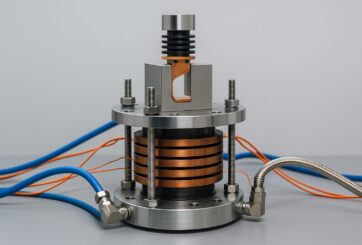
New material improves magnetic cooling near absolute zero … Cooling is a long-standing technological challenge. Standard cooling cycle based on vapor compression exploits expensive helium gas to reach temperatures near absolute zero. Adiabatic demagnetization known since nearly a century could be a viable alternative if compact and durable paramagnetic materials were available. A team of researchers from the University of Augsburg used their recent experience in creating quantum-disordered magnetic states to design a promising new material for adiabatic demagnetization cooling….
Researchers at Utrecht University and at TU Wien (Vienna) create special light waves that can penetrate even opaque materials as if the material was not even there. Why is sugar not transparent? Because light that penetrates a piece of sugar is scattered, altered and deflected in a highly complicated way. However, as a research team from TU Wien (Vienna) and Utrecht University (Netherlands) has now been able to show, there is a class of very special light waves for which…
Inserting lightweight optimization code in high-speed network devices has enabled a KAUST-led collaboration to increase the speed of machine learning on parallelized computing systems five-fold. This “in-network aggregation” technology, developed with researchers and systems architects at Intel, Microsoft and the University of Washington, can provide dramatic speed improvements using readily available programmable network hardware. The fundamental benefit of artificial intelligence (AI) that gives it so much power to “understand” and interact with the world is the machine-learning step, in which…
Expedition investigates matter fluxes and food webs in the world’s largest river plume. As the world’s largest river, the Amazon contributes about one-fifth of the global freshwater input to the ocean, and its river plume, which extends thousands of kilometres into the tropical North Atlantic, influences diverse ecosystems there. To better understand the fate of this gigantic river plume from its mouth to open ocean expanses and its influence on plankton food webs, the research vessel METEOR is embarking on…
New research has for the first time compared images of the protein spikes that develop on the surface of cells exposed to the Oxford-AstraZeneca vaccine to the protein spike of the SARS-CoV-19 coronavirus. The images show that the spikes are highly similar to those of the virus and support the modified adenovirus used in the vaccine as a leading platform to combat COVID-19. The SARS-CoV-2 virus, which causes COVID-19, has a large number of spikes sticking out of its surface…
 Feedback


