
When two galaxies collide, the supermassive black holes at their cores release a devastating gravitational “kick,” similar to the recoil from a shotgun. New research led by CU Boulder suggests that this kick may be so powerful it can knock millions of stars into wonky orbits. The research, published Oct. 29 in The Astrophysical Journal Letters, helps solve a decades-old mystery surrounding a strangely-shaped cluster of stars at the heart of the Andromeda Galaxy. It might also help researchers better…
The humble quillworts are an ancient group of about 250 small, aquatic plants that have largely been ignored by modern botanists. A group of researchers, led by Boyce Thompson Institute’s Fay-Wei Li, have sequenced the first quillwort genome and uncovered some secrets of the plant’s unique method of photosynthesis – secrets that could eventually lead to the engineering of crops with more efficient use of water and carbon dioxide. Most plants breathe in carbon dioxide (CO2) and use sunlight to…
Coral reef ecosystems are severely threatened by climate change. The urgent need to address the issue is driving a new era of innovation in reef science, shown by a global multidisciplinary exploration of different approaches to enhance coral resilience. An international team including KAUST professors Manuel Aranda and Raquel Peixoto, with adjunct professor Chris Voolstra, have proposed an adaptive framework to increase the resilience of corals in the face of climate change. The team proposes integrating current approaches that center…
Cancer diagnosis is confirmed through histopathology by removing a part of the tissue in question after conducting imaging tests such as MRI, CT, ultrasound, or endoscopy. Based on this clinical diagnosis, the cancerous tissue is surgically removed and suspected tissues or lymph nodes are additionally examined. Future treatment plans, chemotherapy, and radiation are formulated based on these results. Recently, a research team led by POSTECH and Gachon University College of Medicine has developed a machine learning-based histopathology method. A research…
A team of engineers at the University of South Florida has invented new technology that could forever change the manufacturing of wearable, electronic sensors. They’ve figured out a way to speed up production without having to use polymer binders – the industry standard in printing flexible sensors, which are often used to monitor vital signs in health care settings. Their technology, featured on the cover of the journal ACS Applied Materials & Interfaces, prints electronic skin, or “e-skin,” by using…
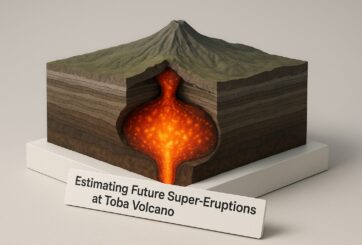
Geologists from the UNIGE and Peking University have developed a technique that makes it possible to estimate the maximum size of a future super-eruption of Toba volcano in Sumatra. It is estimated that about 5-10 volcanoes worldwide are capable of producing a super-eruption that could catastrophically affect global climate. One of these volcanoes hides below the waters of Lake Toba in Sumatra and has caused two super-eruptions in the last one million year. But when will the next one be?…
Australian researchers have developed disruptive technology allowing autonomous vehicles to track running pedestrians hidden behind buildings, and cyclists obscured by larger cars, trucks, and buses. The autonomous vehicle uses game changing technology that allows it to “see” the world around it, including using x-ray style vision that penetrates through to pedestrians in blind spots and to detect cyclists obscured by fast-moving vehicles. The iMOVE Cooperative Research Centre-funded project collaborating with the University of Sydney’s Australian Centre for Field Robotics and…
Acoustic manipulation of electron spins could lead to new methods of quantum control. The captured electrons typically absorb light in the visible spectrum, so that a transparent material becomes colored under the presence of such centers, for instance in diamond. “Color centers are often coming along with certain magnetic properties, making them promising systems for applications in quantum technologies, like quantum memories – the qubits – or quantum sensors. The challenge here is to develop efficient methods to control the…
Johns Hopkins Medicine study also suggests longer interval between virus exposure and first vaccine dose may enhance antibody response. In what is believed to be one of the largest studies of its kind, Johns Hopkins Medicine researchers have shown that antibody levels against SARS-CoV-2 (the COVID-19 virus) stay more durable — that is, remain higher over an extended period of time — in people who were infected by the virus and then received protection from two doses of messenger RNA…
With $750,000 in NASA funding, engineers work to mitigate and prevent defects in additively manufactured metal parts designed for use in extreme environments. In additive manufacturing, also known as 3D printing, a 3D printer deposits material onto a surface or mold, letting it solidify one layer at a time until a 3D object – as simple as a plastic cube or as complex as a metal jet engine component – takes shape. Unlike subtractive manufacturing, which involves carving an object…
Lung model mimicking complex anatomy may enable air volume assessment. Take a nice, deep breath. Now imagine your lungs: myriad airways like branches, each with tiny alveoli like leaves. This alveolar structure is key to the absorption of oxygen and excretion of carbon dioxide that we call “breath.” As we breathe, the volume of gases in the lungs is continually changing with varying degrees of inhalation and exhalation. These volumes are medically important for clinical assessment and diagnosis of respiratory…
The device you are currently reading this article on was born from the silicon revolution. To build modern electrical circuits, researchers control silicon’s current-conducting capabilities via doping, which is a process that introduces either negatively charged electrons or positively charged “holes” where electrons used to be. This allows the flow of electricity to be controlled and for silicon involves injecting other atomic elements that can adjust electrons— known as dopants—into its three-dimensional (3D) atomic lattice. Silicon’s 3D lattice, however, is…
Researchers resolve a long-standing challenge in quantum optics: optimal Bell-state measurement of time-bin encoded qubits, to enhance the key rate of secure quantum communication. Integrated quantum photonics (IQP) is a promising platform for realizing scalable and practical quantum information processing. Up to now, most of the demonstrations with IQP focus on improving the stability, quality, and complexity of experiments for traditional platforms based on bulk and fiber optical elements. A more demanding question is: “Are there experiments possible with IQP…
Using cold temperatures and machine learning, researchers visualized individual molecules in a synthetic soft material for the first time. The Science Scientists have created thin, paper-like crystalline sheets using a synthetic, protein-like molecule called a polypeptoid. These nanosheets are only one molecule thick, with the molecules arranged in very specific ways. Scientists take images of these nanosheets using electron microscopes under cryogenic conditions. Until recently these images were blurry because of the tiny number of electrons that can pass through…
A needle-free COVID-19 vaccination could be possible, with University of Queensland scientists successfully protecting mice from the virus by administering a US-developed vaccine candidate with a ‘patch’. The University of Texas Hexapro vaccine candidate – delivered via the UQ-developed and Vaxxas-commercialised high-density microarray patch (HD-MAP) – provided protection against COVID-19 disease with a single, pain-free ‘click’ from a pocket-sized applicator. Dr David Muller, from UQ’s School of Chemistry and Molecular Biosciences, said the vaccine patch produced strong immune responses that were shown to be effective when…
A team using the nation’s fastest supercomputer to look at protein binding finds that some binding processes are simpler than expected. The Science Proteins bind to one another through a complex mix of chemical interactions. What if some proteins bind due to their shapes, a much simpler process? To answer this question, researchers used Summit, the nation’s fastest supercomputer, to model lock-and-key interactions. In these interactions, molecules in the proteins that are binding together must chemically “fit” precisely. The team…
 Feedback


