
The active plant ingredient anemonin could provide a new approach in the treatment of malaria. It was identified by researchers from Ethiopia and Germany in a buttercup that is traditionally used in some African countries as a medicinal plant to treat malaria. Extracts from the plant significantly alleviated the symptoms of infected mice, as the team from Arba Minch University (AMU), Addis Ababa University (AAU) and Martin Luther University Halle-Wittenberg (MLU) reported in the journal “Molecules”. A tea made from…
Heidelberg researchers investigate how the spoonweed genus successfully adapted to extreme climatic changes over millions of years. As cold relics in an increasingly warming world, plants of the spoonweed group time and again quickly adapted to a changing climate during the Ice Ages of the last two million years. An international team of evolutionary biologists and botanists led by Prof. Dr Marcus Koch of Heidelberg University used genomic analyses to study what factors favour adaptation to extreme climatic conditions. The…
The metric system was introduced in Germany 150 years ago. The world can sometimes reach a consensus. At least when it comes to measuring things. Today, it seems obvious to us to measure distances in meters, electric current in amperes and weights in kilograms. The story of this global achievement started with the French Revolution at the end of the 18th century. The French Revolution set many things in motion, it abolished some others, and it led to the creation…
Intelligent packaging with sensors that monitor goods, such as vegetables, on long transport routes is a trend for the future. Yet printed and disposable electronics also cause problems: Metals in printing inks are expensive – and disposing of them in an environmentally sound manner is costly and exacerbates the problem of electronic waste. A new solution from Empa researchers aims to remedy this. More precise, faster, cheaper: Researchers all over the world have been working for years on producing electrical…
At Fraunhofer MEVIS, a new device update accelerates development of control software. Reliable and feasible early detection of Alzheimer’s disease is the goal of DEBBIE, an international joint project under the EU Joint Programme – Neurodegenerative Disease Research (JPND). It is coordinated by the Fraunhofer Institute for Digital Medicine MEVIS in Bremen, which has received national funding from the Federal Ministry of Education and Research (BMBF) for its work. In this project, MRI images shall uncover the extent to which…
Room divider based on UV-C light inactivates SARS-CoV-2 aerosols. Despite myriad precautionary measures, virus-contaminated aerosols still pose a serious problem indoors. An invisible protective wall of UV-C light developed by researchers at the Division of Infectious Diseases and Tropical Medicine at the LMU University Hospital Munich and the Technical University of Munich (TUM) could provide a solution and reliably curb the spread of viruses and other pathogens in rooms in the future while allowing total freedom of movement. A research…
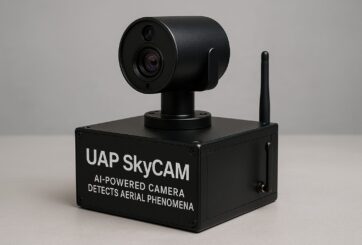
A new camera system has gone into test operation at the University of Würzburg. It is designed to detect unidentified aerial phenomena using artificial intelligence methods. Time and again, people see strange luminous phenomena or other phenomena in the sky that they cannot explain. “Most of these observations concern known phenomena or objects such as birds, aircraft, satellites or clouds. But for a very small proportion, the cause remains unexplained even after intensive investigation by experts,” says Hakan Kayal, Professor…
When cells are exposed to ionising radiation, more destructive chain reactions may occur than previously thought. An international team led by researchers from the Max Planck Institute for Nuclear Physics has for the first time observed intermolecular Coulombic decay in organic molecules, which is triggered by ionising radiation such as from radioactivity or from outer space. The effect damages two neighbouring molecules and ultimately leads to the breaking of bonds, as they also exist in DNA and proteins. The finding…
Johns Hopkins-led imaging research helps quantify antibiotic levels, improve antibiotic action and prevent bacterial resistance. Treating bacterial infections associated with orthopaedic implants has often been a case of too little, too late. The traditional therapy has been a combination of prolonged antibiotics, including rifampin, a 50-year-old drug that has been a staple in the global fight against tuberculosis and other bacterial diseases. However, the inability to determine how much rifampin reaches the target site can be disastrous. If not enough…
A UCSC team obtained an x-ray ‘snapshot’ of a novel protein structure with potential applications in biomedicine and materials science. By mixing a small peptide with equal amounts of its mirror image, a team of scientists at UC Santa Cruz has created an unusual protein structure known as a “rippled beta sheet” and obtained images of it using x-ray crystallography. They reported their findings in a paper published December 8 in Chemical Science. The rippled sheet is a distinctive variation…
Discovery improves stability in ethylene and hydrogen production via artificial photosynthesis. A research team has developed a new artificial photosynthesis device with remarkable stability and longevity as it converts sunlight and carbon dioxide into two promising sources of renewable fuels – ethylene and hydrogen. The researchers’ findings, which they recently reported in the journal Nature Energy, reveal how the device degrades with use, then demonstrate how to mitigate it. The authors also provide new insight into how electrons and charge…
Earthquakes of similar magnitude can cause tsunamis of greatly varying sizes. This commonly observed, but not well-understood phenomenon has hindered reliable warnings of local tsunamis. Research led by University of Hawai‘i (UH) at Mānoa scientists provides new insight that connects the characteristics of earthquakes—magnitude, depth where two tectonic plates slip past each other and the rigidity of the plates involved—with the potential size of a resulting tsunami. Previous researchers identified a special class of events known as tsunami earthquakes, which produce disproportionately…
Unlike the jumble of frequencies produced by the light that surrounds us in daily life, each frequency of light in a specialized light source known as a “soliton” frequency comb oscillates in unison, generating solitary pulses with consistent timing. Each “tooth” of the comb is a different color of light, spaced so precisely that this system is used to measure all manner of phenomena and characteristics. Miniaturized versions of these combs – called microcombs – that are currently in development…
Perovskites are the great hope for further increasing the efficiency of solar modules in the future. Until now, their short service life has been considered the biggest hurdle to their practical use, but this could soon change. In the current issue of the renowned journal Nature Energy, researchers from the Helmholtz Institute Erlangen-Nuremberg of the Forschungszentrum Jülich have presented a variant that stands out for its special stability. In tests at elevated temperature and illumination over 1450 hours of operation,…
Up to 20 percent of children and three percent of adults worldwide suffer from the chronic inflammatory skin disease eczema, also known as atopic dermatitis. Typical symptoms are dry, inflamed and very itchy patches of skin on the inside of the elbows or on the back of the knees – but eczema can occur all over the body. The condition is often triggered by exposure to allergens, which leads to an overactive immune response and an inflammatory reaction in the…
… help prepare for future coronaviruses. Small, unique antibody-like proteins known as VNARs — derived from the immune systems of sharks — can prevent the virus that causes COVID-19, its variants, and related coronaviruses from infecting human cells, according to a new study published Dec. 16. The new VNARs will not be immediately available as a treatment in people, but they can help prepare for future coronavirus outbreaks. The shark VNARs were able to neutralize WIV1-CoV, a coronavirus that is…
 Feedback


