
A new publication and interactive map summarise the current state of knowledge on the risks posed by permafrost soils – and call for decisive action. How is climate change affecting the permanently frozen soils of the Arctic? What will the consequences be for the global climate, human beings, and ecosystems? And what can be done to stop it? In the journal Frontiers in Environmental Science, a team of experts led by Benjamin Abbott from Brigham Young University, USA and Jens…
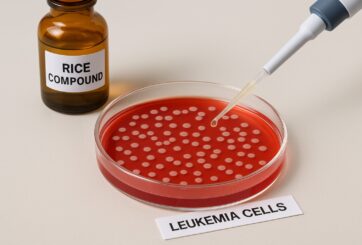
Rice, MD Anderson study highlights potential of mitochondria-targeted chemotherapies. Researchers from Rice University and the University of Texas MD Anderson Cancer Center have discovered potential new drugs that work in concert with other drugs to deliver a deadly one-two punch to leukemia. The potential drugs are still years away from being tested in cancer patients, but a recently published study in the journal Leukemia highlights their promise and the innovative methods that led to their discovery. In previous studies, the…
New tumor diagnostic method. If breast cancer is suspected, doctors carry out a biopsy. However, this is invasive, painful and costly. It also takes several days to get the results. In the future, diagnosis could be made via a liquid biopsy of a patient’s blood — a gentle, cost-effective method that would deliver the results within just a few hours. A team of researchers at the Fraunhofer Institute for Applied Polymer Research IAP is working alongside partners on this innovative…
Chemoproteomics draw the target landscape of HDAC drugs. Histone deacetylase (HDAC) inhibitors are a class of drugs used in oncology. An international research team involving scientists at the Technical University of Munich (TUM), Cornell University in Ithaca (USA), the German Cancer Research Center (DKFZ) in Heidelberg and Martin Luther University of Halle-Wittenberg has now investigated the effects of some HDAC drugs in more detail. The scientists researched whether those epidrugs affect proteins other than the HDACs which they are designed…
A joint research group led by Genki Kanda at the RIKEN Center for Biosystems Dynamics Research (BDR) has developed a robotic artificial intelligence (AI) system for autonomously determining the optimal conditions for growing replacement retina layers necessary for vision. The AI controlled a trial and error process spanning 200 million possible conditions that succeeded in improving cell culture recipes used in regenerative medicine. This achievement, published in the scientific journal eLife on June 28, is just one example of how…
New simulation also shows gamma ray bursts are 10 times rarer than previously thought. A Northwestern University-led team of astrophysicists has developed the first-ever full 3D simulation of an entire evolution of a jet formed by a collapsing star, or a “collapsar.” Because these jets generate gamma ray bursts (GRBs) — the most energetic and luminous events in the universe since the Big Bang — the simulations have shed light on these peculiar, intense bursts of light. Their new findings…
… against pathogens and cancers. A new atlas of tissue-resident memory T cells offers hope for new therapies based on protective ‘first responders’. Scientists exploring how our immune system responds to pathogens and cancers have ramped up their attention to CD8+ T cells, which are deployed in response to infections and malignancies and equipped to remember the identities of malicious invaders. While some of these critical “memory” cells circulate throughout the body, others are known to remain lodged within bodily…
Results quantify how construction of dams and land use change alters sediment flux to oceans. The way rivers function is significantly affected by how much sediment they transport and where it gets deposited. River sediment — mostly sand, silt, and clay — plays a critical ecological role, as it provides habitat for organisms downstream and in estuaries. It is also important for human life, resupplying nutrients to floodplain agricultural soils, and buffering sea level rise caused by climate change by…
… and other vital parameters from the ear canal. The prototype tested in the terraXcube extreme environment simulator is particularly suitable for emergency interventions. During an emergency medical intervention, measuring vital parameters is not always possible. Victims are often uncooperative, spaces uncomfortable and the equipment one can carry very limited, just think of a helicopter rescue or the scene of a car accident. Eurac Research in collaboration with the companies Minnova Med and Kerr Srl has patented a space-saving, noninvasive…
Sensing with levitated nanoparticles has so far been limited by the precision of position measurements. Now, researchers at the University of Innsbruck led by Tracy Northup, have demonstrated a new method for optical interferometry in which light scattered by a particle is reflected by a mirror. This opens up new possibilities for using levitated particles as sensors, in particular, in quantum regimes. Levitated nanoparticles are promising tools for sensing ultra-weak forces of biological, chemical or mechanical origin and even for…
To halt biodiversity loss, the future design of EU agricultural policy could be guided by six basic principles and accompanied by multi-annual agreements and progressive payment systems. These are at the core of recommendations made by over 300 scientists from 23 EU member states who were consulted at the request of the European Commission. The process was coordinated by the German Centre for Integrative Biodiversity Research (iDiv), the Helmholtz Centre for Environmental Research (UFZ), Thünen Institute of Rural Studies, and…
Team surrounding Alexander Haas launches “A Guide to the Tadpoles of Borneo”. Important, yet often neglected: Tadpoles play a critical role in the ecology of aquatic habitats. On 279 pages, a new book presents descriptions for 99 species from the southeast Asian island of Borneo, covering all species commonly found, as well as representatives of the more cryptic ones. LIB-scientist Alexander Haas and his team of international collaborators worked over 20 years on its completion and just released “A Guide…
Breakthrough by Berkeley engineers could dramatically improve the efficiency of lasers for sensing, communication and imaging. Berkeley engineers have created a new type of semiconductor laser that accomplishes an elusive goal in the field of optics: the ability to maintain a single mode of emitted light while maintaining the ability to scale up in size and power. It is an achievement that means size does not have to come at the expense of coherence, enabling lasers to be more powerful…
– new possibilities in product labeling. Researchers from INNOVENT e.V. and Ferdinand-Braun-Institut gGmbH have developed a measurement technique that allows to detect nanoscale fluorescent thin films for the first time without using expensive laboratory equipment. The addressed fields of appli-cation of fluorescent thin films and the associated analysis technology are in areas such as security, logistics and merchandise management. The Jena-based industrial research institution INNOVENT e.V. has incorporated fluorescent nanoparticles into thin-film technologies. These particles can now be detected thanks…
A research team lead by scientists from the Max Planck Institute for Biology, Tübingen, has now made substantial progress in understanding how gut bacteria succeed in their human hosts on a molecular level. They investigated how bacteria produce inositol lipids, substances vital for many cellular processes in humans and other eukaryotes but hitherto rarely observed in bacteria. The results, now published in the journal Nature Microbiology, indicate that inositol lipids have implications for the symbiosis between the bacteria and their…
Research icebreaker departs for a process study in the marginal ice zone north of Svalbard and glacier research off Greenland. Today, the research vessel Polarstern will depart on a seven-week-long voyage to the Arctic, where the onset of summer also marks the beginning of the annual sea-ice melting. Over the past 40 years, the summer sea-ice extent has decreased by 40 percent – making it one of the most visible impacts of climate change. In a process study to be…
 Feedback


