
A team of researchers from Helmholtz Munich, the German Center for Diabetes Research (DZD) and Novo Nordisk have developed a new hormone combination for the future treatment of type 2 diabetes. The scientists have combined the blood sugar-reducing effects of the drugs tesaglitazar and GLP-1 (Glucagon-like peptide-1) in a new and highly effective drug. The advantage is that, by combining Tesaglitazar with GLP-1, the Tesaglitazar only enters tissue that contains GLP-1 receptors. This reduces the adverse effects of tesaglitazar while…
– new participating cells and supportive drug identified. Regeneration in the CNS is a rare event and strongly limited to the replacement of so-called oligodendroglial cells and their electrically insulating elements of the axons, called myelin sheaths. This is also true for multiple sclerosis (MS). The team of Prof. Patrick Küry, Department of Neurology, University Hospital Düsseldorf, describes in Lancet EBioMedicine that the corticosteroid Medrysone is highly effective in promoting the replacement of lost oligodendroglial cells and also the restoration…
Scientists from the Max Planck Institute for the Science of Light and the Friedrich-Alexander-Universität Erlangen-Nürnberg in cooperation with Sandia National Laboratories have successfully created photon pairs at several different frequencies using resonant metasurfaces. A photon is the quantum (the minimum amount involved in an interaction) of any form of electromagnetic radiation, such as light. Photons are essential to a number of current research fields and technologies, like quantum state engineering, which in turn represents the cornerstone of all quantum photonic…
Researchers capture the release of dopamine across the entire neuron with unparalleled spatial resolution using new technology developed at Janelia. Astronomers build new telescopes and peer at the night sky to see what they might find. Janelia Group Leader Abraham Beyene takes a similar approach when looking at the cells that make up the human brain. Beyene and his team design and synthesize new types of highly sensitive biosensors they use to peer at neurons to see what they can…
Wax flowers and numerous plant genera related to them evolved about 33 million years ago. Shortly thereafter, they split into three independent evolutionary lineages, according to a new international study led by Bayreuth plant systematist Prof. Dr. Sigrid Liede-Schumann. A total of 37 genera and 740 species emerged, distributed over the tropics and subtropics worldwide. Only the combination of well-established morphological studies with the latest molecular genetic analysis methods ensures a correct taxonomic description and classification. The research results have…
Engineers at RMIT University have developed a method to use disposable personal protective equipment (PPE) to make concrete stronger, providing an innovative way to significantly reduce pandemic-generated waste. The RMIT team is the first to investigate the feasibility of recycling three key types of PPE – isolation gowns, face masks and rubber gloves – into concrete. Published in the journals Case Studies in Construction Materials, Science of the Total Environment and Journal of Cleaner Production, the studies by RMIT School…
Many tumor cells mist themselves with a protective perfume that disables the immune system. But a drug already approved for other purposes can apparently render this weapon harmless. This is shown in a study by the University of Bonn and the University Medical Center Hamburg-Eppendorf, which has now appeared in the Journal for ImmunoTherapy of Cancer. The researchers now want to further optimize the compound. In the medium term, this could pave the way for new anti-cancer drugs. Many cancer…
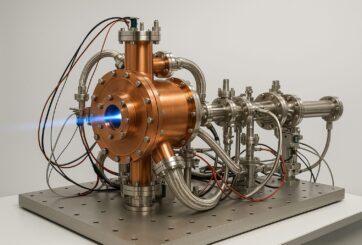
New add-on could enhance the research opportunities at X-ray lasers. The Photo Injector Test Facility at DESY in Zeuthen (PITZ) has reached a major milestone: a free-electron laser (FEL) driven by the photoinjector has generated its first laser light in the Terahertz (THz) wavelength regime. Pulses with a wavelength of about 0.1 millimetres were produced with a repetition rate of up to one Megahertz. The laser is the first high-power Terahertz FEL worldwide working according to the so-called SASE principle,…
During development, lack of sensory experience elicits powerful plasticity mechanisms that alter brain circuitry. Many inhibitory neuron subtypes are known to influence circuit dynamics, however, how they interact with plasticity is not yet fully understood. Scientists at the Max Planck Institute for Brain Research in Frankfurt have investigated how synaptic plasticity in rodents, who were deprived of vision in one eye, affects network activity in a circuit model of the sensory cortex. Their findings point to the role of different…
A team headed by Prof. Jörg Kudla at Münster University has discovered that salt stress triggers calcium signals in a special group of cells in plant roots, which form a “sodium-sensing niche”. Also, the researchers identified a calcium sensor switch mechanism as for tolerance to elevated salt stress in which a particular calcium-binding protein (CBL8) specifically conveys salt tolerance under severe salt stress conditions. The results of the study have now been published in the journal “Developmental Cell”. Unfavourable environmental…
New research shows greater separation of molecules in smaller-sized artificial cells. New research shows that cell size and membranes may play a key role in regulating the distribution of molecules inside cells. This discovery offers a new unconventional method for manipulating artificial cells via their size and interfacial properties, or their boundaries, instead of through molecular modification of their chemical structure. This could aid multiple industries, from cosmetics to pharmaceuticals, which want to avoid unexpected changes to the properties of…
KIST develops membrane distillation methods using hydrothermal and solar energy. The goal is to maximize system efficiency through customized membrane distillation technologies for regional climate characteristics. Clean water is essential for human survival. However, less than 3% of fresh water can be used as drinking water. According to a report published by the World Meteorological Organization, there is scarcity of drinking water for approximately 1 billion people worldwide, which is expected to rise to 1.4 billion by 2050. Seawater desalination…
AI-based federated diagnostic algorithm efficiently learns across hospitals with data protection compliance. An algorithm developed by researchers from Helmholtz Munich, the Technical University of Munich (TUM) and its University Hospital rechts der Isar, the University Hospital Bonn (UKB) and the University of Bonn is able to learn independently across different medical institutions. The key feature is that it is “self-learning”, i.e. it does not require extensive, time-consuming findings or markings by radiologists in the MRI images. This federated algorithm was…
Researchers identify a new class of drugs that offer a safer, more targeted treatment for leukemia patients. Chemotherapy sucks. The treatments generally have awful side effects, and it’s no secret that the drugs involved are often toxic to the patient as well as their cancer. The idea is that, since cancers grow so quickly, chemotherapy will kill off the disease before its side effects kill the patient. That’s why scientists and doctors are constantly searching for more effective therapies. A…
Lessons learned from the public health responses to the HIV and COVID-19 pandemics should help guide the response to the current outbreak of monkeypox, National Institutes of Health experts write in an editorial published today in the New England Journal of Medicine. Anthony S. Fauci, M.D., director of the National Institute of Allergy and Infectious Diseases (NIAID), and H. Clifford Lane, M.D., NIAID deputy director for clinical research and special projects, discuss a published case series (JP Thornhill et al.)…
New optics-on-a-chip device paves the way to helping characterize fast chemical, material, and biological processes. The Science Optical microelectromechanical systems (MEMS) are tiny microchip-size devices that control light and communications. Separately, time-resolved X-ray probes are devices that help scientists study highly transient phenomena. These phenomena are short-lived and involve fast structural and functional changes. Scientists have now developed X-ray optics based on specially designed and fabricated MEMS that can harness extremely short X-ray pulses. The new devices are much smaller…
 Feedback


