
Researchers at North Carolina State University have demonstrated a caterpillar-like soft robot that can move forward, backward and dip under narrow spaces. The caterpillar-bot’s movement is driven by a novel pattern of silver nanowires that use heat to control the way the robot bends, allowing users to steer the robot in either direction. “A caterpillar’s movement is controlled by local curvature of its body – its body curves differently when it pulls itself forward than it does when it pushes…
… going green in the field of soft robotics. Artificial muscles are a progressing technology that could one day enable robots to function like living organisms. Such muscles open up new possibilities for how robots can shape the world around us; from assistive wearable devices that can redefine our physical abilities at old age, to rescue robots that can navigate rubble in search of the missing. But just because artificial muscles can have a strong societal impact during use, doesn’t…
Fake seeds can cost farmers more than two-thirds of expected crop yields and threaten food security. Trackable silk labels could help. Average crop yields in Africa are consistently far below expected, and one significant reason is the prevalence of counterfeit seeds whose germination rates are far lower than those of the genuine ones. The World Bank estimates that as much as half of all seeds sold in some African countries are fake, which could help to account for crop production…
Human activities are accelerating biodiversity change and promoting a rapid turnover in species composition. A team of researchers has now shown that more widespread species tend to benefit from anthropogenic changes and increase the number of sites they occupy, whereas more narrowly distributed species decrease. Their results, which were published in Nature Communications, are based on an extensive dataset of over 200 studies and provide evidence that habitat protection can mitigate some effects of biodiversity change and reduce the systematic…
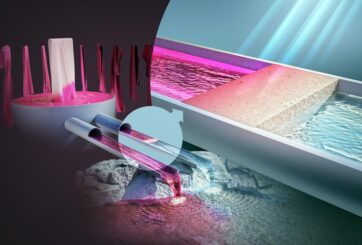
Researchers at Chalmers University of Technology, Sweden, have developed a new method that can easily purify contaminated water using a cellulose-based material. This discovery could have implications for countries with poor water treatment technologies and combat the widespread problem of toxic dye discharge from the textile industry. Clean water is a prerequisite for our health and living environment, but far from a given for everyone. According to the World Health Organization, WHO, there are currently over two billion people living…
KIT researchers characterized chemical processes at the electrodes of lithium-ion batteries. In our daily lives, lithium-ion batteries have become indispensable. They function only because of a passivation layer that forms during their initial cycle. As researchers at Karlsruhe Institute of Technology (KIT) found out via simulations, this solid electrolyte interphase develops not directly at the electrode but aggregates in the solution. The scientists report on their study in the Advanced Energy Materials journal (DOI: 10.1002/aenm.202203966). Their findings allow the optimization of the performance…
Synthesis gas and battery power from sunlight energy. Plants use photosynthesis to harvest energy from sunlight. Now researchers at the Technical University of Munich (TUM) have applied this principle as the basis for developing new sustainable processes which in the future may produce syngas (synthetic gas) for the large-scale chemical industry and be able to charge batteries. Syngas, a mixture of carbon monoxide and hydrogen, is an important intermediate product in the manufacture of many chemical starter materials such as…
The MINERvA experiment in the NuMI beam at Fermilab has made the first accurate image of the proton using neutrinos instead of light as the probe. The Science Protons and neutrons, the building blocks of atomic nuclei, are themselves made up of strongly interacting quarks and gluons“>quarks and gluons. Because the interactions are so strong, the structure of protons and neutrons is difficult to calculate from theory. Instead, scientists must measure it experimentally. Neutrino experiments use targets that are nuclei made of many protons and neutrons…
Samples from the asteroid Ryugu collected by the Hayabusa2 mission contain nitrogenous organic compounds, including the nucleobase uracil, which is a part of RNA. Researchers have analyzed samples of asteroid Ryugu collected by the Japanese Space Agency’s Hayabusa2 spacecraft and found uracil—one of the informational units that make up RNA, the molecules that contain the instructions for how to build and operate living organisms. Nicotinic acid, also known as Vitamin B3 or niacin, which is an important cofactor for metabolism…
Disorder leads to ferromagnetic topological insulator. Magnetic topological insulators are an exotic class of materials that conduct electrons without any resistance at all and so are regarded as a promising breakthrough in materials science. Researchers from the Cluster of Excellence ct.qmat in Würzburg and Dresden have achieved a significant milestone in the pursuit of energy-efficient quantum technologies by designing the ferromagnetic topological insulator MnBi6Te10 from the manganese bismuth telluride family. The amazing thing about this quantum material is that its…
New Findings on the Prevention of Retrovirus Infections. Intensive research is being carried out to enable the transplantation of organs from specially bred pigs to humans. However, the pig genome contains the genomes of various endogenous retroviruses (PERV-A, B and C) that could potentially cause infectious diseases. A research team at the Paul-Ehrlich-Institut has demonstrated in the Yucatan miniature pig breed (haplotype SLA D/D) that the retrovirus PERV-C could be reproductive and therefore infectious. The identification of the PERV-C genome…
Muscle degeneration, the most prevalent cause of frailty in hereditary diseases and aging, could be caused by a deficiency in one key enzyme in a lipid biosynthesis pathway. Researchers at the Institute of Molecular Biotechnology (IMBA) of the Austrian Academy of Sciences characterize how the enzyme PCYT2 affects muscle health in disease and aging in laboratory mouse models. The findings are published on March 20 in Nature Metabolism. Muscle degeneration in inherited diseases and aging affects hundreds of millions of…
Discovery of two novel classes of natural products with activity against RNA viruses. The COVID-19 pandemic has dramatically demonstrated that the development of effective agents against viral pathogens is of great importance for global health. Although effective vaccines are available for many viral diseases, there is an urgent need for new and effective therapeutic treatments. At the Helmholtz Institute for Pharmaceutical Research Saarland (HIPS), the team led by Prof Rolf Müller is researching novel active substances for the treatment of…
… compatible with semiconductor manufacturing. Could enable more efficient fiber-optical telecommunications, datacentres and future quantum computers. A team of researchers led by the University of Sydney’s Associate Professor Niels Quack has developed a new technology to combine optics and micro-electro mechanical systems (MEMS) in a microchip, paving the way for the creation of devices like micro-3D cameras and gas sensors for precision air quality measurement, including their use in mobile phones. Published today in Nature: Microsystems and NanoEngineering, the new microfabrication process…
An international team led by the UNIGE has developed a quantum material in which the fabric of space inhabited by electrons can be curved on-demand. The development of new information and communication technologies poses new challenges to scientists and industry. Designing new quantum materials – whose exceptional properties stem from quantum physics – is the most promising way to meet these challenges. An international team led by the University of Geneva (UNIGE) and including researchers from the universities of Salerno,…
Security gaps exist not only in software, but also directly in hardware. Attackers might deliberately have them built in in order to attack technical applications on a large scale. Researchers at Ruhr University Bochum, Germany, and the Max Planck Institute for Security and Privacy (MPI-SP) in Bochum are exploring methods of detecting such so-called hardware Trojans. They compared construction plans for chips with electron microscope images of real chips and had an algorithm search for differences. This is how they…
 Feedback


