
Small, clean, efficient and affordable: Deforestation in African regions and many other parts of the world is increasing rapidly. The reasons for this are growing population and the increased use of wood/charcoal as cooking fuel. Against this background, a cookstove was developed for special requirements in Togo as part of the “LabTogo” project funded by the Federal Ministry of Education and Research (BMBF). The DBFZ’s new development not only requires significantly less fuel than traditional stoves, but also has lower…
First long-distance quantum repeater node for telecommunication networks. A quarter of a century ago, theoretical physicists at the University of Innsbruck, Austria, made the first proposal on how to transmit quantum information via quantum repeaters over long distances which would open the door to the construction of a worldwide quantum information network. Now, a new generation of researchers at the University of Innsbruck has built a quantum repeater node for the standard wavelength of telecommunication networks and transmitted quantum information…
DTU spin-out company develops quantum mechanical random number generator that must be reduced to chip size to be included in the electronics in mobile phones. In a few years, protection of communication with quantum encryption may become a permanent fixture in mobile phones and thus protect communication from hacking. The technology has already been demonstrated in large data transfers in the financial sector in Denmark, and now DTU spin-out company Alea Quantum Technologies has developed a quantum mechanical random number…
Topological materials are intensively investigated in the world. This boom started at Julius-Maximilians-Universität (JMU) Würzburg, where the physics professor Laurens Molenkamp realized the first topological insulator in 2007. These novel materials have unusual properties and promise innovative applications in information technology and quantum computing. In order to conduct fundamental research in these materials, physicists from Würzburg successfully applied to the German Research Foundation (DFG) in 2015 for the Collaborative Research Centre (CRC) “Topological and Correlated Electronics at Surfaces and Interfaces…
… allows researchers to create important materials for quantum, electronic, and spintronic applications. New technique paves the way for easy oxidation of historically “stubborn” metals. A University of Minnesota Twin Cities-led team has developed a first-of-its-kind, breakthrough method that makes it easier to create high-quality metal oxide thin films out of “stubborn” metals that have historically been difficult to synthesize in an atomically precise manner. This research paves the way for scientists to develop better materials for various next-generation applications…
Project aims to understand — and use — this quasiparticle’s role in next-gen optoelectronics. In the U.S. military, the use of sensors can make the difference between life or death and success or failure on the battlefield. In everyday life, sensors perform indispensable roles in our health, safety and security. Optoelectronic sensors — those that use the physics of light particles to interact with electrons to produce a beautiful TV picture, allow a soldier to see at night or detect…
Researchers at the University of Basel have developed a new approach for a vaccine against COVID-19. This vaccine is based on a modified coronavirus that can enter body cells and trigger an effective immune response but cannot multiply in the body. In animal studies, the vaccine effectively protected against the disease and even prevented virus transmission. Clinical trials in humans are to follow. Although safe and effective COVID-19 vaccines have been available since early 2021, SARS-CoV-2 continues to spread, with…
The “DeMoBat” research project came to an end in April. For this, twelve project partners developed concepts and applications for handling and reprocessing electric car components in a sustainable and economical manner. The aim here was to avoid valuable raw materials going to waste. The project was coordinated by Fraunhofer IPA, with funding provided by the Ministry of the Environment, Climate Protection and the Energy Sector Baden-Württemberg. The European Parliament’s decision to ban combustion engines from 2035 has ensured that…
This year’s Venice Architecture Biennale sees itself as a “Laboratory of the Future”. Bio-composites are not just dreams of the future in architecture. The German Institutes of Textile and Fiber Research (DITF) have developed a sustainable material for support profiles and connecting nodes, which will be on display at Palazzo Mora during the Biennale from May 20 to November 26. The ultralight components are the result of a joint project between partners from research and industry, funded by the German…
A new study focusing on the number of dividing bacterial cells in the North Sea challenges some dogmas about marine microbial life. Seawater is full of bacteria, hundreds of thousands live in every litre. But the sheer number of bacteria living in the water does not necessarily mean a lot. More important is how active they are and how quickly they duplicate, as demonstrated in a study by researchers from the Max Planck Institute for Marine Microbiology in Bremen, now…
From mangroves to fjords, coastal ecosystems can take up or emit greenhouse gases. But globally, they’re a vital sink. A new greenhouse gas budget shows coastal ecosystems globally are a net greenhouse gas sink for carbon dioxide (CO2) but emissions of methane (CH4) and nitrous oxide (N2O) counteract some of the CO2 uptake, according to international researchers led by Australia’s Southern Cross University. The new findings of the coastal greenhouse gas balance (CO2 + CH4 + N2O) in ten world…
Engineers at UC San Diego develop a fully integrated system for deep-tissue monitoring. A team of engineers at the University of California San Diego has developed the first fully integrated wearable ultrasound system for deep-tissue monitoring, including for subjects on the go. It facilitates potentially life-saving cardiovascular monitoring and marks a major breakthrough for one of the world’s leading wearable ultrasound labs. The paper, “A fully integrated wearable ultrasound system to monitor deep tissues in moving subjects,” is published in…
A research group led by Professor Minoru Osada (he, him) and postdoctoral researcher Yue Shi (she, her) at the Institute for Future Materials and Systems (IMaSS), Nagoya University in Japan, has developed a new technology to fabricate nanosheets, thin films of two-dimensional materials a couple of nanometers thick, in about one minute. This technology enables the formation of high-quality, large nanosheet films with a single click without the need for specialized knowledge or technology. Their findings are expected to contribute…
… shedding light on the development of new smart active materials. In nature, the skin of cephalopods (animals with tentacles attached to the head) exhibits unparalleled camouflage ability. Their skin contains pigment groups that can sense changes in environmental light conditions and adjust their appearance through the action of pigment cells. Although intricate in nature, this colour-changing ability is fundamentally based on a mechanical mechanism in which pigment particles are folded or unfolded under the control of radial muscles. Inspired…
“For it to be doing this function in the context of PTSD in females is very surprising” said Tim Jarome, an associate professor in the College of Agriculture and Life Sciences’ School of Animal Sciences. From humans to plants to single-cell organisms, there’s a protein that rules them all. This protein does general housekeeping of the cells, regulating them through normal daily functions. Virginia Tech researchers found that one specific form of this ubiquitous protein has a different function in…
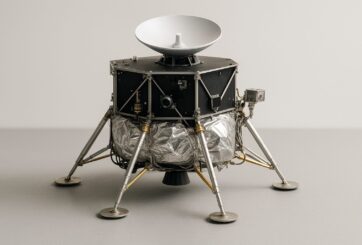
Georgia Tech researchers have been selected by NASA to lead a $7.5 million center that will study the lunar environment and the generation and properties of volatiles and dust. The Center for Lunar Environment and Volatile Exploration Research (CLEVER) will be led by Thomas Orlando, professor in the School of Chemistry and Biochemistry. CLEVER is the successor to Orlando’s pioneering REVEALS (Radiation Effects on Volatiles and Exploration of Asteroids and Lunar Surfaces) center, and both are part of NASA’s Solar System Exploration Research Virtual Institute (SSERVI)…
 Feedback


