
Scientists from the Berlin Institute of Health at Charité (BIH), along with colleagues from the United Kingdom, have found clues as to how we maintain constant blood sugar levels after we have eaten. Analyzing the DNA of nearly 55,000 participants from different studies, they identified ten genomic regions containing genetic variants responsible for regulating blood sugar levels after a meal. In further experiments, they were able to show how these genetic variants influence insulin resistance in cells. Their findings, which…
How do our genes determine the immune response to pathogens? This depends on small differences in the genome. The situation is complex, as a new study shows. Not everyone reacts to infectious agents in the same way: some fall ill very severely, others only slightly, and still others possibly not at all. There are many different reasons for this variability. One important reason is that the genome of different people differs from one another. For example, single molecules can be…
A group of scientists and engineers that includes researchers from The University of Texas at Austin have created a new class of materials that can absorb low energy light and transform it into higher energy light. The new material is composed of ultra-small silicon nanoparticles and organic molecules closely related to ones utilized in OLED TVs. This new composite efficiently moves electrons between its organic and inorganic components, with applications for more efficient solar panels, more accurate medical imaging and…
Research led by Chemnitz University of Technology reveals electronic defect landscape in organic solar cells and describes the density of states of these cells for the first time using a power law – publication in the prestigious journal Physical Review Letters. Researchers from the Professorship of Optics and Photonics of Condensed Matter (headed by Prof. Dr. Carsten Deibel) of Chemnitz University of Technology and other partner institutions are currently intensively working together on solar cells made of novel organic semiconductors,…
Reactivating Damaged Motor Neurons Using Magnetic Fields. Motor neurons in healthy individuals send signals to the skeletal muscles. ALS, however, is currently an incurable, neurodegenerative disease in which motor neurons are severely damaged and can therefore no longer transmit these signals. An interdisciplinary team at HZDR has proven in cell experiments that magnetic fields can restore impaired motor neurons. This could serve as the groundwork for an entirely new therapeutic approach in curing neurodegenerative diseases, as currently reported in Cells,…
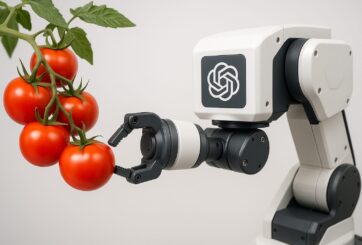
EPFL researchers have used the popular large language model Chat-GPT-3 to develop a robotic gripper for harvesting tomatoes, in a first demonstration of the artificial intelligence tool’s potential for collaborating with humans. With their ability to process vast amounts of text data, and to use this information to answer prompts, neural networks known as large language models (LLMs) like Chat-GPT have been making headlines for their potential to change the way we write, learn, and even make art. Now, EPFL researchers…
A team of researchers from IRB Barcelona and CNAG identifies the IL-17 protein as a determining factor in skin ageing. Blocking the function of IL-17 reduces the pro-inflammatory state and delays the appearance of age-related features in the skin. Published in the journal Nature Aging, the work opens up new perspectives in the development of therapies to improve skin ageing health. A team of scientists from the Institute for Research in Biomedicine (IRB Barcelona) in collaboration with the National Center…
Quantum information (QI) processing may be the next game changer in the evolution of technology, by providing unprecedented computational capabilities, security and detection sensitivities. Qubits, the basic hardware element for quantum information, are the building block for quantum computers and quantum information processing, but there is still much debate on which types of qubits are actually the best. Research and development in this field is growing at astonishing paces to see which system or platform outruns the other. To mention…
… with molecular brakes that harness light. Like the brakes that stop cars, a molecular brake exists that can prevent semiconductor chains from slipping, enabling the creation of more groundbreaking devices. Recently, a joint research team led by Professor Kilwon Cho and PhD candidates Seung Hyun Kim and Sein Chung from the Department of Chemical Engineering at POSTECH, and Professor Boseok Kang from the Department of Nano Engineering at Sungkyunkwan University (SKKU) has developed a technology for high-performance organic polymer…
Discovering ‘axions’ could help answer one of the most puzzling questions in physics. One of the most high-profile mysteries in physics today is what scientists refer to as the “Strong CP Problem.” Stemming from the puzzling phenomenon that neutrons do not interact with electric fields despite being made up of quarks—smaller, fundamental particles that carry electric charges—the Strong CP Problem puts into question the Standard Model of physics, or the set of theories scientists have been using to explain the…
DFKI develops innovative AI technologies for autonomous robots to recover munitions. More than one million tons of munitions dumped in the North and Baltic Seas during and after the two world wars posing a threat to both humans and the environment. So far, trained divers had to recover the ammunition. In the future, however, robots will take on this challenging and potentially dangerous task. The technologies required for this are being developed by the Robotics Innovation Center of the German…
New cryo-EM structure of a zinc-transporter protein reveals how this molecular machine functions to regulate cellular levels of zinc, an essential micronutrient. Scientists at the U.S. Department of Energy’s (DOE) Brookhaven National Laboratory have determined the atomic-level structure of a zinc-transporter protein, a molecular machine that regulates levels of this crucial trace metal micronutrient inside cells. As described in a paper just published in Nature Communications, the structure reveals how the cellular membrane protein shifts its shape to move zinc…
An international research team has succeeded for the first time in measuring the electron spin in matter – i.e., the curvature of space in which electrons live and move – within “kagome materials“, a new class of quantum materials. The results obtained – published in Nature Physics – could revolutionise the way quantum materials are studied in the future, opening the door to new developments in quantum technologies, with possible applications in a variety of technological fields, from renewable energy to biomedicine, from electronics to quantum computers. Success was achieved by an international…
Pathways in the brain The different areas in the brain are connected to each other via billions of nerve fibres. These connections are vital for proper brain function. The quest for a comprehensive map of all neural connections critically depends on imaging techniques that can disentangle these fibres, most of them only about a micrometre thin. Particularly challenging are regions with densely packed and highly interwoven nerve fibres. Miriam Menzel, Assistant Professor at the Department of Imaging Physics of TU…
A new approach to optical communication that can be deployed with conventional technology. The patterns of light hold tremendous promise for a large encoding alphabet in optical communications, but progress is hindered by their susceptibility to distortion, such as in atmospheric turbulence or in bent optical fibre. Now researchers at the University of the Witwatersrand (Wits) have outlined a new optical communication protocol that exploits spatial patterns of light for multi-dimensional encoding in a manner that does not require the patterns…
An international research team makes a breakthrough in physics. An international team led by researchers at Nankai University in China and at University of Zagreb in Croatia, along with team at the Institut national de la recherche scientifique (INRS) in Canada, led by Roberto Morandotti has made an important breakthrough in the study of topological phases. Their findings were recently published in Nature Physics – a journal published by Nature Publishing Group. In the last decade, topological photonics has attracted increasing…
 Feedback


