
The batteries of the future must be both powerful and sustainable. A new joint project, coordinated by the University of Würzburg, aims to make sodium-ion batteries ready to fulfill for these requirements. The Federal Ministry of Education and Research (BMBF) is funding the project with more than two million euros. The Karlsruhe Institute of Technology / Helmholtz Institute Ulm and the Fraunhofer Institute for Silicate Research ISC, Würzburg / Fraunhofer R&D Center for Electromobility FZEB are also involved. There is…
More extreme rainfall in tropics with increased temperatures. Understanding cloud patterns in our changing climate is essential to making accurate predictions about their impact on society and nature. Scientists at the Institute of Science and Technology Austria (ISTA) and the Max Planck Institute for Meteorology published a new study in the journal Science Advances that uses a high-resolution global climate model to understand how the clustering of clouds and storms impacts rainfall extremes in the tropics. They show that with…
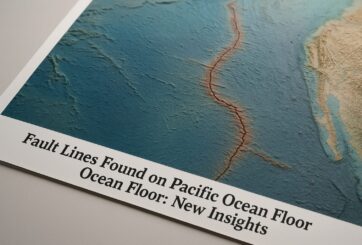
Findings show Pacific Plate is being torn apart at undersea plateaus spanning the ocean by the weight of the oceanic plate subducting at the Western Pacific Ring of Fire. New research led by a team of University of Toronto (U of T) geoscientists is refining the century-old model of plate tectonics that holds the plates covering the ocean floors are rigid as they move across Earth’s mantle. Instead, the researchers found the Pacific Plate is scored by large undersea faults…
Interdisciplinary Research Team from the University of Jena Develops Meta-Surface that Can Be Switched with Light. A material coating, whose light refraction properties can be precisely switched between different states, has been developed by an interdisciplinary research team from the Chemistry and Physics departments at the University of Jena. The team, led by Felix Schacher, Sarah Walden, Purushottam Poudel, and Isabelle Staude, combined polymers that react to light with so-called meta-surfaces. This innovation has led to the creation of new…
Astronomers identify record-breaking quasar. Using the European Southern Observatory’s (ESO) Very Large Telescope (VLT), astronomers have characterised a bright quasar, finding it to be not only the brightest of its kind, but also the most luminous object ever observed. Quasars are the bright cores of distant galaxies and they are powered by supermassive black holes. The black hole in this record-breaking quasar is growing in mass by the equivalent of one Sun per day, making it the fastest-growing black hole…
Researchers use deep brain stimulation to localize disrupted neural pathways. When certain connections in the brain do not function correctly, disorders such as Parkinson’s disease, dystonia, obsessive-compulsive disorder (OCD), and Tourette’s syndrome may result. Targeted stimulation of specific areas in the brain can help alleviate symptoms. To pinpoint the exact therapeutic target areas of the brain, a team led by researchers from Charité – Universitätsmedizin and Brigham and Women’s Hospital analyzed data from patients across the globe who had undergone…
… enable high-performance multifunctional electronic devices. Downscaling of electronic devices, such as transistors, has reached a plateau, posing challenges for semiconductor fabrication. However, a research team led by materials scientists from City University of Hong Kong (CityUHK) recently discovered a new strategy for developing highly versatile electronics with outstanding performance, using transistors made of mixed-dimensional nanowires and nanoflakes. This innovation paves the way for simplified chip circuit design, offering versatility and low power dissipation in future electronics. In recent decades,…
Data from heavy ion collisions give new insight into electromagnetic properties of quark-gluon plasma. A new analysis by the STAR collaboration at the Relativistic Heavy Ion Collider (RHIC), a particle collider at the U.S. Department of Energy’s (DOE) Brookhaven National Laboratory, provides the first direct evidence of the imprint left by what may be the universe’s most powerful magnetic fields on “deconfined” nuclear matter. The evidence comes from measuring the way differently charged particles separate when emerging from collisions of atomic nuclei…
To ensure that plants flower at the right time of year, they possess an internal clock, which enables them to measure the amount of daylight during a day. In a study published in the scientific journal Plant Physiology, biologists from Heinrich Heine University Düsseldorf (HHU) describe that the mutation of a specific gene makes the flowering time of barley almost entirely independent of day length. This mutation can be useful for breeding varieties adapted to altered climatic conditions with relatively…
In living cells, a vast number of transient events occur simultaneously, each of them important for a given cell in carrying out its function. The faithful recording of these transient activities is a prerequisite for a molecular understanding of life, yet obtaining such recordings is extremely challenging. Scientists at the Max Planck Institute for Medical Research in Heidelberg and their collaboration partners have created a novel technology that allows cellular events to be recorded through chemical labeling with fluorescent dyes…
Bats live in a world of sounds. They use vocalizations both to communicate with their conspecifics and for navigation. For the latter, they emit sounds in the ultrasonic range, which echo and enable them to create an “image” of their surroundings. Neuroscientists at Goethe University Frankfurt have now discovered how Seba’s short-tailed bat, a species native to South America, manages to filter out important signals from ambient sound and especially to distinguish between echolocation and communication calls. Seba’s short-tailed bat…
Immune system: B cells teach T cells which targets must not be attacked. Immune cells must learn not to attack the body itself. A team of researchers from the Technical University of Munich (TUM) and the Ludwig Maximilian University of Munich (LMU) has discovered a previously unknown mechanism behind this: other immune cells, the B cells, contribute to the “training” of the T cells in the thymus gland. If this process fails, autoimmune diseases can develop. In children and adolescents,…
New Model Identifies Potential Therapeutic Target. Scientists at the University of Zurich have developed an innovative neural cell culture model, shedding light on the intricate mechanisms underlying neurodegeneration. Their research pinpointed a misbehaving protein as a promising therapeutic target in the treatment of amyotrophic lateral sclerosis (ALS) and frontotemporal dementia (FTD). Neurodegenerative diseases cause some of the neurons in our brains to die, resulting in different symptoms depending on the brain region affected. In amyotrophic lateral sclerosis (ALS), neurons in…
Successful completion of the EU Graphene Flagship. Think big. Despite its research topic, this could well be the motto of the Graphene Flagship, which was launched in 2013: With an overall budget of one billion Euros, it was Europe’s largest research initiative to date, alongside the Human Brain Flagship, which was launched at the same time. The same applies to the review article on the effects of graphene and related materials on health and the environment, which Empa researchers Peter…
Max Planck Researchers find new targets for improving biocatalysts. Nitrogenases are considered promising candidates for the sustainable enzymatic production of ammonia and carbon compounds. Unfortunately, one bottleneck in this complex process, the supply of electrons to the enzymes, has remained a mystery until now. Now a team at the Max Planck Institute for Terrestrial Microbiology in Marburg has discovered two essential electron carriers which play a key role in determining the performance of iron (Fe) nitrogenase, thus opening up new…
Testing method can analyze blood samples twice as quickly as other techniques. University of Waterloo researchers have developed a new blood testing method that can detect potent opioids much faster than traditional approaches and potentially save lives. The method, the latest effort by Waterloo researchers and entrepreneurs to lead health innovation in Canada, can simultaneously analyze 96 blood samples that could contain opioids such as fentanyl in under three minutes – twice as quickly as other techniques. “The difference between…
 Feedback


