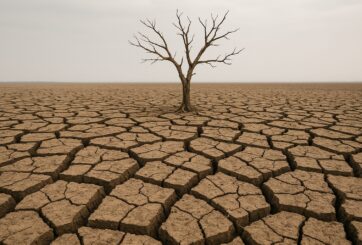
The Amazon rainforest may be able to survive long-term drought caused by climate change, but adjusting to a drier, warmer world would exact a heavy toll, a study suggests. The findings show that adjusting to cope with the effects of climate change could see some parts of the Amazon rainforest lose many of its largest trees. This would release the large amount of carbon stored in these trees to the air, and reduce the rainforest’s immediate capacity to act as…
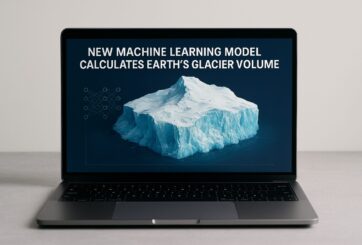
VENICE – A team of researchers led by Niccolò Maffezzoli, “Marie Curie” fellow at Ca’ Foscari University of Venice and the University of California, Irvine, and an associate member of the Institute of Polar Sciences of the National Research Council of Italy, has developed the first global model based on artificial intelligence to calculate the ice thickness distribution of all the glaciers on Earth. The model has been published in the journal Geoscientific Model Development and is expected to become…
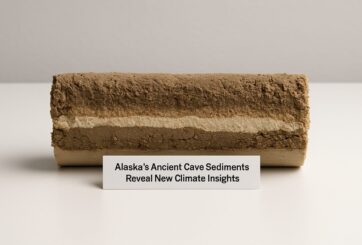
Discovery of 20,000-year-old cave sediments on Prince of Wales Island offers rare land-based evidence of ancient meltwater events Paul Wilcox, a geologist at the University of Innsbruck, has discovered the first land-based evidence of meltwater pulses from the Cordilleran Ice Sheet during the last ice age about 20,000 years ago. The age of the cave sediments was constrained via optical dating techniques, which is crucial to help piece together the sequence of climate events leading to a warming planet. The…

Updated estimates point to need for more treatment A large percentage of American children are growing up in households with at least one parent who uses alcohol or other drugs in problematic ways—raising the risk that those children will go on to do the same, a new study suggests. Using data from 2023 to give as current a view as possible, the researchers estimate that 19 million children—1 in 4 of Americans under age 18—live with a parent or other…
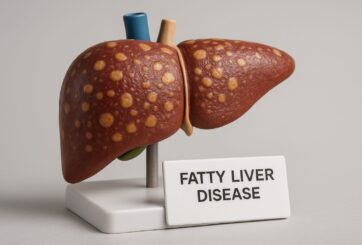
Like GLP-1, hormone works by signaling the brain OKLAHOMA CITY – A pioneering research study published today in Cell Metabolism details how the hormone FGF21 (fibroblast growth factor 21) can reverse the effects of fatty liver disease in mice. The hormone works primarily by signaling the brain to improve liver function. University of Oklahoma researcher Matthew Potthoff, Ph.D., is the lead author of the study, which provides valuable insight about the mechanism of action of the hormone, which is a…
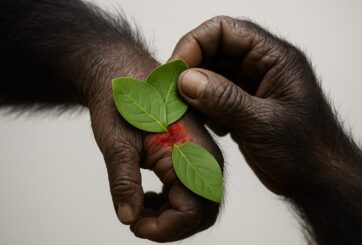
Scientists observed chimpanzees in Uganda apparently cleaning and treating their own and others’ wounds Scientists studying chimpanzees in Budongo Forest, Uganda, have observed that these primates don’t just treat their own injuries, but care for others, too — information which could shed light on how our ancestors first began treating wounds and using medicines. Although chimpanzees elsewhere have been observed helping other community members with medical problems, the persistent presence of this behavior in Budongo could suggest that medical care…

Palaeontologists at the Manitoba Museum and Royal Ontario Museum (ROM) have discovered a remarkable new 506-million-year-old predator from the Burgess Shale of Canada. The results are announced in a paper in the journal Royal Society Open Science. Mosura fentoni was about the size of your index finger and had three eyes, spiny jointed claws, a circular mouth lined with teeth and a body with swimming flaps along its sides. These traits show it to be part of an extinct group…

Research from the University of Adelaide shows microbial communities in echidna pseudo-pouches undergo dramatic changes while the animal is lactating, which could help in creating an environment for their young, known as puggles, to thrive. Echidnas are monotremes, which are the only mammals that lay eggs. The early developmental stage at which they hatch from their egg means that the puggles lack a functioning immune system. “We know the reproductive microbiome is important to infant health, including for humans, but…
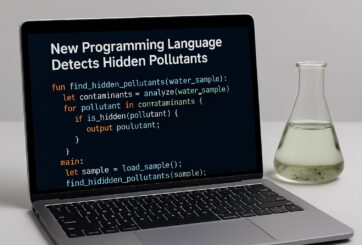
UC Riverside tool empowers scientists, accelerates discovery Biologists and chemists have a new programming language to uncover previously unknown environmental pollutants at breakneck speed – without requiring them to code. By making it easier to search massive chemical datasets, the tool has already identified toxic compounds hidden in plain sight. Mass spectrometry data is like a chemical fingerprint, showing scientists what molecules are in a sample such as air, water, or blood, and in what amounts. It helps identify everything…
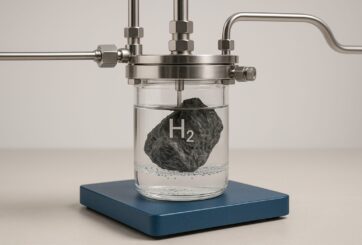
In the modern world, a reliable supply of hydrogen gas is vital for the function of society. Fertiliser produced from hydrogen contributes to the food supply of half the global population, and hydrogen is also a key energy component in many roadmaps to a carbon neutral future, essential if we are to prevent the worst predictions of climate change. Today, hydrogen is produced from hydrocarbons, with waste gases contributing to 2.4% of global CO2 emissions. Demand for hydrogen is set…

Turbulence on the Galactic Scales From the ocean’s rolling swells to the bumpy ride of a jetliner, turbulence is everywhere. It breaks large waves into smaller ones, cascading energy across scales. It is ubitquitous throughout our Galaxy and the broader Universe, shaping the behavior of plasma, stars, and magnetic fields. Yet despite its ubiquity, turbulence remains one of the greatest unsolved problems in physics. Now, by developing the world’s largest-ever simulations of magnetized turbulence, an international team of scientists has measured —…

Stomp dancing, head jerking, chattering and skimming generate whorls and eddies that funnel brine shrimp and small animals into the birds’ mouths Flamingos standing serenely in a shallow alkaline lake with heads submerged may seem to be placidly feeding, but there’s a lot going on under the surface. Through studies of Chilean flamingos in the Nashville Zoo and analysis of 3D printed models of their feet and L-shaped bills, researchers have documented how the birds use their feet, heads and…

Fishing pots fitted with LED lights catch significantly more shrimp and fish, new research shows. In the new study, by the University of Exeter and Fishtek Marine, pots fitted with LEDs caught up to 19 times more northern shrimp than unlit pots. Importantly, illuminated pots also attracted fish – raising hopes for new low-impact fishing. “We think that the light attracts zooplankton – like moths around a flame – which in turn attracts shrimp (which eat zooplankton), and that entices…

FIT would still be more cost-effective even if Cologuard and Cologuard Plus test costs were lowered to $100 Embargoed for release until 5:00 p.m. ET on Monday 12 May 2025 Follow @Annalsofim on X, Facebook, Instagram, threads, and Linkedin Below please find summaries of new articles that will be published in the next issue of Annals of Internal Medicine. The summaries are not intended to substitute for the full articles as a source of information. This information is under strict…

Researchers at Amsterdam UMC followed 1955 young transmasculine and gender-diverse individuals, who used testosterone for an average of five years, finding no increased risk Transmasculine and gender-diverse individuals who use testosterone are not at increased risk of gynecological cancer in the first years of hormone therapy. This is evident from large-scale research by Amsterdam UMC, which was published today in eClinicalMedicine. The results provide important insights for healthcare providers and transmasculine and gender-diverse individuals who are considering starting hormone therapy….

The Met Office and the University of Exeter will host scientists, policy makers and business leaders for vital talks assessing growing risks from climate change – and action to address it. Even as scientific evidence demonstrates increasing threats to lives and livelihoods across the world, the global impetus for action is becoming more fragile. In the run up to COP30 in Brazil, the Exeter Climate Forum will give a strong voice to the scientists whose work drives our understanding of…
 Feedback


