
The linguistic abilities of contemporary artificial intelligence systems are remarkable. We can now participate in genuine dialogues with systems such as ChatGPT, Gemini, and others, exhibiting a fluency nearly akin to that of a human. Nevertheless, our understanding of the fundamental mechanisms within these networks that yield such extraordinary outcomes remains limited. A recent study published in the Journal of Statistical Mechanics: Theory and Experiment (JSTAT) elucidates a component of this enigma. It indicates that when less data is utilised…
Quantum computers encounter a significant obstacle in their pursuit of practical applications: their constrained capacity to rectify emerging computational mistakes. To create genuinely dependable quantum computers, researchers must replicate quantum calculations on classical computers to validate their accuracy – an essential yet exceptionally challenging endeavour. Researchers from Chalmers University of Technology in Sweden, the University of Milan, the University of Granada, and the University of Tokyo have introduced a pioneering method for simulating particular forms of error-corrected quantum computations, marking…
In a collaborative effort between researchers at Karolinska Institutet and several Chinese hospitals and universities, gene therapy was administered to ten patients, leading to noticeable hearing improvement across all participants. The therapy was found to be safe and well-tolerated. “This is a huge step forward in the genetic treatment of deafness, one that can be life-changing for children and adults,” stated Maoli Duan, one of the study’s corresponding authors and a consultant and docent at the Karolinska Institutet’s Department of…
The majority of Earth’s water is unfit for human consumption since it is trapped in salty oceans. Although desalination plants are capable of turning saltwater into freshwater, they usually use a lot of energy. Scientists have now created a novel, sponge-like substance that effectively turns saltwater into drinkable water when combined with sunlight and a basic plastic cover. Their research, which was published in ACS Energy Letters, shows that an outdoor proof-of-concept that used just natural sunlight to successfully produce…
An artificial intelligence (AI) model has shown remarkable accuracy in predicting which patients are most at risk of sudden cardiac arrest. The results have outperformed current clinical methods used by doctors. It is developed by researchers at Johns Hopkins University with federal funding. This new system combines underutilized heart imaging with a wide array of medical data to focus on uncovering hidden indicators of heart disease. This innovation could lead to life-saving interventions for high-risk patients. It would also reduce…
Benzaldehyde is a compound best known for its almond-like aroma. It can halt the growth and spread of pancreatic cancer cells. It is possible for those who have become resistant to standard treatments. Scientists from Fujita Health University in Japan have identified a mechanism by which benzaldehyde interferes with complex protein signaling pathways, suppressing tumor progression and resistance. Benzaldehyde exerts its anticancer action by breaking the interaction between the signaling protein 14-3-3ζ and phosphorylated histone H3 at serine 28 (H3S28ph)….
The belief that owning a pet improves mental well-being has long been popular. Many assume that adopting a dog or cat leads to greater happiness and reduced loneliness. But new research challenges this assumption, especially in the context of the COVID-19 pandemic, when social isolation was widespread and pet adoption rates soared. Exploring the Emotional Role of Pets During Lockdown While it’s often believed that pets bring health and emotional benefits, scientific studies have struggled to consistently confirm this so-called…
The Researchers at ETH Zurich have used nuclear magnetic resonance (NMR) to investigate the atomic surroundings. They have also done it for the spatial orientation of individual platinum atoms embedded in solid supports. This technique is reliable for improving the design and production of single-atom catalysts in the future. Catalysis is the process of accelerating chemical reactions by introducing a specific substance called a catalyst. They are vital to both industry and everyday life. Approximately 80% of all chemical products…
The scientific team led by Dr. Miloslav Polášek at IOCB Prague has come up with a technique to separate and purify rare earth elements (lanthanides). These are critical to industries ranging from electronics and medicine to automotive and defense. This novel method enables the extraction of metals like neodymium and dysprosium from used neodymium magnets. It is an important component in electric vehicles and wind turbines. Eco-Friendly and Solvent-Free Process Unlike conventional methods that rely on harsh chemicals and generate…

A new study has reconstructed two 4000-year-old genomes from the rare pathogen Mycobacterium lepromatosis To the point Hansen’s Disease, more commonly known as leprosy, is a chronic disease that can lead to physical impairment. Today it exists in over 100 countries, and while the infection is treatable, access to treatment varies widely with socioeconomic conditions. Its mention in historical texts give us a glimpse into its past impact on population health in Europe and Asia. Prolonged untreated infection can result…
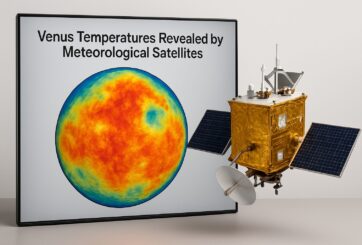
The forecast is bright for future, long-term multiband monitoring of planets Imaging data from Japan’s Himawari-8 and -9 meteorological satellites have been successfully used to monitor temporal changes in Venus’ cloud-top temperature, revealing unseen patterns in the temperature structure of various waves. A team led by the University of Tokyo collated infrared images from 2015–25 to estimate brightness temperatures on day to year scales. The results demonstrate that meteorological satellites can serve as additional eyes to access the Venusian atmosphere…
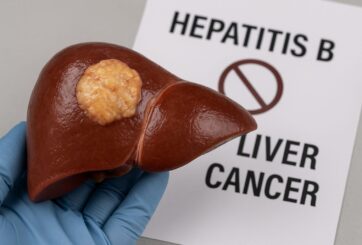
Hepatitis B virus (HBV) infection is known to be associated with the risk of hepatocellular carcinoma (HCC), but how and why they are connected remains unknown. Researchers from Mass General Brigham discovered that HBV does not cause liver inflammation or cancer on its own, but worsens liver inflammation and may make patients more susceptible to early cancer development caused by environmental carcinogens. Limiting carcinogen exposure or reducing inflammation could mitigate this risk. The results are published in Nature Communications. “Our…
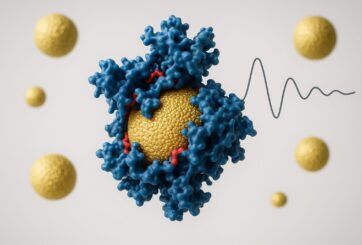
Researchers investigate the interaction dynamics of bovine serum albumin and silica nanoparticles using spectroscopy methods Nanoparticles (NPs) are materials whose dimensions range from 1 to 1,000 nanometers (nm). Due to their nano-scale dimensions and tunable material properties, NPs have gained interest in the global scientific community in recent years. Applications of NPs in the field of human health include NP-based drug delivery systems and radioactive probe-linked NPs for medical diagnosis. While significant advancements have been achieved in the design and…

Inserting a nanometer-thin spacer in ExUC-OLEDs improves energy transfer, enhances blue light emission 77-fold, paving way for lightweight, low-voltage, and more flexible OLEDs Organic light-emitting diodes (OLEDs) have transformed display and lighting technology with their vivid colors, deep contrast, and energy efficiency. As demand grows for lighter, thinner, and more energy-saving devices—especially in wearables, foldables, and portable electronics—there’s increasing interest in OLEDs that can operate at lower voltages without compromising performance. A new type of OLEDs, known as exciplex upconversion…

Engineers have harnessed quantum physics to detect the presence of biomolecules without the need for an external light source, overcoming a significant obstacle to the use of optical biosensors in healthcare and environmental monitoring settings Optical biosensors use light waves as a probe to detect molecules, and are essential for precise medical diagnostics, personalized medicine, and environmental monitoring. Their performance is dramatically enhanced if they can focus light waves down to the nanometer scale – small enough to detect proteins…

Chipmunk and vole skulls from over 125 years reflect changes in diet and noise exposure In general, evolution is a long, slow process of tiny changes passed down over generations, resulting in new adaptations and even new species over thousands or millions of years. But when living things are faced with dramatic shifts in the world around them, they sometimes rapidly adapt to better survive. Scientists recently found an example of evolution in real time, tucked away in the collection…
 Feedback


