
New study finds that the nutritional value of prey within a single species can widely vary, offering key insights for food web dynamics and ecosystem change The hunt is on and a predator finally zeroes in on its prey. The animal consumes the nutritious meal and moves on to forage for its next target. But how much prey does a predator need to consume? Following a period of massive starvation among animals living along the California coast, University of California…

Lost bird of paradise found in isolated Foja mountains of Papua, along with new honeyeater bird, new frogs and a rare tree kangaroo
An expedition to one of Asia’s most isolated jungles – in the mist-shrouded Foja Mountains of western New Guinea – discovered a virtual ’’Lost World” of new species, giant flowers, and rare wildlife that was unafraid of humans.
The December 2005 trip by a team of U.S., Indonesian, and Australian scientists led by Conservatio
Working in cooperation with Maine trawler captain Cameron McLellan and the Gulf of Maine Research Institute, UMaine graduate student Emily Knight and UMaine Marine Science professor Les Watling recently completed a long-term study that examines the effects of groundfish trawling on the complex ecology of the sea floor in the Gulf of Maine.
Based on the gradual increases in complexity and diversity of seafloor communities that have been protected from bottom trawling for two, four, and s
Introduced foxes throw a wrench in the food web
Indirect effects of predators
In an extensive study, researchers from the University of Montana, University of California – Santa Cruz, and the University of California – Davis have shown that a top predator strongly affected plants and animals at the bottom of an island food web by eating organisms that transport nutrients between ecosystems. “An introduced predator alters Aleutian island plant communities by thw
Scientists devise technique to detect squid egg clusters on the seafloor
California’s $30-million-a-year squid fishery has quadrupled in the past decade, but until now there has been no way to assess the continuing viability of squid stocks. A multi-institutional team of scientists this month reported a new sonar technique to locate squid egg clusters in the murky depths, offering a window onto next year’s potential squid population in its nursery.
The scientists demonstra
A prototype system designed to help consumers, farmers and other interested parties trace the geographic origin of food at all stages of production from ‘farm to fork’ – storage, processing and distribution – has been developed by researchers.
In the wake of successive outbreaks of food-borne disease in the past decade (think mad cow disease, E.coli, salmonella, etc) and the current fear over the possible spread of avian flu, public demand for tighter safeguards on the entire
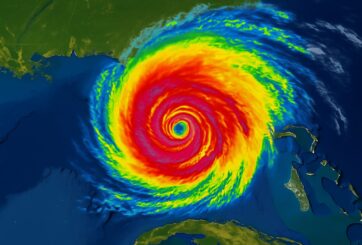
When Hurricane Katrina made landfall in August 2005, it changed the look of some of the coastlines of three U.S. states. Now, using Google Earth’s software on the Internet, people can see the before and after affects, thanks to detailed images from NASA and the U.S. Geological Survey (USGS).
The images on Google Earth show changes that Hurricane Katrina made to the Gulf coast from Panama City, Fla. to New Orleans, La.
Hurricane Katrina made landfall in south Plaquemines Par
New research on Antarctic krill (Euphausia superba), a shrimp-like animal at the heart of the Southern Ocean food chain, reveals behaviour that shows that they absorb and transfer more carbon from the Earth’s surface than was previously understood. The results are published this week in the journal Current Biology.
Scientists from British Antarctic Survey (BAS) and Scarborough Centre of Coastal Studies at the University of Hull discovered that rather than doing so once per 24 hours, Ant
El-Niño events are both worse and more frequent than before, perhaps due to global warming. The major event in 1997-1998 burned an area in Borneo larger than Switzerland.
Besides causing massive air pollution throughout Southeast Asia, more than a hundred butterfly species were locally exterminated from the affected area. Writing in Ecology Letters, Dr. Daniel Cleary and Dutch, French, British and Canadian colleagues now present evidence for a new pattern that further dims the future of th
Corporate Sustainable Development (CSD) – also referred to as Corporate Social Responsibility – is now at the heart of business practices. Earth Observation from space has the potential to provide a global and cost-effective way to objectively measure progress towards sustainability of business activities.
ESA has begun working with large multinational companies – including Alcan, AMEC, Aon, B&Q, Lafarge, Shell, SUEZ Energy, and UPM – to integrate satellite data into CSD reportin
Agri-environment schemes (AES) in Europe appear to be largely ineffective as policy instruments. Research in five European countries has shown that common species of birds, insects and plants do not benefit very much from this kind of nature management and rare species benefit much less. There are virtually no benefits for threatened species (listed in the Red Data Books). These conclusions were drawn by researchers from six European research institutions during a conference on 30 and 31 January at
A new report released today finds that the illegal trade in the Roti Island snake-necked turtle, found only on one island in Indonesia, has left it all but extinct in the wild. Exotic pet enthusiasts in Europe, North America and East Asia are fueling the illegal trade for the turtle, often without realizing that they are contributing to its demise. No legal trade of this species has been allowed since 2001.
The report by TRAFFIC, the wildlife trade monitoring network of WWF and IUCN, “T
Photographic images captured by radar satellites enable the superficial humidity of agricultural basins to be estimated with great precision, although it is important to have knowledge of the rugosity of the surface. This is the conclusion of Jesús Álvarez Mozos in his PhD thesis, Evaluation of the applicability of radar teledetection in estimating the superficial humidity of agricultural basins, defended recently at the Public University of Navarre.
Roughness of the terrain
Scientists at the University of Southampton have devised a new method of examining how much of the earth’s surface is covered by vegetation and assessing the state of health of the foliage. The European Space Agency (ESA) has recognised the value of this information which is likely to be a vital tool for researchers examining models of terrestrial productivity, gas exchange and climate change.
Dr Jadunandan Dash and Visiting Professor Paul Curran from the School of Geography use dat
Work could help definitively determine whether fish populations are shrinking
Researchers at MIT have found a new way of looking beneath the ocean surface that could help definitively determine whether fish populations are shrinking.
A remote sensor system developed by Associate Professor Nicholas Makris of mechanical engineering, along with others at MIT, Northeastern University and the Naval Research Laboratory, allows scientists to track enormous fish populatio
Robots can do in days what humans take years to accomplish at archaeological sites
After lying hidden for centuries off the coast of Greece, a sunken 4th century B.C. merchant ship and its cargo have been surveyed by an international team using a robotic underwater vehicle. The team accomplished in two days what it would take divers years to do. The project, the first in a new collaboration between U.S. and Greek researchers, demonstrates the potential of new technology and
The first scientific conference of the international iLEAPS-IGBP research programme (Integrated Land Ecosystem Atmosphere Processes Study) was recently held in Colorado, USA. At this multi- and cross-disciplinary conference, leading researchers in the field were discussing the interactivity between Earth and the atmosphere and climate change connected with it. The main aim was to clarify how vegetation, as well as aerosol particles and the composition of the atmosphere, relate to climate change.
 Feedback


