
New study finds that the nutritional value of prey within a single species can widely vary, offering key insights for food web dynamics and ecosystem change The hunt is on and a predator finally zeroes in on its prey. The animal consumes the nutritious meal and moves on to forage for its next target. But how much prey does a predator need to consume? Following a period of massive starvation among animals living along the California coast, University of California…

Measuring magnetic particles on needles reveals particulate air pollution. Every tree, even an evergreen, can be an air quality monitor. That’s the conclusion of researchers at the University of Utah who measured the magnetism of particulate matter on the needles of evergreen trees on the U campus. That measurement, they found, correlated to general air quality, suggesting that analysis of the needles–a relatively simple and low-cost process–could provide a high-resolution, year-round picture of air quality. “Wherever you have a tree…
The forest canopy, the closed vegetation cover consisting of treetops, is rapidly declining according to a research team from the Technical University of Munich (TUM) and the University of Natural Resources and Applied Life Sciences, Vienna. The team used satellite images, to create the first high-resolution map of canopy openings in Europes forests and reached the conclusion that the canopy of more than 36 million forest areas has been lost over the past 30 years. Rupert Seidl (Professor of Ecosystem…
A soil scientist from RUDN University found out that the resources of organic phosphorus in the soils of the Tibetan Plateau could be depleted because of global warming. To do so, he compared phosphorus content in the soils from the Tibetan Plateau that has a cold climate and from the warmer Loess Plateau. The results of the study were published in the Agriculture, Ecosystems and Environment journal. Phosphorus is the second most vital element for plants after nitrogen. In the…
Research team led by the University of Göttingen investigates influence of ‘greening measures’ on pollinators About one third of the payments received by farmers are linked to specific “greening measures” to promote biodiversity. The cultivation of nitrogen-fixing legumes is very popular. However, these measures have been criticized because the benefits for biodiversity are unclear. Now a team from the University of Göttingen, the Julius Kühn Institute and the Thuenen Institute in Braunschweig has investigated whether the cultivation of the faba…
The Ob, Yenisei, and Lena rivers flow into the Kara and Laptev seas and account for about half of the total freshwater runoff to the Arctic Ocean. The transport and transformation of freshwater discharge in these seas have a large impact on ice formation, biological productivity, and many other processes in the Arctic. Researchers from Shirshov Institute of Oceanology and MIPT have investigated the spreading of large river plumes — that is, freshened water masses formed as a result of…
For the first time, long-term photogrammetic series document the “life cycle” of a volcano. The analyses shows that volcanoes have a kind of memory. Volcanoes are born and die – and then grow again on their own remains. The decay of a volcano in particular is often accompanied by catastrophic consequences, as was the most recent case for Anak Krakatau in 2018. The flank of the volcano had collapsed sliding into the sea. The resulting tsunami killed several hundred people…
In a joint study, scientists from Jacobs University Bremen, the Leibniz Centre for Tropical Marine Research (ZMT) and the University of Bremen have for the first time predicted the vulnerability of tropical coral reef habitats to measurable environmental factors. According to the study, 94 percent of the world’s coral reef habitats must be considered endangered, whereas only six percent of the habitats can be considered as reef refugia, as largely unaffected areas. The study was recently published by the Bremen…
Plant and animal species across the world are steadily disappearing due to human activity. A major new IIASA-led study suggests that without ambitious, integrated action combining conservation and restoration efforts with a transformation of the food system, turning the tide of biodiversity loss by 2050 or earlier will not be possible. Biodiversity – the variety and abundance of species, along with the extent and quality of the ecosystems they call home – has been declining at an alarming rate for…
Invasive alien species are one of the main threats to the biodiversity of natural habitats worldwide. They can cause severe ecological and economic damage and can be a root of biodiversity loss. Artificial man-built maritime canals have long been known as hotspots for invasion by various types of marine organisms. Scientists from the Leibniz Centre for Tropical Marine Research (ZMT) and the Smithsonian Tropical Research Institute in Panama have now detected changes in the salinity of Lake Gatún, an artificial…
Extremely hot and dry summers are expected to be much more frequent in the future due to climate change. ICOS, the Integrated Carbon Observation System, has enabled a set of studies showing how nature and crops in Europe respond to extremely dry conditions, such as occurred in the last three summers, 2018-2020. The results published today in Philosophical Transactions B show, for example, that in 2018 the vegetation’s carbon sink function decreased by 18 percent, and crops produced the lowest…
Panthasaurus maleriensis lived about 225 million years ago in what is now India. It is an ancestor of today’s amphibians and has been considered the most puzzling representative of the Metoposauridae. Paleontologists from the universities of Bonn and Opole (Poland) examined the fossil’s bone tissue and compared it with other representatives of the family also dating from the Triassic. They discovered phases of slower and faster growth in the bone, which apparently depended on the climate. The results have now…
Lack of shade? Too many nutrients from adjacent fields? Modified banks? If a river or stream is not doing well, there are many possible causes, but they are sometimes difficult to detect. Scientists from the University of Duisburg-Essen (UDE) have now developed a method that evaluates biological symptoms of rivers and calculates probable causes. “Our tool works similar to a visit to the doctor, where they ask us ‘What’s wrong?’”, explains PD Dr. Christian Feld from Aquatic Ecology. But instead…
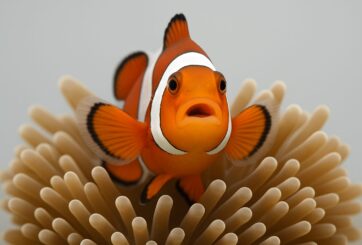
Human intervention is putting marine ecosystems under increasing pressure. On coral reefs, rising water temperatures, ocean acidification, pollution from plastic waste or overfishing threaten the organisms living there – be they fish, sea cucumbers or corals. But how does the direct physical presence of humans under water actually change the behaviour and ecology of animals on coral reefs? Off the coast of the island state of Vanuatu in the South Pacific, researchers from the Leibniz Centre for Tropical Marine Research…
The populations of common animals are just as likely to rise or fall in number in a time of accelerating global change as those of rare species, a study suggests. A study of more than 2,000 species reveals animal populations around the world – from the very common to endangered species – are going up and down as global change alters land, sea and freshwater ecosystems. The findings highlight a need to look beyond only rare species in order to…
German polar research aircraft launch from Svalbard to conduct aerial surveys of the sea ice and atmosphere over the Arctic Ocean Following a five-month mandatory delay due to the coronavirus pandemic, on August 30th the two German polar research aircraft Polar 5 and Polar 6 will launch from Svalbard to conduct their first aerial survey flights over the Arctic this year. The flights, which will extend far into the Central Arctic, will support the investigation of the atmosphere and sea…
Changes to water masses which are stored on the continents can be detected with the help of satellites. The data sets on the Earth’s gravitational field which are required for this, stem from the GRACE and GRACE-FO satellite missions. Using the South American continent as an example, the Earth system modellers at the German Research Centre for Geosciences GFZ, have developed a new Deep-Learning-Method, which quantifies small as well as large-scale changes to the water storage with the help of…
 Feedback


