
New study finds that the nutritional value of prey within a single species can widely vary, offering key insights for food web dynamics and ecosystem change The hunt is on and a predator finally zeroes in on its prey. The animal consumes the nutritious meal and moves on to forage for its next target. But how much prey does a predator need to consume? Following a period of massive starvation among animals living along the California coast, University of California…

TU Freiberg clarifies basis for innovative PFAS filter made of clay. PFAS filters available for industrial waste are usually made of activated carbon (PFAS = perfluorinated and polyfluorinated alkyl compounds). As this is comparatively expensive, researchers are looking for alternative filter materials for the so-called “eternal toxins”, whose hazardous residues only degrade very slowly in the environment. A team from the TU Bergakademie Freiberg is now proposing a clay made of bentonite modified with organic substances as a possible PFAS…
Researchers led by Göttingen University determine factors for chemical development in crater lakes on Earth. In southern Germany just north of the Danube, there lies a large circular depression between the hilly surroundings: the Nördlinger Ries. Almost 15 million years ago, an asteroid struck this spot. Today, the impact crater is one of the most useful analogues for asteroid craters on early Mars. Studying the deposits of the former lake that formed in the crater is particularly informative. These deposits…
Himalayan glaciers react, blow cold winds down their slopes. Himalayan Glaciers fight back to preserve themselves, but for how long? An international team of researchers, co-led by Professor Francesca Pellicciotti of the Institute of Science and Technology Austria (ISTA), explains a stunning phenomenon: rising global temperatures have led Himalayan glaciers to increasingly cool the air in contact with the ice surface. The ensuing cold winds might help cool the glaciers and preserve the surrounding ecosystems. The results, found across the…
Kiel researchers evaluate the future protection potential of dikes and show flooding scenarios for the German Baltic Sea coast until 2100. The record storm surge in October 2023 caused severe damage to the German Baltic coast. Effective adaptation scenarios to rising sea levels are therefore becoming increasingly urgent. In two recent studies, researchers at Kiel University have modelled both the flooding extent along the Baltic Sea coastal areas and, for the first time, two possible upgrades for current dike lines…
Yesterday evening, the research vessel Polarstern set off from Cape Town for a special region: Two expeditions in East Antarctica will focus on the history of the instability of the ice sheet there and its interactions with ocean circulation. On the first leg, which will last around two months and be led by GEOMAR, the main focus will be on oceanographic, geoscientific and biological work; the second leg will be led by Kiel University and will have a geoscientific focus,…
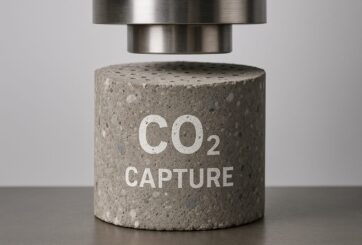
Confirming CO2 origins could be useful for emissions trading. Carbon capture is essential to reduce the impact of human carbon dioxide emissions on our climate. Researchers at the University of Tokyo and Nagoya University in Japan have developed a method to confirm whether carbon in concrete originates from the raw materials, or from carbon in the air which has been trapped when it reacts with the concrete to form the mineral calcium carbonate. By measuring the ratio of certain carbon…
Blame it on plate tectonics. The deep ocean is never preserved, but instead is lost to time as the seafloor is subducted. Geologists are mostly left with shallower rocks from closer to the shoreline to inform their studies of Earth history. “We have only a good record of the deep ocean for the last ~180 million years,” said David Fike, the Glassberg/Greensfelder Distinguished University Professor of Earth, Environmental, and Planetary Sciences in Arts & Sciences at Washington University in St….
Plants in which an ion channel of the vacuole is hyperactive are extremely stressed and grow poorly. But the broad bean is an exception, as Würzburg researchers have discovered. Like the human body, plants also use electrical signals to process and pass on information. In addition to the cell membrane, the membrane of the central vacuole plays an important role in this process. Vacuoles are typical for plant cells. They are fluid-filled bladders that act as a reservoir for minerals…
GEOMAR study investigates effects of sediment plumes. The deep sea is home to one of the largest animal communities on earth which is increasingly exposed to environmental pressures. However, our knowledge of its inhabitants and their response to human-induced stressors is still limited. A new study led by scientists from GEOMAR Helmholtz Centre for Ocean Research Kiel now provides first insights into the stress response of a pelagic deep-sea jellyfish to ocean warming and sediment plumes caused by deep-sea mining….
Global measurements and model calculations show that the complex relationship between the chemistry and climate impact of aerosol particles can be successfully captured by a simple formula. The extent to which aerosol particles affect the climate depends on how much water the particles can hold in the atmosphere. The capacity to hold water is referred to as hygroscopicity (K) and, in turn, depends on further factors – particularly the size and chemical composition of the particles, which can be extremely…
Revolutionizing fishery management and conservation… Deep learning model developed by researchers outperform human fishermen in correctly identifying the gender of horsehair crabs. When winter comes to Japan, fishermen in the northern regions set out to capture one of the most anticipated seasonal delicacies: the horsehair crab. Known locally as “kegani” and bearing the scientific name Erimacrus isenbeckii, this species of crustacean is highly sought after throughout the country. To protect the horsehair crab population from overfishing, the Japanese and prefectural…
North Atlantic circulation reduced little Ice Age cooling. Evidence of climate change in the North Atlantic during the last 1,000 years can be seen in the deep ocean, according to a newly published paper led by researchers from the Woods Hole Oceanographic Institution (WHOI) and University College London. The paper, “Surface climate signals transmitted rapidly to deep North Atlantic throughout last millennium,” published in Science, presents records from North Atlantic sediments that agree with observations of recent surface and deep…
Tomography with neutrons and X-rays shows where particles are deposited. It is a real problem: Microplastic particles are everywhere. Now a team from the University of Potsdam and HZB has developed a method that allows it for the first time to precisely localise microplastic particles in the soil. The 3D tomographies show where the particles are deposited and how structures in the soil are changed. The method was validated on prepared samples. The team used a special instrument at the…
The radiative effects of smoke from individual extreme forest fires can apparently lead to global impacts that influence the energy balance of the atmosphere and thus the global climate in a complex way. This is the conclusion drawn by a team from the Leibniz Institute for Tropospheric Research (TROPOS) from an analysis of the extreme 2019/20 forest fires in Australia using simulations with a global aerosol climate model. The simulated effects of the smoke led to a temperature increase of…
How did climatic and environmental change impact early eastern Mediterranean cultures, and what were the consequences of human settlement on land and marine ecosystems? In order to collect research data to answer these questions, the German research ship METEOR – under the guidance of Earth scientists from Heidelberg University – is embarking on a multi-week expedition to the Aegean and Ionian seas. The international research team will collect sediment cores from the sea floor along the coast of Greece, which…
…is already affecting the calcification of marine plankton. The acidification of the oceans caused by human activity is already altering the production of marine plankton shells in the Mediterranean Sea. This is the worrying conclusion of a study led by the Institute of Environmental Science and Technology of the Universitat Autònoma de Barcelona (ICTA-UAB), which alerts of the impact the decrease in pH of the surface ocean has on the production of calcium carbonate by marine plankton, with negative consequences…
 Feedback


