
New study finds that the nutritional value of prey within a single species can widely vary, offering key insights for food web dynamics and ecosystem change The hunt is on and a predator finally zeroes in on its prey. The animal consumes the nutritious meal and moves on to forage for its next target. But how much prey does a predator need to consume? Following a period of massive starvation among animals living along the California coast, University of California…

More extreme rainfall in tropics with increased temperatures. Understanding cloud patterns in our changing climate is essential to making accurate predictions about their impact on society and nature. Scientists at the Institute of Science and Technology Austria (ISTA) and the Max Planck Institute for Meteorology published a new study in the journal Science Advances that uses a high-resolution global climate model to understand how the clustering of clouds and storms impacts rainfall extremes in the tropics. They show that with…
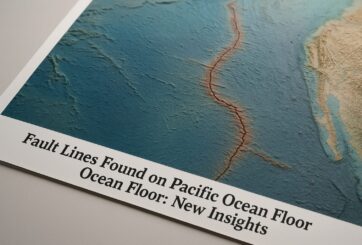
Findings show Pacific Plate is being torn apart at undersea plateaus spanning the ocean by the weight of the oceanic plate subducting at the Western Pacific Ring of Fire. New research led by a team of University of Toronto (U of T) geoscientists is refining the century-old model of plate tectonics that holds the plates covering the ocean floors are rigid as they move across Earth’s mantle. Instead, the researchers found the Pacific Plate is scored by large undersea faults…
To ensure that plants flower at the right time of year, they possess an internal clock, which enables them to measure the amount of daylight during a day. In a study published in the scientific journal Plant Physiology, biologists from Heinrich Heine University Düsseldorf (HHU) describe that the mutation of a specific gene makes the flowering time of barley almost entirely independent of day length. This mutation can be useful for breeding varieties adapted to altered climatic conditions with relatively…
University of Tübingen researchers attribute items from French site of Le Moustier to Neanderthals – evidence of higher mental abilities and cultural development. More than 40,000 years ago, early people in what is now France used a multi-component adhesive to make handles for stone tools. They produced a sophisticated mixture of ochre and bitumen, two raw materials that had to be procured from the wider region. This is the earliest discovery of a multi-component adhesive in Europe to date. Under…
Research team analyses organic material from the early Earth tracing its origin and composition. To learn about the first organisms on our planet, researchers have to analyse the rocks of the early Earth. These can only be found in a few places on the surface of the Earth. The Pilbara Craton in Western Australia is one of these rare sites: there are rocks there that are around 3.5 billion years old containing traces of the microorganisms that lived at that…
New research finds that fungi that live in healthy plants are sensitive to climate change. Findings more than a decade in the making reveal a rich diversity of beneficial fungi living in boreal forest trees, with implications for the health of forests. Spruce, pine, fir and other trees tower across the frigid swaths of land that span North America, northern Europe and Russia in a great ring around the world. These boreal forests constitute the largest land ecosystem and the…
How does ocean alkalinity enhancement affect marine life? In a multi-week experiment starting today, scientists led by GEOMAR Helmholtz Centre for Ocean Research Kiel investigate if the addition of rock powder is able to help the ocean absorb carbon dioxide from the atmosphere and mitigate climate change. For this purpose, twelve enclosed test tanks are set up in the water in front of the Kiel Aquarium. With the help of controlled experiments, the researchers want to better assess what effects…
…increase significantly over high latitudes. Berkeley Lab scientists show decadal increases in wetland methane emissions in Arctic and Boreal ecosystems. Wetlands are Earth’s largest natural source of methane, a potent greenhouse gas that is about 30 times more powerful than carbon dioxide at warming the atmosphere. A research team from the Department of Energy’s Lawrence Berkeley National Laboratory (Berkeley Lab) analyzed wetland methane emissions data across the entire Boreal-Arctic region and found that these emissions have increased approximately nine percent…
Bacteria in the Arctic seabed are active all year round. Despite the pronounced seasonality in their habitat, the bacterial community in Arctic sediments is taxonomically and functionally very stable. The Arctic is cold and hostile to life, yet it is home to a large number of microorganisms whose activity has a significant impact on life on our planet. For example, bacteria in the seabed play a central role in processing the biomass of dead organisms, thereby transforming the contained carbon…
Synthetic fibers and tire abrasion have the strongest impact on corals. Studies on the effects of microparticles of different materials on reef-building corals and their feeding behavior. Corals feed on plankton, which they catch from the seawater. Due to the increasing pollution of the oceans, they also ingest tiny plastic particles. Sometimes, the corals are unable to expel the microplastics from their bodies. Instead, they store it in their calcareous skeleton, which can be bad for some species: they grow…
AWI research team shows that jellyfish play an important, previously unknown role in the diet of amphipods during the polar night. The Arctic is changing rapidly due to climate change. It is not only affected by increasing surface temperatures, but also by warm water from the Atlantic, which is flowing in more and more – changing the structures and functions of the ecosystem as it also leads to species from warmer regions, such as jellyfish, arriving in the Arctic. Using…
Climate changes usually happens over long periods of time, but during the last glacial period, extreme fluctuations in temperature occurred within just a few years. Researchers at the University of Basel have now been able to prove the phenomenon also occurred during the penultimate glacial period. In recent geological history, the so-called Quaternary period, there have been repeated ice ages and warm periods. Researchers are able to determine past climate variability from the composition of climate records. In the case…
In autumn 2021, geologists discovered an unusual row of stones, almost 1 km long, at the bottom of Mecklenburg Bight. The site is located around 10 kilometres off Rerik in 21 metres water depth. The approximately 1,500 stones are aligned so regularly that a natural origin seems unlikely. A team of researchers from different disciplines now concluded, that Stone Age hunter-gatherers likely built this structure around 11,000 years ago to hunt reindeer. The finding represents the first discovery of a…
University of Queensland-led research has shown there is more coral reef area across the globe than previously thought, with detailed satellite mapping helping to conserve these vital ecosystems. Dr Mitchell Lyons from UQ’s School of the Environment, working as part of the Allen Coral Atlas project, said scientists have now identified 348,000 square kilometres of shallow coral reefs, up to 20-30 metres deep. “This revises up our previous estimate of shallow reefs in the world’s oceans,” Dr Lyons said. “Importantly, the high-resolution, up-to-date mapping…
New technique can aid in coral reef protection and restoration efforts. Researchers used Earth-orbiting satellites to map coral reef biodiversity at a global scale to show that areas of high habitat diversity also have high species diversity. This new satellite mapping technique can help guide future efforts to identify and protect highly biodiverse reefs, according to the University of Miami Rosenstiel School of Marine, Atmospheric, and Earth Science research team that conducted the study. “As remote sensing technology becomes more…
For the first time, pollutants from burning fossil fuels have been found embedded in corals, offering scientists a potential new tool to track the history of pollution, finds a new study led by UCL researchers. The study, published in the journal Science of the Total Environment, identified carbon particles emitted by burning fossil fuels embedded in the corals of Illa Grossa Bay, off the Columbretes Islands in the Mediterranean Sea. Finding this type of pollution – known as fly-ash or…
 Feedback


