
New study finds that the nutritional value of prey within a single species can widely vary, offering key insights for food web dynamics and ecosystem change The hunt is on and a predator finally zeroes in on its prey. The animal consumes the nutritious meal and moves on to forage for its next target. But how much prey does a predator need to consume? Following a period of massive starvation among animals living along the California coast, University of California…

The latest ESA Earth Observation data show that reports of the demise of the ozone hole appearing annually above Antarctica have been greatly exaggerated.
The ozone hole is normally at its largest in September, but 2002 saw it at its smallest extent for more than a decade: 40% down on previous years. And a year ago yesterday ongoing satellite measurements of ozone – gathered by the Royal Dutch Meteorological Institute (KNMI) from the Global Ozone Monitoring Experiment (GOME) instrume
This year’s Antarctic ozone hole is the second largest ever observed, according to scientists from NASA, the National Oceanic and Atmospheric Administration (NOAA), and the Naval Research Laboratory (NRL). The Antarctic ozone “hole” is defined as thinning of the ozone layer over the continent to levels significantly below pre-1979 levels. Ozone blocks harmful ultraviolet “B” rays. Loss of stratospheric ozone has been linked to skin cancer in humans and other adverse biological effects on plants
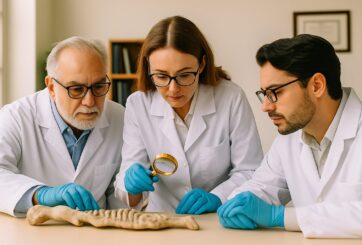
As a paleontologist, Gerta Keller has studied many aspects of the history of life on Earth. But the question capturing her attention lately is one so basic it has passed the lips of generations of 6-year-olds: What killed the dinosaurs?
The answers she has been uncovering for the last decade have stirred an adult-sized debate that puts Keller at odds with many scientists who study the question. Keller, a professor in Princeton’s Department of Geosciences, is among a minority of scientists
The latest ESA Earth Observation data show that reports of the demise of the ozone hole appearing annually above Antarctica have been greatly exaggerated.
The ozone hole is normally at its largest in September, but 2002 saw it at its smallest extent for more than a decade: 40% down on previous years. And a year ago yesterday ongoing satellite measurements of ozone – gathered by the Royal Dutch Meteorological Institute (KNMI) from the Global Ozone Monitoring Experiment (GOME) instrument on ES
Emerging geochemical and biological evidence from Alaskan lake sediment suggests that slight variations in the sun’s intensity have affected sub-polar climate and ecosystems in a predictable fashion during the last 12,000 years.
Researchers at six institutions report the findings in the Sept. 26 issue of the journal Science. The data, they say, help to explain past changes on land and in freshwater ecosystems in northern latitudes and may provide information to help project the future.
Rees, a new drought tolerant wheat variety, was released today by CSIRO joint venture organisation, Graingene.
CSIRO Plant Industry scientist Dr Richard Richards says Rees has an advantage over comparable wheats in dry years, producing about five per cent more grain despite receiving the same rainfall.
“Rees is the second variety to be developed using scientific gene selection criteria based on measuring a plant’s carbon isotope signature,” Dr Richards says.
“By using
For over a decade ESA has used satellites to bounce radar pulses off the Earth and precisely measure the height of ocean and land surfaces. But inland lakes and rivers have been effective blind spots for radar altimetry – at least until now.
Next week ESA previews a new product range called River and Lake Level from Altimetry that provides previously inaccessible information on water levels of major lakes and rivers across the Earth’s surface, derived from Envisat and ERS radar altimete
More than half of Australia’s carbon dioxide emissions come from power stations. Storing these harmful gases underground can drastically reduce the rate of emission build-up in our atmosphere.
CSIRO’S Dr Lincoln Paterson says that it is possible to capture the gases emitted by these stationary sources, and strip out the carbon dioxide in order to pump it back underground.
“Oil, gas and coal all come from underground in the first place,” says Paterson. “We’re looking a
USDA Forest Service (FS) researchers are improving the use of ground-penetrating radar (GPR) to study tree roots nondestructively. They are refining GPR’s processing capabilities by comparing results with those of more invasive methods.
GPR is an electromagnetic imaging technique that can be used to detect buried objects or hidden structures. GPR has been used for geological research, archaeology, forensics, and for assessing the integrity of roads and bridges. FS researchers soon reco
Our record-breaking long hot summer heated Europe’s seas as well as the land. Results returned from ESA’s Envisat environmental satellite show Mediterranean waters off Crete around three degrees Celsius warmer than the previous year.
The top image represents sea surface temperature around the island for 31 August 2003, while the second image shows it for 30 August 2002. The brighter the colour the higher the temperature: there is a five-degree difference between the two recorded in waters n
’Fresh’ shellfish in markets still alive enough to spawn
The global live seafood trade is barely regulated even though it could be a significant conservation threat. New research shows that “fresh” shellfish sold in markets are still alive enough to feed – and so presumably to spawn. This suggests that the seafood trade could spread invasive non-native marine species around the world.
It wouldn’t take much. “Introduced species can spread throughout entire ecos
Shrike conservation threatened foxes on a California island
Because loggerhead shrikes on San Clemente Island are critically endangered, the foxes that prey on their nestlings should be controlled. Right? Wrong. The problem is that the foxes are also at-risk. A new analysis shows that instead of pitting the shrike against the fox, both species could have been protected with an ecosystem-wide conservation plan.
“This endangered species conflict might have been avoided through
The Hessian fly changes wheat growth by injecting poisons into the plants, but a newly discovered resistance gene that can kill the insect may add a new defensive weapon for the grain crop.
Using the new gene in combination with other genes is expected to extend resistance time to the most economically damaging insect of wheat by as much as six times. Scientists from Purdue University and the U.S. Department of Agriculture—Agricultural Research Service (USDA-ARS) mapped the new gene and
A new study suggests in-season nitrogen monitoring can reduce overall fertilizer use
Many producers currently base nitrogen fertilizer applications on the results of soil nitrate tests. According to a recent article in the Soil Science Society of America Journal, farmers can reduce in-season nitrogen use for irrigated crops without sacrificing yield potential by using commercially available nitrogen sensing tools.
The typical spring soil nitrate tests do not account for nitrate l
The largest ice shelf in the Arctic has broken, and scientists who have studied it closely say it is evidence of ongoing and accelerated climate change in the north polar region. The Ward Hunt Ice Shelf is located on the north coast of Ellesmere Island in Canada’s Nunavut territory and its northernmost national park. This ancient feature of thick ice floating on the sea began forming some 4,500 years ago and has been in place for at least 3,000 years.
Warwick Vincent and Derek Mueller
A 50,000-year record of mammals consumed by early humans in southwestern France indicates there was no major difference in the prey hunted by Neanderthal and Cro-Magnon, according to a new study.
The paper, published in the online Journal of Archaeological Science, counters the idea proposed by some scientists that Cro-Magnon, who were physically similar to modern man, supplanted Neanderthals because they were more skilled hunters as a result of some evolutionary physical or mental advantag
 Feedback


