
DFKI technologies provide important insights for the fight against waste in South East Asia. Millions of tons of plastic are floating in the oceans, threatening the ecosystem and mankind on an increasing scale. Especially countries in South East Asia are battling with the vast amounts of waste making their journey from the land into rivers and the sea. To support national governments in their fight against plastic, the German Research Center for Artificial Intelligence (DFKI) is participating in several projects…
Globally, one fourth of carnivorous plants are threatened An international research team including botanist Andreas Fleischmann from SNSB-BSM has evaluated the Red List threat categories for all 860 known species of carnivorous plants in the light of the 21st Century – the Anthropocene, i.e. the geological time impacted by human ecological influences like habitat destruction, pollution and global climate change. The scientists now published their results in the international journal ‚Global Ecology and Conservation‘. In order to evaluate the global…
Researchers from six countries in the Americas explored bromeliad microcosms, showing how drought and flood affect the functioning of aquatic ecosystems, especially at the bottom of the food chain. To understand how climate change may affect different ecosystems, 27 researchers from Brazil, Argentina, Colombia, Costa Rica, French Guiana and Puerto Rico, among other countries, conducted experiments in seven different locations involving the aquatic environment in the tank (centrally-located water-holding cup) of bromeliads, a habitat for insect larvae and other small…
Storms, fires, bark beetles: Many forests around the world are increasingly affected by these and other natural disturbances. It is common practice to eliminate the consequences of these disturbances – in other words, to harvest damaged trees as quickly as possible. Spruce trees attacked by bark beetles are removed from the forest, as are dryed beeches or trees thrown to the ground by storms. “However, this practice is an additional disturbance that has a negative impact on biodiversity,” says Dr….
Fairy circles are one of nature’s greatest enigmas and most visually stunning phenomena. An international research team led by the University of Göttingen has now, for the first time, collected detailed data to show that Alan Turing’s model explains the striking vegetation patterns of the Australian fairy circles. In addition, the researchers showed that the grasses that make up these patterns act as “eco-engineers” to modify their own hostile and arid environment, thus keeping the ecosystem functioning. The results were…
An expansion of the protected areas by only about 1% would sufficiently protect most remaining primary forests in Europe. This is one of the main results of a study conducted by an international team led by researchers from the German Centre for Integrative Biodiversity Research (iDiv), Martin Luther University Halle-Wittenberg (MLU) and Humboldt-Universität zu Berlin (HU). The study, published in Diversity and Distribution, is the first assessment of the conservation status of Europe’s primary forests. It identifies protection gaps and…
In a joint study, scientists from Jacobs University Bremen, the Leibniz Centre for Tropical Marine Research (ZMT) and the University of Bremen have for the first time predicted the vulnerability of tropical coral reef habitats to measurable environmental factors. According to the study, 94 percent of the world’s coral reef habitats must be considered endangered, whereas only six percent of the habitats can be considered as reef refugia, as largely unaffected areas. The study was recently published by the Bremen…
Plant and animal species across the world are steadily disappearing due to human activity. A major new IIASA-led study suggests that without ambitious, integrated action combining conservation and restoration efforts with a transformation of the food system, turning the tide of biodiversity loss by 2050 or earlier will not be possible. Biodiversity – the variety and abundance of species, along with the extent and quality of the ecosystems they call home – has been declining at an alarming rate for…
Invasive alien species are one of the main threats to the biodiversity of natural habitats worldwide. They can cause severe ecological and economic damage and can be a root of biodiversity loss. Artificial man-built maritime canals have long been known as hotspots for invasion by various types of marine organisms. Scientists from the Leibniz Centre for Tropical Marine Research (ZMT) and the Smithsonian Tropical Research Institute in Panama have now detected changes in the salinity of Lake Gatún, an artificial…
Lack of shade? Too many nutrients from adjacent fields? Modified banks? If a river or stream is not doing well, there are many possible causes, but they are sometimes difficult to detect. Scientists from the University of Duisburg-Essen (UDE) have now developed a method that evaluates biological symptoms of rivers and calculates probable causes. “Our tool works similar to a visit to the doctor, where they ask us ‘What’s wrong?’”, explains PD Dr. Christian Feld from Aquatic Ecology. But instead…
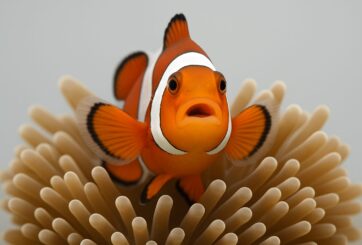
Human intervention is putting marine ecosystems under increasing pressure. On coral reefs, rising water temperatures, ocean acidification, pollution from plastic waste or overfishing threaten the organisms living there – be they fish, sea cucumbers or corals. But how does the direct physical presence of humans under water actually change the behaviour and ecology of animals on coral reefs? Off the coast of the island state of Vanuatu in the South Pacific, researchers from the Leibniz Centre for Tropical Marine Research…
The populations of common animals are just as likely to rise or fall in number in a time of accelerating global change as those of rare species, a study suggests. A study of more than 2,000 species reveals animal populations around the world – from the very common to endangered species – are going up and down as global change alters land, sea and freshwater ecosystems. The findings highlight a need to look beyond only rare species in order to…
Environmental policy decisions are often based on so-called tipping points. A research team led by the biodiversity expert Helmut Hillebrand from the University of Oldenburg now reports in the journal Nature Ecology and Evolution that such tipping points are hardly detectable in environmental data. The team concludes this from an extensive data analysis. Many policies tackling the consequences of global environmental change rely on the concept of tipping points: If an impact, such as biodiversity loss, becomes too large, an…
Researchers compared estimates of current and future plastic waste with the ability of floating clean-up devices to collect it – and found the impact of such…
A new EU-project has the aim to develop a sensor network to monitor emissions from ships.
Microplastics in the environment are viewed as a global problem from more than one angle: on the one hand, laboratory tests have shown that the plastic…
 Feedback


