
Craig Manning, a professor of geology and geochemistry at UCLA, and Peter Kelemen, a geochemistry professor at Columbia University, present new analyses that…
Scientists are expecting that this year's Gulf of Mexico hypoxic zone, also called the “dead zone,” will be approximately 5,483 square miles or about the size…
Satellites fill a void by providing a more complete view of remote reefs. The information is monitored globally through Coral Reef Watch, an online tool that…
Human consumption is rapidly draining about a third of its largest groundwater basins, despite having little to no accurate data about how much water remains…
For decades, researchers have debated the climate history of Mars and how the planet’s early climate led to the many water-carved channels seen today.
For more than 30 million years after dinosaurs first appeared, they remained inexplicably rare near the equator, where only a few small-bodied meat-eating…
On June 12 at 15:00 UTC (11:00 a.m. EDT) NOAA's GOES-West satellite captured a visible image of tropical storm Carlos that showed bands of thunderstorms being…
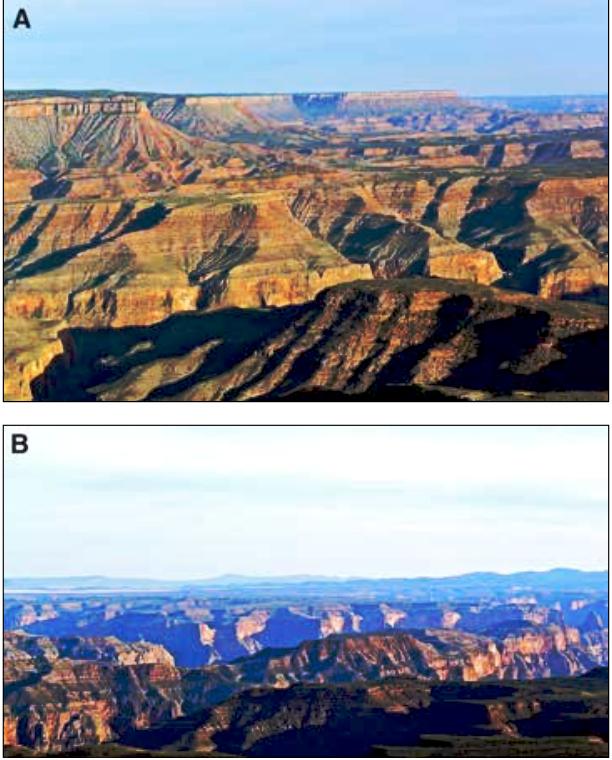
The age of the Grand Canyon (USA) has been studied for years, with recent technological advances facilitating new attempts to determine when erosion of this…
NASA's Terra satellite passed over Ashobaa on June, 11 at 06:35 UTC (2:35 a.m. EDT). The Moderate Resolution Imaging Spectroradiometer or MODIS instrument…
The Global Precipitation Measurement (GPM) core observatory had an excellent view of Tropical Cyclone Ashobaa in the Arabian Sea over on June 8, 2015 at 2131…
An international team of scientists has found a dramatic ice sheet collapse at the end of the ice age before last caused widespread climate changes and led to…

Tiger sharks are among the largest and most recognizable sharks on the planet, yet many of their habits remain mysterious because they are long-distance…
The work shows how the particles' chemical composition influences their abilities to take in moisture from the air, which indicates whether the particle will…
The GPM core observatory satellite flew over Ashobaa on the morning of June 8 at 0811 UTC (4:11 a.m. EDT). Tropical cyclone Ashobaa had sustained wind speeds…
Quenched glasses formed by asteroid impacts can encapsulate and preserve biological material for millions of years on Earth, and can also serve as a substrate…
The Visible Infrared Imaging Radiometer Suite or VIIRS instrument aboard the satellite gathered infrared data of the storm that was made into an image at the…
 Feedback


