
Climate change is causing major challenges especially for plant breeders. An intelligent field robot and X-ray technology are helping them selecting heat-tolerant plant varieties. The sensors in the high-tech machine were developed by the Fraunhofer Development Center for X-ray Technology, a division of the Fraunhofer Institute for Integrated Circuits IIS. Our summers keep becoming hotter. Just this summer, Germany experienced a heatwave with temperatures of up to 40 C. The resulting drought also affected plants. Given an ample supply of…
Researchers decode the unusual genome of the Prussian carp. The Prussian carp is considered one of the most successful invasive fish species in Europe. Its ability to reproduce asexually gives it a major advantage over competing fish. An international research team has now managed to describe the complete genome of the Prussian carp for the first time. This also provides a much better understanding of its peculiar reproductive method. The study, led by Dunja Lamatsch from the Research Department for…
Scientists are developing artificial photosynthesis to help make food production more energy-efficient here on Earth, and one day possibly on Mars. Photosynthesis has evolved in plants for millions of years to turn water, carbon dioxide, and the energy from sunlight into plant biomass and the foods we eat. This process, however, is very inefficient, with only about 1% of the energy found in sunlight ending up in the plant. Scientists at UC Riverside and the University of Delaware have found…
Southern Africa has a rich bounty of crop varieties, crop wild relatives, orphan crops and underutilised plant species, collectively known as plant genetic resources for food and agriculture (PGRFA), which have sustained generations of local farmers and rural communities and enabled them to cope with changing environmental conditions. The project “Farmer Resilience and Melon Crop Diversity in southern Africa” (FRAMe) aims at a future-oriented agriculture of crop diversity using melons as an example. The German Federal Ministry of Education and…
Usually, increasing agricultural productivity depends on adding something, such as fertilizer or water. A new Stanford University-led study reveals that removing one thing in particular – a common air pollutant – could lead to dramatic gains in crop yields. The analysis, published June 1 in Science Advances, uses satellite images to reveal for the first time how nitrogen oxides – gases found in car exhaust and industrial emissions – affect crop productivity. Its findings have important implications for increasing agricultural output…
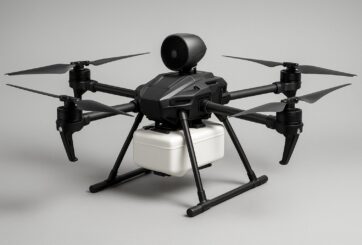
In the future, cameras could spot blackbirds feeding on grapes in a vineyard and launch drones to drive off the avian irritants, then return to watch for the next invading flock. All without a human nearby. A Washington State University research team has developed just such a system, which they detail in a study published in the journal Computer and Electronics in Agriculture. The system is designed to have automated drones available to patrol 24 hours a day to deter…
A team of international researchers has discovered a way to produce higher quality wheat. The scientists from the University of Adelaide and the UK’s John Innes Centre have identified a genetic driver that improves yield traits in wheat, which unexpectedly can also lead to increasing protein content by up to 25 per cent. “Little is known about the mechanism behind drivers of yields and protein content in wheat production,” said the University of Adelaide’s Dr Scott Boden, School of Agriculture,…
Through a genome-wide association study (GWAS) of 500 wheat varieties, researchers of the Julius Kühn-Institut have identified 14 gene loci that are consistently associated with low yield losses due to infection by Wheat dwarf virus. These QTL (quantitative trait loci) could be used for breeding new virus resistant wheat cultivars. If the leafhopper Psammotettix alienus pierces a wheat plant to suck plant sap, the consequences may be fatal: The leafhopper can transmit the Wheat dwarf virus (WDV) through its saliva….
A protein that allows the fungus which causes white mold stem rot in more than 600 plant species to overcome plant defenses has been identified by a team of U.S. Department of Agriculture Agricultural Research Service and Washington State University scientists. Knowledge of this protein, called SsPINE1, could help researchers develop a new, more precise system of control measures for the Sclerotinia sclerotiorum fungus, which attacks potatoes, soybeans, sunflowers, peas, lentils, canola, and many other broad leaf crops. The damage…
Alternative production systems to provide the growing global population with healthy, nutritious and sustainably produced foodstuffs are currently gaining considerable attention. In this interview, Senthold Asseng, Professor of Digital Agriculture at the Technical University of Munich (TUM), discusses the concept of vertical farming, which will allow agriculture of the future to take place under fully controlled and automated conditions. Professor Asseng, vertical farming allows food production to be fully uncoupled from soil and external climate influences. What possibilities and opportunities…
Steroid hormones contribute to the heat stress resistance of plants. Plants, like other organisms, can be severely affected by heat stress. To increase their chances of survival, they activate the heat shock response, a molecular pathway also employed by human and animal cells for stress protection. Researchers from the Technical University of Munich (TUM) have now discovered that plant steroid hormones can promote this response in plants. It may be hard to remember in winter, but July 2021 was the…
A publication saw light in Chemosensors. Mycotoxins are secondary metabolites of fungi that contaminate agriculture products. Their release in the environment can cause severe damage to human health. Aptasensors are compact analytical devices that are intended for the fast and reliable detection of various species able to specifically interact with aptamers attached to the transducer surface. Among many others, mycotoxins are frequently mentioned as one of the most pertinent problems in food safety and human health control. They affect a…
Solution Sets the Bar for Quantifying Carbon Budget and Credit. Carbon is everywhere. It’s in the atmosphere, in the oceans, in the soil, in our food, in our bodies. As the backbone of all organic molecules that make up life, carbon is a very accurate predictor of crop yields. And soil is the largest carbon pool on earth, playing an important role in keeping our climate stable. As such, computational models that track carbon as it cycles through an agroecosystem…
As temperatures rise, the risk of devastating forest fires is increasing. Researchers at the Technical University of Munich (TUM) are using artificial intelligence to estimate the long-term impact that an increased number of forest fires will have on forest ecosystems. Their simulations show how Yellowstone National Park in the USA could change by the end of the century. Forest fires are already a global threat. “But considering how climate change is progressing, we are probably only at the beginning of…
Digitization in agriculture … Crop diseases threaten yields in the field. Pests and parasitic weeds cause high crop losses of up to 30 percent every year. In the FarmerSpace project, the Fraunhofer Institute for Optronics, System Technologies and Image Exploitation IOSB in Ilmenau is working together with partners to investigate the use of digital technologies for crop protection. The aim is to detect leaf diseases and the spread of weeds at an early stage and to initiate targeted protective measures…
A Rutgers study finds that symbiotic bacteria that colonize root cells may be managed to produce hardier crops that need less fertilizer. The study appears in the journal Microorganisms. Bacteria stimulate root hair growth in all plants that form root hairs, so the researchers examined the chemical interactions between bacteria inside root cells and the root cell. They found that bacteria are carried in seeds and absorbed from soils, then taken into root cells where the bacteria produce ethylene, a…
 Feedback


