



Feeding 9 Billion: Innovations in Agricultural Modeling
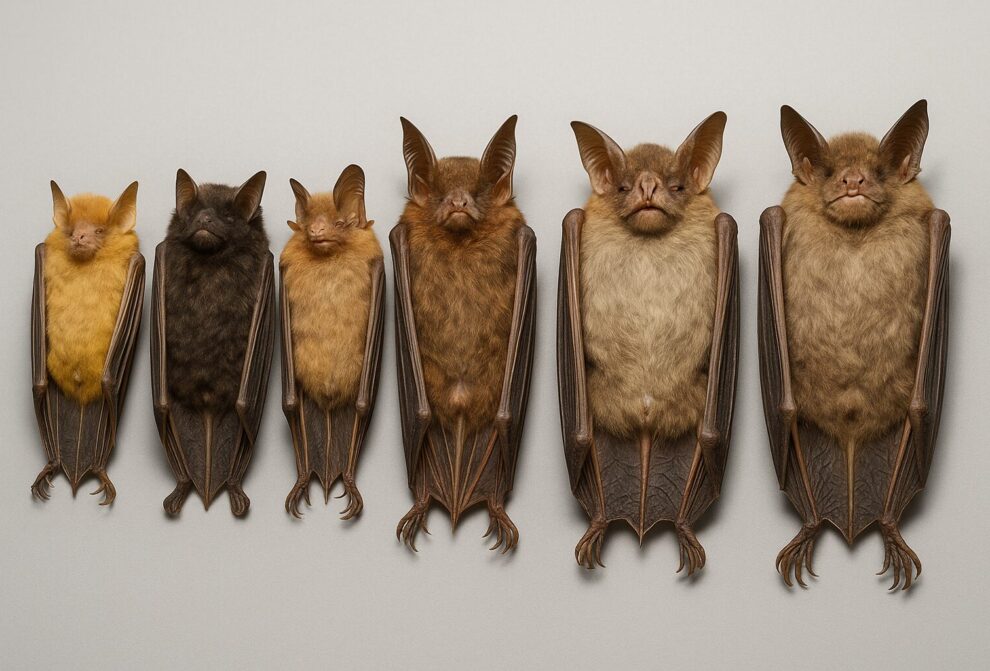
AI Generated Image
Just in time for Halloween, researchers from the Royal Ontario Museum (ROM), the Field Museum in Chicago, and Lawrence University in Wisconsin have announced the discovery of six new species of bats. These newly identified species, all found in the Philippines, belong to the group known as tube-nosed bats—a fascinating and diverse branch of the mammal family tree.
Formally recognized as new species through morphological and genetic analysis, this discovery expands the already impressive global diversity of bats.
“This latest research serves to illustrate how much remains unknown about the countless species with which we coexist,” says Dr. Judith Eger, Curator Emeritus of Mammals at ROM. “Expanding our knowledge of biodiversity is essential to understanding and managing our environment on behalf of humanity and the other species on which the vitality of our planet depends.”
While Halloween celebrations in the Philippines are relatively modest compared to North America, bats hold a unique place in Filipino folklore. The mythical aswang, a shape-shifting creature from local legends, is said to have been inspired by flying fox bats—the world’s largest bats. Globally, bats occupy various symbolic roles, representing good luck in China, fortune in India, and even deities in Guatemala and Mexico.
“I’m astonished at how much we still don’t know about the natural world, such as how many bat species there are,” says Dr. Burton Lim, Assistant Curator of Mammals at ROM. “Before we started our research, there were only two species of tube-nosed bats reported from the Philippines. We confirmed the presence of one of those species, plus another closely related species previously unknown to science. The other previously reported species was actually not present in the Philippines, but we did find five new species that were masquerading as it!”
The six newly named species — Murina alvarezi, Murina baletei, Murina hilonghilong, Murina luzonensis, Murina mindorensis, and Murina philippinensis — were identified through careful comparisons of tooth patterns, skull shapes, fur coloration, and genetic sequences conducted in ROM’s Laboratory of Molecular Systematics.
Bats are found on every continent except Antarctica and serve crucial ecological functions such as insect control, pollination, and seed dispersal. The tube-nosed bats (genus Murina) of Asia rely heavily on forest habitats, making them particularly vulnerable to deforestation.
The Philippines, a biodiversity hotspot composed of thousands of islands, was already home to 79 known bat species—a number that now rises with this discovery.
The ROM’s extensive bat collection, one of the world’s largest, includes dried skins, skeletal remains, ethanol-preserved samples, and over 15,000 frozen tissue specimens from 30 countries. This resource has been vital in revealing how Philippine Murina bats differ from their Southeast Asian relatives.
The team’s findings are now published in Zootaxa, an international journal of animal taxonomy, and corresponding genetic data have been archived in GenBank for future research.
“It has been a long and slow process of discovery, but these six previously unknown species show clearly just how wonderfully extensive Philippine biodiversity is,” says Dr. Lawrence Heaney, Curator Emeritus of Mammals at the Field Museum. “On a per-unit-area basis, the Philippines has the most distinctive mammal fauna of any country worldwide.”
The specimens, all small bats weighing between 4 and 14 grams, were collected over decades of expeditions led by the Field Museum, in collaboration with the Philippine Department of Environment and Natural Resources and Protected Area Management Boards.
“These bats are notoriously elusive, so the tube-nosed bat collection this study examined was cobbled together over many years, expeditions, and memorable experiences – one bat at a time,” says Dr. Jodi Sedlock, co-author and Dennis and Charlot Nelson Singleton Professor of Biological Sciences at Lawrence University. “As a result, it’s deeply satisfying to see our collection make such an important contribution to Philippine biodiversity studies. I’m eager to learn what these newly described tube-nosed bats each do with their tube-like nostrils that, presumably, offer them directional smell detection. Describing them is an essential beginning, but there’s still so much to learn!”
The Field Museum has been conducting collaborative fieldwork in the Philippines for over 30 years as part of the Philippine Mammal Project. Reference specimens (holotypes) from the study are now housed at the National Museum of the Philippines.
Two of the new species honor late Filipino scientists:
Original Publication
Authors: JUDITH L. EGER, JODI L. SEDLOCK, BURTON K. LIM and LAWRENCE R. HEANEY.
Journal: Zootaxa
DOI: 10.11646/zootaxa.5691.1.1
Subject of Research: Animals
Article Title: Systematics and biogeography of tube-nosed bats, Murina (Mammalia, Chiroptera, Vespertilionidae), from the Philippines with descriptions of six new species
Article Publication Date: 8-Sep-2025
The study identified five distinct species of the genus Murina that are endemic to the Philippines, increasing the total number of Philippine Murina species from two to seven.
Most of the new species are allopatric, meaning they do not overlap in their habitats, except for the smallest and largest species that coexist on Mindanao Island.
The findings indicate that the diversification of insectivorous bats in the Philippines mirrors that of fruit bats, suggesting that there may be many more undiscovered endemic species in the region.
Powered by  the revolutionary project management tool




Earthquakes in the American state of Utah, the Soultz-sous-Forêts region of France or in the Dutch province of Groningen should not be able to occur even if the subsurface has been exploited for decades. This is because the shallow subsurface behaves in such a way that faults there become stronger as soon as they start moving. At least that is what geology textbooks teach us. And so, in theory, it should not be possible for earthquakes to occur. So why…
In a recent study published today in the European Geosciences Union (EGU) journal Biogeosciences, scientists have confirmed that mercury pollution from artisanal and small-scale gold mining (ASGM) is contaminating food crops not through the soil, as previously believed, but directly from the air. Driven by the surging price of gold, which has increased by more than tenfold since 2000, the rapid expansion of unregulated mining in these regions raises urgent questions about food security, human health, and environmental justice The…
A new study from Iceland’s Surtsey island shows that birds carried most of the plants that colonised the island, challenging long-held beliefs that seed or fruit shape determines how plants spread — offering fresh insight into life’s adaptation to c When the volcanic island of Surtsey rose from the North Atlantic Ocean in 1963, it offered scientists a once-in-a-lifetime opportunity to observe how life takes hold on a brand-new and barren land. For decades, ecologists believed that plants’ ability to…
An AWI study gives a potential explanation as to why the ocean around Antarctica is defying climate model projections and continuing to absorb CO2, despite the effects of climate change Climate models suggest that climate change could reduce the Southern Ocean’s ability to absorb carbon dioxide (CO2). However, observational data actually shows that this ability has seen no significant decline in recent decades. In a recent study, researchers from the Alfred Wegener Institute have discovered what may be causing this….
 Feedback
