



Feeding 9 Billion: Innovations in Agricultural Modeling
A new species of marsupial, closely related to the kangaroo, has been identified through fossil evidence from caves in the Nullarbor and southwest Australia. Researchers from Curtin University, the Western Australian Museum, and Murdoch University revealed the discovery of a previously unknown bettong species, along with two new subspecies of the woylie.
Tragically, the newly identified species is already believed to be extinct.
Woylies, also known as brush-tailed bettongs, are small marsupials native to Western Australia. Despite their size, they play an outsized role in the environment. By digging for fungi, their preferred food, woylies turn over several tonnes of soil each year, helping to aerate the ground and disperse spores.
They are also Australia’s most translocated mammal, regularly moved between habitats as part of conservation efforts to save the critically endangered species.
Lead author Mr Jake Newman-Martin, a PhD student in Curtin’s School of Molecular and Life Sciences, explained that the study sheds light on the overlooked diversity of woylies.
“Woylies are critically endangered marsupials that have been the focus of conservation efforts for decades,” Mr Newman-Martin said.
“In this new research, we’ve named a completely new species based on fossil material, and two new subspecies of woylies for the first time. Sadly, many of them have become extinct before we’ve even been aware of them.
“Our results split the critically endangered woylie into two living subspecies, which is very important for conservation when we’re considering breeding and translocation initiatives to increase the size and fitness of populations.”
Co-author Dr Kenny Travouillon, Curator of Terrestrial Zoology at the Western Australian Museum, said the study relied on fossil analysis to distinguish different species and subspecies.
“This research confirmed several distinct species and expanded the known diversity of woylies by measuring skull and body fossil material that had previously not been looked at in detail,” Dr Travouillon said.
“What we’ve found through this research tells us that examining fossils alongside genetic tools could offer significant insights that may help conservation efforts of this critically endangered native species.”
The new Nullarbor species has been given the scientific name Bettongia haoucharae. However, researchers have committed to working with Indigenous communities to establish a collaborative name. The term “woylie” itself comes from the Noongar language.
The study drew on specimens from numerous institutions, including the Western Australian Museum, South Australia Museum, Australian Museum, Queensland Museum, Museums Victoria, Flinders University research collection, as well as international collections at the Natural History Museum in London and the Oxford University Museum of Natural History.
The new species, Bettongia haoucharae, will be renamed in consultation with Indigenous communities.
Original Publication
Authors: JAKE NEWMAN-MARTIN, KENNY J. TRAVOUILLON, NATALIE WARBURTON, MILO BARHAM and ALISON J. BLYTH.
Journal: Zootaxa
DOI: 10.11646/zootaxa.5690.1.1
Method of Research: Observational study
Subject of Research: Animals
Article Title: A taxonomic revision of the Bettongia penicillata (Diprotodontia: Potoroidae) species complex and description of the subfossil species Bettongia haoucharae sp. nov.
Article Publication Date: 4-Sep-2025
COI Statement: N/A
The research identified a new species of woylie called Bettongia haouchara, based on unique physical characteristics found in subfossil specimens.
The woylie is critically endangered due to a significant decline in its population, with only a few individuals remaining in the wild and some subspecies being declared extinct.
The research recommends a combined approach that uses both genetic and morphological data from subfossil, modern, and historical specimens to better understand the species.




Earthquakes in the American state of Utah, the Soultz-sous-Forêts region of France or in the Dutch province of Groningen should not be able to occur even if the subsurface has been exploited for decades. This is because the shallow subsurface behaves in such a way that faults there become stronger as soon as they start moving. At least that is what geology textbooks teach us. And so, in theory, it should not be possible for earthquakes to occur. So why…
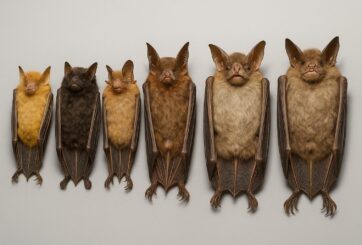
Just in time for Halloween, researchers from the Royal Ontario Museum (ROM), the Field Museum in Chicago, and Lawrence University in Wisconsin have announced the discovery of six new species of bats. These newly identified species, all found in the Philippines, belong to the group known as tube-nosed bats—a fascinating and diverse branch of the mammal family tree. Expanding the Tree of Life Formally recognized as new species through morphological and genetic analysis, this discovery expands the already impressive global…
In a recent study published today in the European Geosciences Union (EGU) journal Biogeosciences, scientists have confirmed that mercury pollution from artisanal and small-scale gold mining (ASGM) is contaminating food crops not through the soil, as previously believed, but directly from the air. Driven by the surging price of gold, which has increased by more than tenfold since 2000, the rapid expansion of unregulated mining in these regions raises urgent questions about food security, human health, and environmental justice The…
A new study from Iceland’s Surtsey island shows that birds carried most of the plants that colonised the island, challenging long-held beliefs that seed or fruit shape determines how plants spread — offering fresh insight into life’s adaptation to c When the volcanic island of Surtsey rose from the North Atlantic Ocean in 1963, it offered scientists a once-in-a-lifetime opportunity to observe how life takes hold on a brand-new and barren land. For decades, ecologists believed that plants’ ability to…
 Feedback
