



Feeding 9 Billion: Innovations in Agricultural Modeling
Palaeontologists at the University of Leicester have solved a 150-million-year-old puzzle: how two baby pterosaurs met their end. According to a new study published in Current Biology, the young reptiles perished in violent storms, which also created the perfect conditions for their exceptional preservation in stone.
The Mesozoic Era, often remembered as the “Age of Reptiles,” is typically associated with giant dinosaurs, marine predators, and vast-winged pterosaurs. However, as in today’s ecosystems, smaller animals were far more abundant. Unfortunately, their delicate skeletons rarely fossilised, leading to an incomplete picture of ancient life.
One rare exception is the Solnhofen Limestones of southern Germany, a world-famous fossil site dating back 150 million years. These lagoon deposits have produced some of the most detailed fossils known, including many pterosaurs. Yet, while hundreds of small, perfectly preserved juveniles have been unearthed, adults are rarely found, and usually only in fragments. This paradox has puzzled scientists for decades.
The turning point came with the discovery of two hatchling pterosaurs nicknamed “Lucky” and “Lucky II.” Belonging to the species Pterodactylus—the first pterosaur ever described—each had a wingspan of less than 20 cm (8 inches). Remarkably, their skeletons are almost entirely intact, except for a striking detail: both had broken wings, each fractured in a similar way.
Lead author Rab Smyth, from the University of Leicester’s Centre for Palaeobiology and Biosphere Evolution, explained:
“Pterosaurs had incredibly lightweight skeletons. Hollow, thin-walled bones are ideal for flight but terrible for fossilisation. The odds of preserving one are already slim and finding a fossil that tells you how the animal died is even rarer.”
The injuries—clean, slanted breaks to the humerus—suggest that the hatchlings were caught by violent gusts, twisted mid-air, and driven into the lagoon below. There, storm-driven waves drowned them before they quickly sank and were buried by fine mud stirred up by the tempest. This rapid burial accounts for their exceptional state of preservation.
The study suggests that these hatchlings were not alone. Many other small pterosaurs from Solnhofen were likely victims of similar storms, even if their bones show no trauma. Unable to withstand the winds, they were swept from nearby islands into the lagoon, where they were buried in sediments.
In contrast, larger, stronger adults were far more likely to survive storms. Those that did eventually die may have floated for days on calm lagoon waters, slowly decaying and leaving behind only partial remains.
“For centuries, scientists believed that the Solnhofen lagoon ecosystems were dominated by small pterosaurs,” said Smyth. “But we now know this view is deeply biased. Many of these pterosaurs weren’t native to the lagoon at all. Most are inexperienced juveniles that were likely living on nearby islands that were unfortunately caught up in powerful storms.”
Co-author Dr David Unwin added:
“When Rab spotted Lucky we were very excited but realised that it was a one-off. Was it representative in any way? A year later, when Rab noticed Lucky II we knew that it was no longer a freak find but evidence of how these animals were dying. Later still, when we had a chance to light-up Lucky II with our UV torches, it literally leapt out of the rock at us – and our hearts stopped. Neither of us will ever forget that moment.”
The findings reveal that storms played a critical role in shaping the fossil record of the Solnhofen deposits.
Original Publication
Authors: Robert S.H. Smyth, Rachel Belben, Richard Thomas and David M. Unwin.
Journal: Current Biology
DOI: 10.1016/j.cub.2025.08.006
Article Title: Fatal accidents in neonatal pterosaurs and selective sampling in the Solnhofen fossil assemblage
Article Publication Date: 5-Sep-2025
Wing fractures in flying animals are mainly caused by traumatic injuries during flight, often due to high torsional and bending stresses on the humerus, especially during extreme conditions like storms.
Storms can lead to rapid burial of pterosaur carcasses in fine-grained sediments, which helps preserve them well. This process also explains why smaller pterosaurs are more commonly found in the fossil record compared to larger ones.
The research indicates that young pterosaurs likely had the ability to fly at a very early age, as evidenced by skeletal features and injuries consistent with flight-related trauma found in fossil specimens.




Earthquakes in the American state of Utah, the Soultz-sous-Forêts region of France or in the Dutch province of Groningen should not be able to occur even if the subsurface has been exploited for decades. This is because the shallow subsurface behaves in such a way that faults there become stronger as soon as they start moving. At least that is what geology textbooks teach us. And so, in theory, it should not be possible for earthquakes to occur. So why…
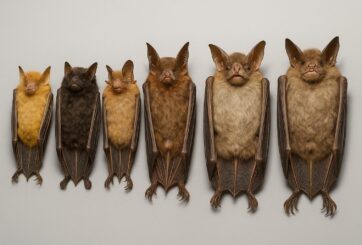
Just in time for Halloween, researchers from the Royal Ontario Museum (ROM), the Field Museum in Chicago, and Lawrence University in Wisconsin have announced the discovery of six new species of bats. These newly identified species, all found in the Philippines, belong to the group known as tube-nosed bats—a fascinating and diverse branch of the mammal family tree. Expanding the Tree of Life Formally recognized as new species through morphological and genetic analysis, this discovery expands the already impressive global…
In a recent study published today in the European Geosciences Union (EGU) journal Biogeosciences, scientists have confirmed that mercury pollution from artisanal and small-scale gold mining (ASGM) is contaminating food crops not through the soil, as previously believed, but directly from the air. Driven by the surging price of gold, which has increased by more than tenfold since 2000, the rapid expansion of unregulated mining in these regions raises urgent questions about food security, human health, and environmental justice The…
A new study from Iceland’s Surtsey island shows that birds carried most of the plants that colonised the island, challenging long-held beliefs that seed or fruit shape determines how plants spread — offering fresh insight into life’s adaptation to c When the volcanic island of Surtsey rose from the North Atlantic Ocean in 1963, it offered scientists a once-in-a-lifetime opportunity to observe how life takes hold on a brand-new and barren land. For decades, ecologists believed that plants’ ability to…
 Feedback
