



Feeding 9 Billion: Innovations in Agricultural Modeling
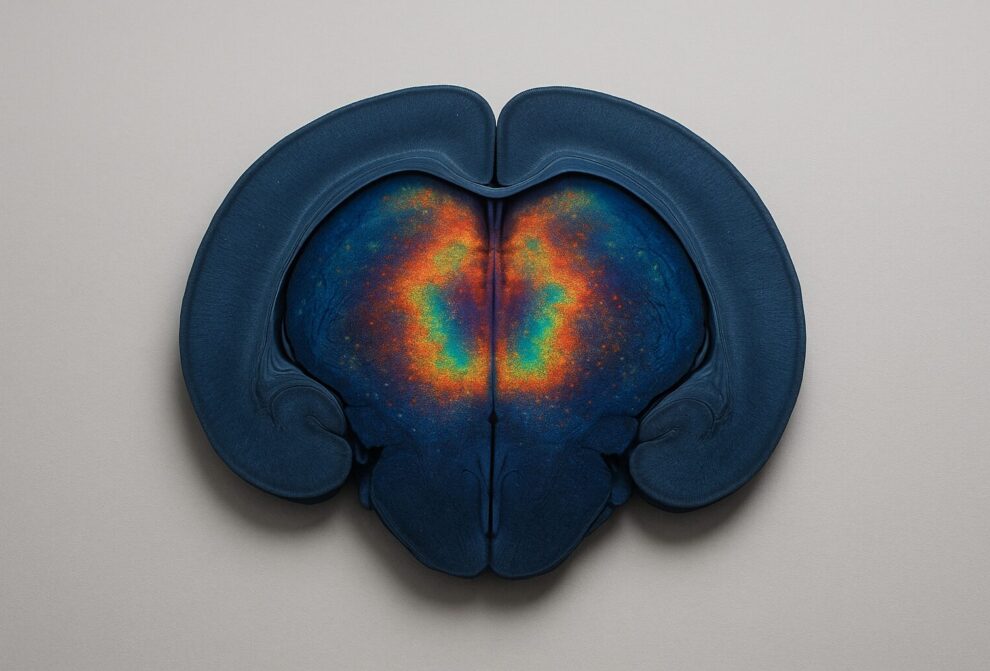
AI Generated Image
PRINCETON, N.J., September 3, 2025 — A team of researchers has created the first brain-wide map of decision-making at single-cell resolution in a mammal, using mice trained to turn tiny steering wheels to move shapes on a screen. The findings, published in Nature by the International Brain Laboratory (IBL) — a global consortium of 22 labs — offer an unprecedented view of how distributed neural networks across the brain coordinate to guide behavior.
For decades, most neuroscience research focused on small clusters of neurons within isolated regions.
“The brain is constantly making decisions during everyday life, and we’ve come to realize that many brain regions, rather than just one or two, contribute to decision-making,” said Ilana Witten, Ph.D., professor of neuroscience at Princeton University and Howard Hughes Medical Institute investigator.
To tackle this complexity, Witten and colleagues at Princeton, working with IBL partners across Europe and the U.S., developed a standardized approach that allowed multiple labs to record neural activity simultaneously while mice performed the same behavioral task.
The collaboration produced two complementary papers, together mapping the activity of over 600,000 neurons across 279 brain regions in 139 mice. Data were gathered using high-density electrodes, pooled across 12 labs, and unified into a single, quality-controlled dataset.
“This had never been done before,” said Alejandro Pan Vazquez, Ph.D., an associate research scholar in the Witten lab. “The organizational innovation was just as critical as the scientific methods. It marks the first time such a large, coordinated dataset has been created in neuroscience.”
The task itself was simple: mice viewed a striped circle that briefly appeared on one side of a screen. By turning a miniature steering wheel to bring the circle to the center, they earned a sip of sugar water. On some trials, the circle was faint, forcing the mice to rely on prior experience and expectations — offering a window into how brains use memory to inform decisions.
Surprising Discoveries
The resulting brain-wide map revealed decision-related activity in regions not traditionally linked to cognition, including motor areas.
“One of the important conclusions is that decision-making is broadly distributed throughout the brain, including regions we previously thought were uninvolved,” Witten explained.
The published datasets not only describe these findings but also serve as a community resource for further research.
“They provide a benchmark for testing new theories of decision-making,” Witten added.
A Global Model for Neuroscience
Coordinating 22 labs worldwide represented a breakthrough in itself, demonstrating the power of large-scale, collaborative neuroscience.
“The brain-wide map is an impressive achievement, but it marks a beginning, not the finale,” said Tatiana Engel, Ph.D., associate professor of neuroscience at Princeton. “The IBL has shown how global collaboration can push the field into uncharted territories no single lab could reach alone.”
This research was supported by the National Institutes of Health (NIH U19NS12371601), National Science Foundation (NSF 1707398), Gatsby Charitable Foundation (GAT3708), Wellcome Trust (216324), Simons Foundation, Max Planck Society, and the Humboldt Foundation.
Original Publication
Authors: Leenoy Meshulam, Dora Angelaki, Julius Benson, Isaiah McRoberts, Jean-Paul Noel, Jaime Arlandis, Niccolò Bonacchi, Kcenia Bougrova, Joana A. Catarino, Fanny Cazettes, Davide Crombie, Eric EJ DeWitt, Laura Freitas-Silva, Inês C. Laranjeira, Zachary F. Mainen, Guido T. Meijer, Pranav Rai, Georg Raiser, Florian Rau, Michael M. Schartner, Olivier Winter, Anne E. Urai, Valeria Aguillon-Rodriguez, Cristian Soitu, Anthony M. Zador, Christopher S. Krasniak, Yang Dan, Fei Hu, Brandon Benson, Surya Ganguli, Luigi Acerbi, Gaelle A. Chapuis, Charles Findling, Berk Gercek, Felix Huber, Alexandre Pouget, Hailey Barrell, Dan Birman, Kim Miller, Kai Nylund, Noam Roth, Nicholas A. Steinmetz, Matthew Tucker, Kenneth Yang, Ila Rani Fiete, Ari Liu, Rylan Schaeffer, Anne K. Churchland, Felicia Davatolhagh, Anup Khanal, Maxwell Melin, Masayoshi Murakami, Sophie Denève, Ivan Gordeliy, Mandana Ahmadi, Jaweria Amjad, Naoki Hiratani, Sanjukta Krishnagopal, Peter Latham, Alberto Pezzotta, Zekai Xu, Kush Banga, Jai Bhagat, Mayo Faulkner, Kenneth D. Harris, Michael Krumin, Samuel Picard, Carolina Quadrado, Cyrille Rossant, Miles J. Wells, Lauren E. Wool, Matteo Carandini, Agnès Landemard, Karolina Z. Socha, Sebastian A. Bruijns, Peter Dayan, Julia M. Huntenburg, Debottam Kundu, Farideh Oloomi, Charline Tessereau, Zoe C. Ashwood, Tatiana Engel, Robert Fetcho, Laura M. Haetzel, Christopher Langdon, Brenna McMannon, Zeinab Mohammadi, Alejandro Pan Vazquez, Jonathan W. Pillow, Nicholas A. Roy, Yanliang Shi, Ilana B. Witten, Robert Campbell, Naureen Ghani, Sonja B. Hofer, Hernando Martinez-Vergara, Nathaniel J. Miska, Thomas Mrsic-Flogel, Steven J. West, Yaxuan Yang, Karel Svoboda, Marsa Taheri, Michael Häusser, Petrina Y. P. Lau, Amalia Makri-Cottington, Sabrina Perrenoud, Larry Abbot, Hannah M. Bayer, Julien Boussard, E. Kelly Buchanan, Michele Fabbri, Cole Hurwitz, Christopher Langfield, Hyun Dong Lee, Catalin Mitelut, Liam Paninski, Kamron Saniee, Erdem Varol, Shuqi Wang, Matthew R. Whiteway, Charles Windolf, Han Yu, Yizi Zhang, Dora Angelaki, Brandon Benson, Julius Benson, Daniel Birman, Niccolò Bonacchi, Kcénia Bougrova, Sebastian A. Bruijns, Matteo Carandini, Joana A. Catarino, Gaelle A. Chapuis, Anne K. Churchland, Yang Dan, Felicia Davatolhagh, Peter Dayan, Eric EJ DeWitt, Tatiana A. Engel, Michele Fabbri, Mayo Faulkner, Ila Rani Fiete, Charles Findling, Laura Freitas-Silva, Berk Gerçek, Kenneth D. Harris, Michael Häusser, Sonja B. Hofer, Fei Hu, Félix Hubert, Julia M. Huntenburg, Anup Khanal, Christopher S. Krasniak, Christopher Langdon, Christopher Langfield, Petrina Y. P. Lau, Zachary F. Mainen, Guido T. Meijer, Nathaniel J. Miska, Thomas D. Mrsic-Flogel, Jean-Paul Noel, Kai Nylund, Alejandro Pan-Vazquez, Liam Paninski, Alexandre Pouget, Cyrille Rossant, Noam Roth, Rylan Schaeffer, Michael Schartner, Yanliang Shi, Karolina Z. Socha, Nicholas A. Steinmetz, Karel Svoboda, Anne E. Urai, Miles J. Wells, Steven J. West, Matthew R. Whiteway, Olivier Winter and Ilana B. Witten.
Journal: Nature
DOI: 10.1038/s41586-025-09235-0
Method of Research: Experimental study
Subject of Research: Animals
Article Title: A brain-wide map of neural activity during complex behaviour
Article Publication Date: 3-Sep-2025
All animal experiments were conducted according to local laws and received approval from relevant ethics committees, ensuring the welfare of the animals involved.
Mice underwent a structured training protocol that included initial trials without bias, followed by biased blocks where stimuli were presented more frequently on one side, helping them learn to respond correctly to visual stimuli.
The study used advanced techniques like Neuropixels probes for neural recordings, video analysis for tracking mouse movements, and statistical methods to assess the relationship between neural activity and task performance.




Scientists uncover how support cells, once thought harmless, send damaging signals that weaken the heart Heart failure (HF) is one of the leading causes of death and disability worldwide, affecting millions of people and placing an enormous burden on healthcare systems. The disease occurs when the heart can no longer pump blood efficiently, leaving patients short of breath, fatigued, and at risk of life-threatening complications. For decades, scientists have focused on studying cardiomyocytes—the heart’s muscle cells responsible for pumping blood—believing…
European research team presents comprehensive review in Brain Medicine on tDCS, rTMS, and DBS for obsessive-compulsive disorder Lausanne, Switzerland – 28 October 2025. In a peer-reviewed article published today in Brain Medicine, a European research team presents a focused review of emerging neuromodulation techniques for treatment-resistant obsessive-compulsive disorder (OCD). The article, “Neuromodulation techniques in obsessive-compulsive disorder: Current state of the art,” examines how transcranial direct current stimulation (tDCS), repetitive transcranial magnetic stimulation (rTMS), and deep brain stimulation (DBS) are changing…
Lawsonia inermis, widely recognised as the source of henna dye used for colouring skin and fabrics, may soon have a life-saving medical application. Researchers at Osaka Metropolitan University have discovered that pigments derived from the plant could help combat liver fibrosis — a serious disease that leads to excessive scar tissue formation in the liver due to chronic injury. Understanding Liver Fibrosis Liver fibrosis occurs when prolonged liver damage — often from factors like alcohol abuse or unhealthy lifestyles —…
Study finds the molecule CCL5 is both protective and harmful, suggesting future drugs could target only its damaging effects Chronic kidney disease (CKD) is a progressive condition in which the kidneys gradually lose their ability to filter waste from the blood. It is a common health concern that affects an estimated 8–16% of the global population, particularly among older adults. CKD can arise from various causes, including glomerulonephritis, a group of diseases that damage the glomeruli, the tiny filtering units…
 Feedback
