



Feeding 9 Billion: Innovations in Agricultural Modeling
A prehistoric Yersinia pestis genome obtained from sheep sheds illuminates a previously enigmatic infectious illness that afflicted Eurasia for more than 2000 years.
Approximately 5,000 years ago, an enigmatic epidemic disseminated across Eurasia, vanishing 2,000 years thereafter. This enigmatic ‘LNBA plague’ lineage, known solely from ancient DNA, has confounded experts regarding its probable zoonotic origin and transmission.
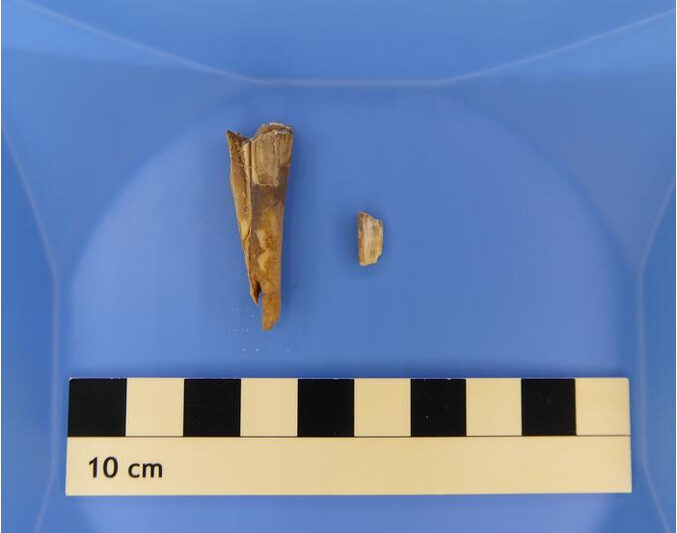
A recent study published in Cell identifies this ancient plague in an animal for the first time: a 4,000-year-old domesticated sheep found from the pastoralist town of Arkaim in the Western Eurasian Steppe. Various lines of evidence indicate that plague illnesses in humans and sheep originate from a currently unidentified wild reservoir, and that extensive sheep herding during the Bronze Age facilitated closer interactions between steppe pastoralist communities and this reservoir.
This study elucidates the relationships between domesticated animals and the dissemination of a notorious bacterium, offering insight into the pathogen’s remarkable effectiveness in infecting humans across vast distances over millennia.
The bulk of contemporary human viruses have a zoonotic origin, indicating they have transitioned from animals to people through a process termed spillover. An expanding corpus of data indicates that numerous infectious diseases originated over the past 10,000 years, coinciding with the domestication of cattle and pets, implicating our increasingly intimate associations with these animals as the genesis of these diseases in humans. The examination of viruses from prehistoric animals through ancient DNA techniques presents a distinctive chance to unravel the origins of human infectious diseases; however, it remains predominantly unexamined thus far.
Plague ranks as one of the most lethal zoonotic illnesses identified. Transmitted by fleas residing on rats, it has resulted in the deaths of millions throughout history, particularly during the 14th-century Black Death, which claimed almost a third of Europe’s population. Before significant historical pandemics, a genetically unique, prehistoric variant of plague disseminated across Eurasia, commencing approximately 5,000 years ago. The lineage recognised today as the Late Neolithic Bronze Age (LNBA) afflicted human populations for around 3,000 years before presumably becoming extinct.
Interestingly, the LNBA lineage is devoid of the essential genetic components necessary for flea transmission of both historical and contemporary plague strains, rendering its mode of transmission perplexing. Other creatures must have contributed to its dissemination, but which ones? “One of the first steps in understanding how a disease spreads and evolves is to find out where it’s hiding, but we haven’t done that yet in the ancient DNA field,” said lead author Ian Light-Maka, a PhD candidate focused on the long-term evolution of pathogens. “We have over 200 Y. pestis genomes from ancient humans, but humans aren’t a natural host of plague,” stated Light-Maka.
An international team of researchers from the Max Planck Institute of Infection Biology, Harvard University, the University of Arkansas, the Max Planck Institute of Evolutionary Anthropology, and Seoul National University examined the bones and teeth of Bronze Age livestock at the pastoralist site of Arkaim in Russia. This site, associated with the Sintashta-Petrovka culture, is recognised for its advancements in the husbandry of cattle, sheep, and horses, in an effort to elucidate the persistence and spread of infection over millennia in Eurasia. They detected a 4,000-year-old sheep infected with the same LNBA lineage of Y. pestis that was concurrently infecting humans.
“Arkaim was part of the Sintashta cultural complex and offered us a great place to look for plague clues: they were early pastoralist societies without the kind of grain storage that would attract rats and their fleas – and prior Sintashta individuals have been found with Y. pestis infections. Could their livestock be a missing link?” states Dr. Taylor Hermes, Assistant Professor of Anthropology at the University of Arkansas and co-author of the study.
An analysis of the ancient Y. pestis genome from the sheep, juxtaposed with other ancient and contemporary genomes, indicated that the sheep’s Y. pestis genome closely resembled that of a strain that had infected a human at a proximate location during a similar temporal period. “If we didn’t know it was from a sheep, everyone would have assumed it was just another human infection – it’s almost indistinguishable,” states Dr. Christina Warinner, Landon T. Clay Professor of Scientific Archaeology at Harvard University and a group leader at the MPI-EVA.
This indicates that both humans and their animals were infected by the same strain of Y. pestis; yet, the direction of transmission remains unclear. Archaeological and comparative methodologies may yield some insights. In regions where Y. pestis remains endemic, it is established that sheep can contract the infection through direct contact with the carcasses of infected animals, such as rodents, which serve as the pathogen’s natural reservoir. This can trigger localised plague outbreaks in humans if the sheep are inadequately butchered or cooked. This arrangement may have facilitated the transmission of LNBA plague in prehistory, connecting human and ovine illnesses.
“The Sintashta-Petrovka culture is famous for their extensive herding over vast pastures aided by innovative horse technologies, and this provided plenty of opportunity for their livestock to come into contact with wild animals infected by Y. pestis,” says Christina Warinner. “From then on it is just one more short hop into humans.”
Examining the novel sheep Y. pestis genome with existing human genomes facilitated a more accurate reconstruction of the evolutionary dynamics of this ancient, probably extinct, plague branch. Unlike the contemporary Y. pestis lineages, which exhibit geographical variability and distinctiveness, the ancient LNBA branch demonstrated remarkable uniformity over its roughly 6,000-kilometer range at any given moment. Variations in the life cycle and maybe natural selection may have contributed, as evidenced by numerous prominent infections, such as SARS-CoV-2 responsible for COVID-19, where new variations can arise and proliferate if they exhibit enhanced infectivity and transmissibility.
Contrary to expectations of discovering such variants, the investigation unexpectedly revealed that the ancient lineage was evolving under significant limitations. A subset of genes was observed to mutate repeatedly and independently; however, these parallel alterations were exclusively identified in infections without direct progeny, potentially serving as a genetic trace of historical spillovers.
“We can show that the ancient lineage evolved under elevated pressure, which is in contrast to the Y. pestis still found today. Moreover, the ancient sheep as well as human infections are likely isolated spillovers from the unknown reservoir, which remains at large. Finding that reservoir would be the next step,” states Dr. Felix M. Key, senior author and director of the Evolutionary Pathogenomics Laboratory at the MPIIB. Notwithstanding these new insights, significant concerns persist, such as the mechanisms by which the pathogen disseminates extensively at brief intervals.
Sheep and people are improbable primary vectors for disease transmission, as instances of virtually identical LNBA Y. pestis genomes have been identified simultaneously at distances of thousands of kilometres apart, beyond the travel capacity of infected humans or terrestrial animals.
The investigation of pathogens in ancient animal remains is in its nascent stages; archaeological excavations can produce tens of thousands of animal bones, and findings from previous digs stay in storage, awaiting further analysis. “I think”, Key says, “there will be more and more interest in analyzing these collections – they give us insights that no human sample can.”
Original Publication
Journal: Cell
DOI: 10.1016/j.cell.2025.07.029
Article Title: Bronze Age Yersinia pestis genome from sheep sheds light on hosts and evolution of a prehistoric plague lineage
Article Publication Date: 11-Aug-2025
The nf-core tools provide standardized and efficient pipelines for analyzing genomic data, making it easier for researchers to process and interpret complex biological information.
Kraken 2 enhances metagenomic analysis by offering faster and more accurate classification of microbial DNA sequences, which helps in identifying the diversity of organisms in a sample.
HOPS automates the detection and authentication of pathogen DNA in archaeological remains, allowing researchers to better understand historical diseases and their impacts on past populations.




Scientists uncover how support cells, once thought harmless, send damaging signals that weaken the heart Heart failure (HF) is one of the leading causes of death and disability worldwide, affecting millions of people and placing an enormous burden on healthcare systems. The disease occurs when the heart can no longer pump blood efficiently, leaving patients short of breath, fatigued, and at risk of life-threatening complications. For decades, scientists have focused on studying cardiomyocytes—the heart’s muscle cells responsible for pumping blood—believing…
European research team presents comprehensive review in Brain Medicine on tDCS, rTMS, and DBS for obsessive-compulsive disorder Lausanne, Switzerland – 28 October 2025. In a peer-reviewed article published today in Brain Medicine, a European research team presents a focused review of emerging neuromodulation techniques for treatment-resistant obsessive-compulsive disorder (OCD). The article, “Neuromodulation techniques in obsessive-compulsive disorder: Current state of the art,” examines how transcranial direct current stimulation (tDCS), repetitive transcranial magnetic stimulation (rTMS), and deep brain stimulation (DBS) are changing…
Lawsonia inermis, widely recognised as the source of henna dye used for colouring skin and fabrics, may soon have a life-saving medical application. Researchers at Osaka Metropolitan University have discovered that pigments derived from the plant could help combat liver fibrosis — a serious disease that leads to excessive scar tissue formation in the liver due to chronic injury. Understanding Liver Fibrosis Liver fibrosis occurs when prolonged liver damage — often from factors like alcohol abuse or unhealthy lifestyles —…
Study finds the molecule CCL5 is both protective and harmful, suggesting future drugs could target only its damaging effects Chronic kidney disease (CKD) is a progressive condition in which the kidneys gradually lose their ability to filter waste from the blood. It is a common health concern that affects an estimated 8–16% of the global population, particularly among older adults. CKD can arise from various causes, including glomerulonephritis, a group of diseases that damage the glomeruli, the tiny filtering units…
 Feedback
