



Feeding 9 Billion: Innovations in Agricultural Modeling
A frog vocalises from a footpath. A hiker captures an image and uploads it to iNaturalist. This solitary action — one individual, one amphibian, and one click — contributes to an expanding worldwide dataset utilised by scientists to delineate changing species distributions, identify invasive concerns, and perhaps uncover new species.
A global study conducted by researchers at the University of Florida Institute of Food and Agricultural Sciences (UF/IFAS) demonstrates that iNaturalist, the worldwide technology platform enabling individuals to share wildlife photographs through a website and an app, serves a purpose beyond merely connecting users with nature. It is swiftly emerging as a fundamental element of scientific inquiry.
“The scientific use of iNaturalist has grown tenfold in five years, closely tracking the platform’s data growth,” Brittany Mason, lead author and data management analyst at the UF/IFAS Fort Lauderdale Research and Education Centre (FLREC), stated. “This suggests that increasing observations, especially in less-documented geographic areas and lesser-studied species groups, can further expand its research applications.”
“Until now, the scientific value of iNaturalist has been recognized in isolated case studies, like how a user rediscovered a century-lost Vietnamese snail, how the data are used to provide high-resolution maps of plants or how iNaturalist is becoming critical for early detection of invasive species,” stated Corey Callaghan, the principal author of the study and an assistant professor of global ecology at FLREC.
Those occurrences have remained rather isolated until the present.
“This study is the first to systematically assess the full scope of how iNaturalist data are being used in research,” stated Mason.
The research team evaluated the utilisation of technology, identifying the geographic regions and scientific enquiries for which the data is applied. The findings underscore how platforms such as iNaturalist enable anyone equipped with smartphones to collect data and assist scientists.
“Millions of people are now directly shaping how we understand and conserve biodiversity,” stated Callaghan. The research identifies multiple trends that influence and improve the future of biodiversity science.
The prevalent application of iNaturalist in species distribution modelling and range mapping highlights the platform’s effectiveness in monitoring the global dispersion of organisms. The utilisation of photographs contributed to iNaturalist is increasing in scientific research, offering novel insights into species behaviour, colouration, and habitat preferences. The exponential increase in scholarly articles utilising iNaturalist data indicates that as participation expands—especially in under-represented areas and among less-studied species groups—its influence on research will similarly grow.
Established in 2008, the platform is a non-profit organisation that permits users to post images or audio recordings of flora, fauna, fungi, and other species, accompanied by information regarding time and location.
A collective of contributors evaluates observations, and those authenticated as “Research Grade” are disseminated to the Global Biodiversity Information Facility, an international repository serving as a clearinghouse for all biodiversity records.
The research indicates that ordinary individuals sharing their findings via iNaturalist are significantly enhancing scientific understanding. “Millions of people are helping scientists track biodiversity in ways that would be impossible through traditional scientific fieldwork alone.” stated Carrie Seltzer, the iNaturalist head of engagement, who was not associated with the study.
These significant contributions originate from 128 nations and 638 species categories, demonstrating the extensive worldwide influence on biodiversity studies. Research subjects encompass conservation planning, habitat modelling, education, machine learning, and species finding. Authors observed that the platform is utilised by conservation authorities, such as the International Union for Conservation of Nature, to evaluate the status of endangered species and monitor the proliferation of invasive species.
“By contributing observations and identifications, everyday citizens become key players in tackling one of the planet’s most pressing challenges: biodiversity loss,” said Callaghan. “Now, an important frontier remains to really understand how iNaturalist data can be strategically paired with other biodiversity data to continue to inform biodiversity and conservation work in the future.”
The research, published in BioScience, included scholars from 15 institutions in the United States, Australia, Belgium, the Czech Republic, Germany, and South Korea. Participating institutions comprise the University of Florida, UNSW Sydney, Meise Botanic Garden, Czech University of Life Sciences Prague, University of Münster, and Changwon National University, among others.
Original Publication
Journal: BioScience
DOI: 10.1093/biosci/biaf104




Earthquakes in the American state of Utah, the Soultz-sous-Forêts region of France or in the Dutch province of Groningen should not be able to occur even if the subsurface has been exploited for decades. This is because the shallow subsurface behaves in such a way that faults there become stronger as soon as they start moving. At least that is what geology textbooks teach us. And so, in theory, it should not be possible for earthquakes to occur. So why…
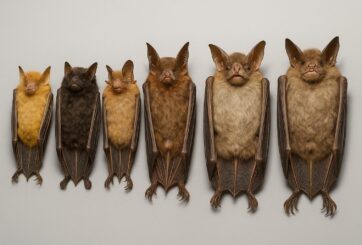
Just in time for Halloween, researchers from the Royal Ontario Museum (ROM), the Field Museum in Chicago, and Lawrence University in Wisconsin have announced the discovery of six new species of bats. These newly identified species, all found in the Philippines, belong to the group known as tube-nosed bats—a fascinating and diverse branch of the mammal family tree. Expanding the Tree of Life Formally recognized as new species through morphological and genetic analysis, this discovery expands the already impressive global…
In a recent study published today in the European Geosciences Union (EGU) journal Biogeosciences, scientists have confirmed that mercury pollution from artisanal and small-scale gold mining (ASGM) is contaminating food crops not through the soil, as previously believed, but directly from the air. Driven by the surging price of gold, which has increased by more than tenfold since 2000, the rapid expansion of unregulated mining in these regions raises urgent questions about food security, human health, and environmental justice The…
A new study from Iceland’s Surtsey island shows that birds carried most of the plants that colonised the island, challenging long-held beliefs that seed or fruit shape determines how plants spread — offering fresh insight into life’s adaptation to c When the volcanic island of Surtsey rose from the North Atlantic Ocean in 1963, it offered scientists a once-in-a-lifetime opportunity to observe how life takes hold on a brand-new and barren land. For decades, ecologists believed that plants’ ability to…
 Feedback
