



Feeding 9 Billion: Innovations in Agricultural Modeling
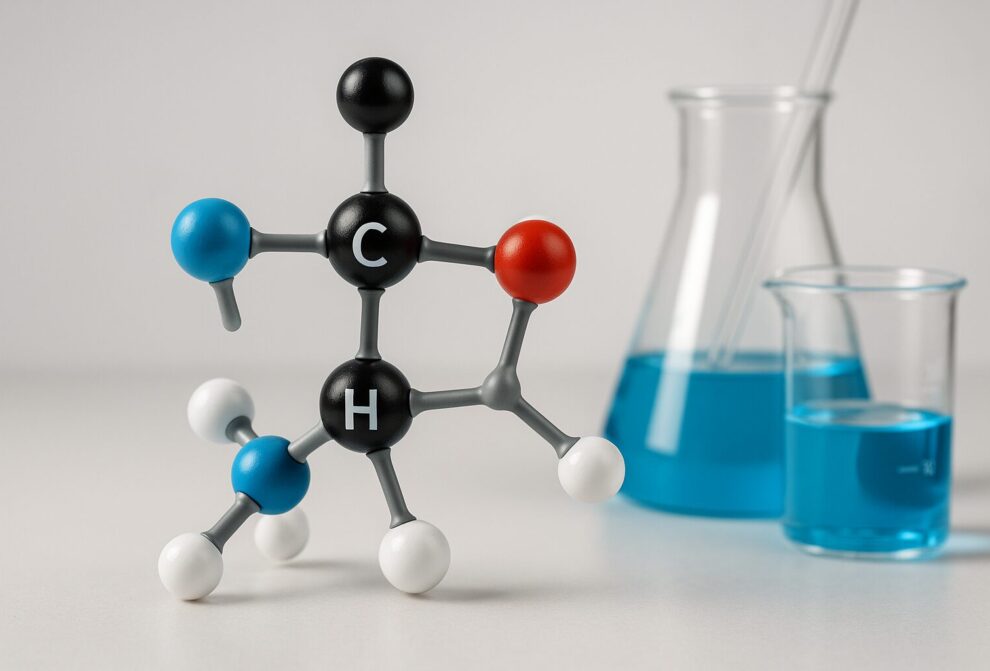
AI Generated Image
COLUMBUS, Ohio – Chemists have unveiled a groundbreaking method to generate a wide range of highly useful chemical building blocks using metal carbenes, according to new research.
Carbenes—short-lived, highly reactive carbon atoms—are crucial in chemical reactions involved in drug synthesis and materials science. However, creating carbenes in the lab has traditionally been a challenge due to the hazardous and limited methods available.
A team at The Ohio State University has now discovered a significantly easier way to produce metal carbenes.
“Our goal all along was to determine if we could come up with new methods of accessing carbenes that others hadn’t found before,” said David Nagib, co-author of the study, a distinguished professor in arts and sciences and a professor of chemistry and biochemistry at The Ohio State University. “Because if you could harness them in a milder catalytic way, you could reach new reactivity, which is essentially what we did.”
By utilizing iron as a catalyst and combining it with chlorine-based molecules that efficiently generate free radicals, the team was able to form previously unmade carbenes. These carbenes then reacted with other molecules to form cyclopropanes—three-sided molecular structures essential to the production of various medicines and agrichemicals.
Despite the availability of other methods to synthesize cyclopropanes, the team’s aim was to identify the most efficient and versatile approach.
“Our lab is obsessed with trying to get the best methods for making cyclopropanes out there as soon as possible,” said Nagib. “We have the eye on the prize of inventing better tools to make better medicines, and along the way, we’ve solved a huge problem in the carbene world.”
The study was recently published in Science.
In solving one of chemistry’s persistent challenges, the researchers also discovered their method works in water—indicating that metal carbenes might one day be generated inside living cells to help discover new drug targets. Nagib noted that this latest technique is “about 100 times better” than any his lab has produced in the past decade.
“Our lab is very much a tool development lab,” he said. “And to me, the way you gauge if it’s valuable or interesting is if others use your tool.”
This breakthrough could simplify and improve the safety of current multi-step, wasteful processes used to generate carbenes. In the long term, the new method may enable the development of medications that are more affordable, effective, and durable.
According to Nagib, the approach has the potential to address shortages of crucial drugs, including antibiotics, antidepressants, and treatments for heart disease, COVID, and HIV.
Recognizing the global importance of their discovery, the team aims to make this tool accessible to both large and small research labs and pharmaceutical companies. Nagib emphasized the need for continuous advancement of the technique to unlock its full potential.
“Our team at Ohio State came together in the coolest, most collaborative way to develop this tool,” he said. “So we’re going to continue racing to show how many different types of catalysts it could work on and make all kinds of challenging and valuable molecules.”
Other Ohio State co-authors include Khue Nguyen, Xueling Mo, Bethany DeMuynck, Mohamed Elsayed, Jacob Garwood, Duong Ngo, and Ilias Khan Rana. The work was supported by the National Science Foundation, the National Institutes of Health, and the Brown Institute for Basic Science.
Original Publication
Authors: Khue N. M. Nguyen, Xueling Mo, Bethany M. DeMuynck, Mohamed Elsayed, Jacob J. A. Garwood, Duong T. Ngo, Ilias Khan Rana and David A. Nagib.
Journal: Science
DOI: 10.1126/science.adw4177
Article Title: Harnessing carbene polarity: Unified catalytic access to donor, neutral, and acceptor carbenes
Article Publication Date: 10-Jul-2025
Original Source: https://news.osu.edu/new-chemical-tool-may-improve-development-of-key-drug-components/




The appearance of a hot sauce or pepper doesn’t reveal whether it’s mild or likely to scorch someone’s taste buds. So, researchers made an artificial tongue to quickly detect spiciness. Inspired by milk’s casein proteins, which bind to capsaicin and relieve the burn of spicy foods, the researchers incorporated milk powder into a gel sensor. The prototype, reported in ACS Sensors, detected capsaicin and pungent-flavored compounds (like those behind garlic’s zing) in various foods. “Our flexible artificial tongue holds tremendous…
Unless you’ve owned reptiles, you might not know that many of them “pee” crystals. Researchers publishing in the Journal of the American Chemical Society investigated the solid urine of more than 20 reptile species and found spheres of uric acid in all of them. This work reveals how reptiles uniquely package up and eliminate crystalline waste, which could inform future treatments for human conditions that also involve uric acid crystals: kidney stones and gout. Most living things have some sort…
Enabled by a new high-resolution mapping technique, the findings overturn a long-held belief that the genome loses its 3D structure when cells divide CAMBRIDGE, MA — Before cells can divide, they first need to replicate all of their chromosomes, so that each of the daughter cells can receive a full set of genetic material. Until now, scientists had believed that as division occurs, the genome loses the distinctive 3D internal structure that it typically forms. Once division is complete, it…
Researchers at Chalmers University of Technology in Sweden and the US space agency NASA have made an unexpected discovery that challenges one of the basic rules of chemistry and provides new knowledge about Saturn’s enigmatic moon Titan. In its extremely cold environment, normally incompatible substances can still be mixed. This discovery broadens our understanding of chemistry before the emergence of life. Scientists have long been interested in Saturn’s largest, orange-coloured moon as its evolution can teach us more about our…
 Feedback
