



Feeding 9 Billion: Innovations in Agricultural Modeling
The energy transition in Germany, Europe, and across the world is driving robust demand for solar panels. Alongside high energy yields, aesthetics and acceptance are also increasingly important factors. To accommodate these trends, a team of researchers from the Fraunhofer Institute for Solar Energy Systems ISE has developed an innovative solar facade element that can be incorporated into a building’s exterior practically invisibly and without any significant loss of efficiency. With the development of MorphoColor® coating technology, the experts have made an important contribution to the expansion of integrated photovoltaic systems in Germany. For this groundbreaking project, they will be presented with the Joseph von Fraunhofer Prize for 2024.
There are two crucial factors with solar panels for building-integrated photovoltaic use: First, they need to behave optically like a traditional colored element, and second, they should still be able to generate as much power as possible. To meet this challenge, the researchers looked to nature for inspiration — and found it in morpho butterflies. “The 3D photonic structures on a morpho butterfly’s wings allow for an intensive, angularly stable colored impression thanks to a fundamentally low-loss interference effect,” explains Kroyer. Following this biological model, the experts from Fraunhofer ISE succeeded in using a vacuum process to apply a similar surface structure to the back of the glass covering their solar panels. Depending on the fine structure, this method can be used to produce glass coverings in various colors.
The coating system for colored solar panels has now surpassed the biological model in terms of its properties. “Independent measurements confirm that the colored solar panels with MorphoColor® coatings can achieve about 95 percent of the power of a comparable uncoated panel,” Wessels explains. That makes MorphoColor® technology far superior to all other comparable technologies available on the market.
The plug-in solution can be used with all standard commercially available solar technologies as well as those foreseeable in the future, plus it can be manufactured industrially at low cost. Cell and panel technologies with a uniform appearance are an especially good fit. These include rear contact solar cells and the shingle matrix technology also developed at Fraunhofer ISE — an assembly method reminiscent of a brick wall. “In shingle matrix technology, the conductive adhesive bonding of the solar cells eliminates the need for reflective metallic connectors between the cells, which leads to a homogeneous appearance. That means the solar cell technology remains completely invisible behind the colored layer. And that in turn enables aesthetically pleasing and complete visual integration into facades or roofs,” Höhn explains.
The MorphoColor® trademark is already registered in the EU, Switzerland, China, the United States, Japan, and South Korea. A license was granted in 2023 to Switzerland-based Megasol Energie AG, a leading European producer of solar panels and in-roof and facade installation systems that is currently establishing the MorphoColor® technology on the market. Integration of solar panels into vehicles is another promising field of development. Fraunhofer ISE presented glass car roofs and hoods with integrated MorphoColor® solar panels at the IAA automotive trade show. All of the major German car manufacturers showed great interest in the new technology.




On large, multi-storey construction sites, one of the biggest productivity hurdles is locating materials. Workers often lose valuable time searching for tools and supplies scattered across different floors. This inefficiency not only delays progress but also increases project costs. A new study, “IoT-Altimeter in Smart Pallets for Material Tracking on Multi-storey Construction Sites”, introduces a simple yet effective solution: equipping standard pallets with smart IoT devices that automatically track their location by floor level. How the System Works The upgraded…
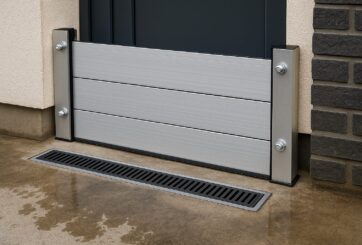
Introducing a severe impacts approach to guide adaptation to pluvial floods in residential and public buildings The risk of heavy rainfall and severe flooding increases with climate change. But property owners – regardless of size – often underestimate their own responsibility and are unaware of what preventive measures they can take themselves. In a new scientific article, researchers from Linköping University, Sweden, show how to go about preventive work. Many property owners believe that it is the municipality’s responsibility to…
A new seismic study of Singapore could guide urban growth and renewable energy development in the coastal city nation, where 5.6 million residents live within an area of 734 square kilometers. The study, published in Seismological Research Letters, identifies areas with increased risk of ground shaking and a possible reservoir for geothermal energy production, as well as a glimpse at Singapore’s tectonic history. Jiayuan Yao of China University for Geosciences and colleagues analyzed teleseismic data captured by a few permanent…
Design to withstand hurricanes isn’t enough to protect tall buildings and facade systems against the climate crisis Houston, we have a problem. The ‘Space City’ boasts 50 buildings over 150 meters tall. These were designed to withstand hurricanes, to which Texas is prone. But on May 16th, 2024, a derecho – a wide, long-lived windstorm associated with rapidly moving showers or thunderstorms – managed to cause unexpected damage to many of the tall buildings downtown. The socio-economic impact was significant, due…
 Feedback
