



Feeding 9 Billion: Innovations in Agricultural Modeling
Now, new research and monitoring systems are clarifying what happens to disruptive clouds of electrons and other electrically charged particles, known as ions, in the ionosphere. The work may lead to regional predictions of reduced GPS reliability and accuracy.
One team of researchers has recently observed Earth's aurora, which is a prominent manifestation of ionospheric electrical activity, in the act of disrupting GPS equipment. Other scientists have successfully tested a way to forecast GPS disturbances for marine users, with likely extension to users on land.
Some research groups are turning the tables and employing GPS receivers as tools with which to conduct basic research on the electrical-current structures of the ionosphere.
The scientific reports on these and other recent developments are available in a special section of Space Weather: The International Journal of Research and Applications, a publication of the American Geophysical Union, or AGU.
A magazine-style article that introduces the section was posted online Friday, June 6. It summarizes past research and operational developments regarding ionospheric effects on GPS, and discusses potential future improvements in the field.
The new introductory article is available at http://www.agu.org/journals/sw/swa/free (Click on “Space Weather and the Global Positioning System”). The special section itself, which currently contains seven scientific reports, is available online at
http://www.agu.org/journals/sw/?content=specialsections&ssid=GPS1
Space Weather is an online journal devoted to studies of the electrical interactions between the Earth and various emissions from the Sun, including electrically charged particles (the solar wind), solar radio noise and solar X-rays. The journal, which has a quarterly print digest called Space Weather Quarterly, is cosponsored by the National Science Foundation and the International Space Environment Service.
AGU is an international organization of Earth and space scientists. It has more than 50,000 members in 137 countries, and publishes Space Weather and 18 other scientific journals.



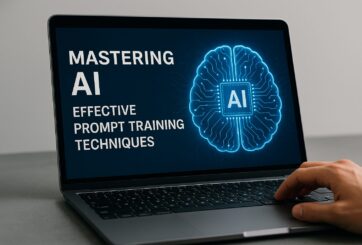
Research from Carnegie Mellon’s School of Computer Science suggests prompt engineering could be as important as coding Today’s generative artificial intelligence models can create everything from images to computer applications, but the quality of their output depends largely on the prompt a human user provides. Carnegie Mellon University researchers have proposed a new approach for teaching everyday users how to create these prompts and improving their interactions with generative artificial intelligence models. The method, called Requirement-Oriented Prompt Engineering (ROPE), shifts…

A new quantum random number generator is almost 1000 times faster than other generators and much smaller, promising to change data management and cybersecurity in several industries including health, finance, and defense A joint team of researchers led by scientists at King Abdullah University of Science and Technology (KAUST) and King Abdulaziz City for Science and Technology (KACST) has reported the fastest quantum random number generator (QRNG) to date based on international benchmarks. The QRNG, which passed the required randomness…

Very secure and highly efficient: encryption and decryption with luminescent perovskites To guarantee high data security, encryption must be unbreakable while the data remains rapidly and easily readable. A novel strategy for optical encryption/decryption of information has now been introduced in the journal Angewandte Chemie by a Chinese research team. It is based on compounds with carefully modulated luminescent properties that change in response to external stimuli. The compounds are hybrid two-dimensional organic-inorganic metal-halide perovskites, whose structure consists of inorganic…

Researchers at the University of Utah’s Department of Psychiatry and Huntsman Mental Health Institute today published a paper introducing RiskPath, an open source software toolkit that uses Explainable Artificial Intelligence (XAI) to predict whether individuals will develop progressive and chronic diseases years before symptoms appear, potentially transforming how preventive healthcare is delivered. XAI is an artificial intelligence system that can explain complex decisions in ways humans can understand. The new technology represents a significant advancement in disease prediction and prevention…
 Feedback
