



Feeding 9 Billion: Innovations in Agricultural Modeling
Nowadays society is deeply concerned with the safety issues, the flight safety in particular. Despite the technological progress, people can not do without dogs` assistance, as no device is capable of replacing the dogs` scent in search of explosive substances and drugs. Dogs are indispensable for differentiating between different individuals by specific smells. To work efficiently a dog needs excellent scent and ability to learn quickly. It is only in Russia that the unique animals -dog and jackal hybrids – have been bred for this purpose. This effort has been undertaken by Klim Sulimov, Senior Research Assistant, D.S. Likhachev Scientific Research Institute for Cultural Heritage and Environmental Protection.
However, why did the scientists come to the idea of breeding the hybrids? The matter is that wild jackals have a better sense of smell than any dog breeds. In the course of domestication animals have lost a lot of qualities needed for living at large. Along with that, it is hard to work with wild animals: they would never trust people completely and be as obedient as dogs. Besides, jackals endure cold weather pretty badly – unlike their congeners, they perspire from all the skin surface. So, hybridisation has appeared to be the only solution.
The scientists had to choose the dog breed best suited for the purpose. “We have chosen arctic dogs – reindeer herding husky, Sulimov told us. Northern dogs have better sense of smell than all other dog breeds, as huskies are used under severe conditions of arctic cold. Substances become non-volatile under low temperatures, that is why a sense of smell becomes keener.” The reindeer herding huskies in the North of Russia help to graze reindeers.
By the way, the gun dogs – greyhounds, hounds and setters have got a weakened sense of smell. If a dog`s scent is too keen, the dog is able to smell not only a fresh scent of an animal, but also the scent of the previous day, the two smells confusing the dog. When the dog starts differentiating between multiple smells, it loses time and is unable to promptly perform a specific task of catching the prey. In this situation the dogs with weaker scent gain the advantage being hot on the trail. Hunters normally choose such dogs for breeding, rejecting the dogs with too keen sense of smell. As a rule, this method of selection does not apply to the shepherd dogs, people not trying to affect their sense of smell.
It is not easy to interbreed the jackal and the dog. Only the animals raised by the dog can be forced to such interbreeding. The sexual partner imprinting accompanies such interbreeding. This is particularly important for male jackals, their mating period being very short. The first jackals for unique hybrids were delivered to Moscow in 1975 from the Baku breeding nursery. “Four cubs were tightly packed in a shoe-box, says Sulimov. But they survived the travel all right – the cubs grew up and produced posterity.” Their cubs were laid under a bitch of the reindeer herding husky, which raised them. Then the scientists initiated interbreeding.
It was rather easy to cross the male dogs and the female jackals. The reverse crossing turned out more difficult, but nevertheless it succeeded – for the first time in the world. The jackal and dog half-breds had extraordinary scent, but it was very hard to train them. To overcome the difficulty the researchers decided to interbreed them again with the dogs and as a result the quarter-bred hybrids were obtained (the scientists called them `quadroons`). This time the desired result was achieved: the animals had excellent scent and good learning capabilities. The researchers chose not to proceed with the interbreeding, it was necessary to further maintain the gene pool, crossing the `quadroons` with each other. The `quadroons` were employed by the forensic criminology examination department for recognition of a human being`s individual smell. The criteria of efficient smell differentiation were strict: three dogs one by one should have been able to indicate that a certain smell belonged to a certain individual.
Twenty-five jackal and dog hybrids are currently working at the Sheremetevo Airport and ten more – at the expert-criminology center. It has appeared very convenient to use these hybrids at the airport: they are small and can creep through the narrowest spots, when an aircraft is inspected before the departure. They can easily climb up the stairs and walk along narrow cornices. The German shepherd dogs are not fit for this purpose. On top of that, the hybrids help catching the airport thieves who break open the baggage and wipe off their fingerprints (but the smell remains!). “Our dogs are all different and this is an advantage – one key does not fit all locks, says Sulimov. Some tasks require smaller dogs, others – larger and quicker ones. We keep in mind that the hybrid dog can work efficiently for 20-30 minutes, and then it should be replaced by a fresh one. The dog`s tail (which is coiled up – a feature inherited from the husky) indicates that the dog`s vitality is low: if the tail is down – the dog is tired.”
The unique hybrids do not make a registered breed yet, they even do not have an approved name, being simply called `Sulimov`s dogs`. It would not make any difference, but the lack of the official registration has prevented the aviation security service from adding the hybrid dogs to the balance sheet since all respective instructions are intended only for the war-dogs of the German shepherd kind. `Sulimov`s dogs` do not have an established value, although they are invaluable for work. There is no chance yet to obtain the official certificate for them. This controversial situation significantly complicates the research work carried out by Sulimov and his colleagues. The dogs are unaware of the fact that they have not been registered – they continue working to protect people`s lives.




Populations in the Southern Caucasus have maintained remarkably consistent genetic ancestry for over 5,000 years, even through periods of significant cultural transformation. Recent research conducted by an international team from Germany, Georgia, Armenia, and Norway indicates that, although there were some genetic inputs from the Eurasian Steppe and Anatolia throughout the Bronze Age, the fundamental local gene pool remained stable across millennia. A Landmark Archaeogenetic Study Researchers at the Max Planck-Harvard Research Centre for the Archaeoscience of the Ancient Mediterranean…
The linguistic abilities of contemporary artificial intelligence systems are remarkable. We can now participate in genuine dialogues with systems such as ChatGPT, Gemini, and others, exhibiting a fluency nearly akin to that of a human. Nevertheless, our understanding of the fundamental mechanisms within these networks that yield such extraordinary outcomes remains limited. A recent study published in the Journal of Statistical Mechanics: Theory and Experiment (JSTAT) elucidates a component of this enigma. It indicates that when less data is utilised…
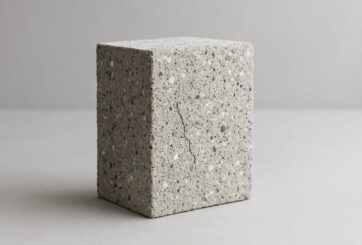
The idea seems futuristic: At ETH Zurich, various disciplines are working together to combine conventional materials with bacteria, algae and fungi. The common goal: to create living materials that acquire useful properties thanks to the metabolism of microorganisms – “such as the ability to bind CO2 from the air by means of photosynthesis,” says Mark Tibbitt, Professor of Macromolecular Engineering at ETH Zurich. An interdisciplinary research team led by Tibbitt has now turned this vision into reality: it has stably…
About 100 cells divide every second in our body. A key protein in cell division is a protein kinase termed Plk1, because it activates other proteins involved in this process. Plk1 is also overexpressed in many types of cancer. This makes it a promising target for cancer therapies. However, drugs that inhibit Plk1 have often proven ineffective. New findings by researchers led by Peter Lenart and Monica Gobran may help to improve therapeutic approaches. They discovered a previously unknown function…
 Feedback
