



Feeding 9 Billion: Innovations in Agricultural Modeling
Findings Could Lead to Faster Electronic Devices
Working at the nexus of biology and nanotechnology, a researcher and an alumnus from Rensselaer Polytechnic Institute have released findings that could lead to the tailoring of bacterial processes for a host of smaller, faster semiconductors and other electronic devices.
Pulickel Ajayan, professor of materials science and engineering at Rensselaer, and geobiologist Ronald Oremland reported that three different kinds of common bacteria “grow” the element selenium in the form of uniform nanospheres. The nanoscopic balls exhibit vastly different properties than selenium that is found as a trace mineral in topsoil.
Selenium is used in photovoltaic and photoconductive technologies. It is incorporated in many electronic and technical applications, such as semiconductors, photocopiers, and photocells.
The findings of Ajayan and Oremland were published in the journal Applied and Environmental Microbiology (an American Society of Microbiology publication) in January. A summary of the research also was featured the same month in the “Editor’s Choice” section of Science magazine.
Oremland, a senior scientist at the U.S. Geological Survey in Menlo Park, Calif., and a 1968 Rensselaer biology graduate, has been studying anaerobic bacteria that respire, or “breathe,” soluble salts, or “oxyanions,” of toxic elements, such as selenium and arsenic. He recently discovered that some of these microbes form distinctive selenium nanoscopic balls, each of which measure 300 nanometers in diameter on the outside of their cell envelopes.
Knowing little about what kinds of properties selenium exhibits on the nanoscale level, Oremland turned to his alma mater to enlist the help of Ajayan, an internationally known nanomaterials expert.
“I was interested in finding out whether this type of selenium would be useful. As a biologist, I am not familiar with the various electrical, optical, and other properties of nanomaterials,” said Oremland, the paper’s lead author.
Ajayan and Seamus Curran, a postdoctoral fellow working at the Nanoscale Science and Engineering Center at Rensselaer at the time, found that the nanospheres exhibited enhanced optical and semiconducting properties. They also discovered that the nanospheres grown on each of the three bacteria studied were different from each other and fundamentally different from amorphous selenium particles formed by chemical means.
“Surprisingly, we found different bacteria produce spheres with different arrangements of the selenium atoms and hence different optical properties,” says Ajayan. “Remarkably, these conditions cannot be achieved by current methods of chemical synthesis.”
The research could lead to the production of nanospheres, nanowires, nanorods, and other nanostructures with precise atomic arrangements for smaller, faster semiconductors and other electronic devices.
“This is an excellent example of how Rensselaer researchers are crossing over disciplines in unique collaborations that are opening up new avenues in research and discovery,” said Rensselaer Provost Bud Peterson.
Other collaborators include researchers from University of Guelph in Canada, the Naval Surface Warfare Center in Virginia, and New Mexico State University.
About Rensselaer
Rensselaer Polytechnic Institute, founded in 1824, is the nation’s oldest technological university. The school offers degrees in engineering, the sciences, information technology, architecture, management, and the humanities and social sciences. Institute programs serve undergraduates, graduate students, and working professionals around the world. Rensselaer faculty are known for pre-eminence in research conducted in a wide range of research centers that are characterized by strong industry partnerships. The Institute is especially well known for its success in the transfer of technology from the laboratory to the marketplace so that new discoveries and inventions benefit human life, protect the environment, and strengthen economic development.




Populations in the Southern Caucasus have maintained remarkably consistent genetic ancestry for over 5,000 years, even through periods of significant cultural transformation. Recent research conducted by an international team from Germany, Georgia, Armenia, and Norway indicates that, although there were some genetic inputs from the Eurasian Steppe and Anatolia throughout the Bronze Age, the fundamental local gene pool remained stable across millennia. A Landmark Archaeogenetic Study Researchers at the Max Planck-Harvard Research Centre for the Archaeoscience of the Ancient Mediterranean…
The linguistic abilities of contemporary artificial intelligence systems are remarkable. We can now participate in genuine dialogues with systems such as ChatGPT, Gemini, and others, exhibiting a fluency nearly akin to that of a human. Nevertheless, our understanding of the fundamental mechanisms within these networks that yield such extraordinary outcomes remains limited. A recent study published in the Journal of Statistical Mechanics: Theory and Experiment (JSTAT) elucidates a component of this enigma. It indicates that when less data is utilised…
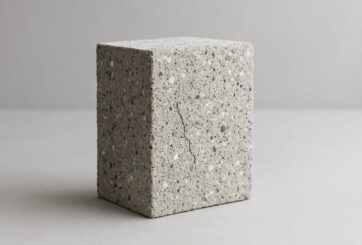
The idea seems futuristic: At ETH Zurich, various disciplines are working together to combine conventional materials with bacteria, algae and fungi. The common goal: to create living materials that acquire useful properties thanks to the metabolism of microorganisms – “such as the ability to bind CO2 from the air by means of photosynthesis,” says Mark Tibbitt, Professor of Macromolecular Engineering at ETH Zurich. An interdisciplinary research team led by Tibbitt has now turned this vision into reality: it has stably…
About 100 cells divide every second in our body. A key protein in cell division is a protein kinase termed Plk1, because it activates other proteins involved in this process. Plk1 is also overexpressed in many types of cancer. This makes it a promising target for cancer therapies. However, drugs that inhibit Plk1 have often proven ineffective. New findings by researchers led by Peter Lenart and Monica Gobran may help to improve therapeutic approaches. They discovered a previously unknown function…
 Feedback
