



Feeding 9 Billion: Innovations in Agricultural Modeling
Dr Mark Birkin and colleagues, who are developing the model at the University of Leeds, will be demonstrating its potential at the UK e-Science stand at SC06, the world’s largest supercomputing conference in Florida, this week.
They are using data recorded at the 2001 census to build a model of the whole UK population, but with personal details omitted so no individual or household can be identified. Their project, Modelling and Simulation for e-Social Science is funded by the UK Economic and Social Research Council National Centre for e-Social Science. “We’re building a core model which represents the whole of the UK at the level of (synthetic) individuals and households with many attributes and behaviours,” says Dr Birkin.
Data about these attributes – such as car ownership, house prices and use of health, education, transport and leisure facilities – are held by different agencies in different locations and often in different formats. “Historically, people have assembled data on a single PC or workstation. E-Science provides exciting opportunities to access multiple databases from remote, virtual locations, making it possible to develop highly generic simulation models which are easy to update,” says Dr Birkin.
The model can be projected into the future to explore the effect of different demographic trends and also to test the consequences of policy decisions. The SC06 demonstration will show how the model could help inform policy for a major UK city under a number of different scenarios. “We can profile populations area by area and forecast attributes such as health status, employment, and car ownership ten or twenty years ahead. In future, we’ll be able to project the effects of policy change and help policymakers evaluate the impact of the decisions they take,” says Dr Birkin.
The demonstration, e-Social Science in action: a prototype geo-simulation portal , can be seen at the UK e-Science Programme stand at SC06, aisle 2200, booth 2234



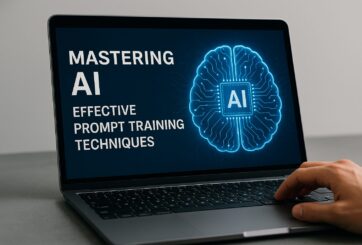
Research from Carnegie Mellon’s School of Computer Science suggests prompt engineering could be as important as coding Today’s generative artificial intelligence models can create everything from images to computer applications, but the quality of their output depends largely on the prompt a human user provides. Carnegie Mellon University researchers have proposed a new approach for teaching everyday users how to create these prompts and improving their interactions with generative artificial intelligence models. The method, called Requirement-Oriented Prompt Engineering (ROPE), shifts…

A new quantum random number generator is almost 1000 times faster than other generators and much smaller, promising to change data management and cybersecurity in several industries including health, finance, and defense A joint team of researchers led by scientists at King Abdullah University of Science and Technology (KAUST) and King Abdulaziz City for Science and Technology (KACST) has reported the fastest quantum random number generator (QRNG) to date based on international benchmarks. The QRNG, which passed the required randomness…

Very secure and highly efficient: encryption and decryption with luminescent perovskites To guarantee high data security, encryption must be unbreakable while the data remains rapidly and easily readable. A novel strategy for optical encryption/decryption of information has now been introduced in the journal Angewandte Chemie by a Chinese research team. It is based on compounds with carefully modulated luminescent properties that change in response to external stimuli. The compounds are hybrid two-dimensional organic-inorganic metal-halide perovskites, whose structure consists of inorganic…

Researchers at the University of Utah’s Department of Psychiatry and Huntsman Mental Health Institute today published a paper introducing RiskPath, an open source software toolkit that uses Explainable Artificial Intelligence (XAI) to predict whether individuals will develop progressive and chronic diseases years before symptoms appear, potentially transforming how preventive healthcare is delivered. XAI is an artificial intelligence system that can explain complex decisions in ways humans can understand. The new technology represents a significant advancement in disease prediction and prevention…
 Feedback
