



Feeding 9 Billion: Innovations in Agricultural Modeling
The MIT project utilizes data gathered, in real time and at an unprecedented scale, from cell phones and other wireless technologies, to better understand the patterns of daily life in Rome, and to illustrate what ubiquitous connectivity in an urban environment looks like.
“In today's world, wireless mobile communications devices are creating new dimensions of interconnectedness between people, places and urban infrastructures,” said project director Carlo Ratti, director of the SENSEable City Lab at MIT. “The goal of Real Time Rome is to use this connectivity to map the city in real time, which may ultimately lead to a deeper understanding of how modern cities function.”
Real Time Rome features seven large animations, projected on transparent plexiglass screens. One screen shows traffic congestion around the city, while another screen shows the exact movements of all the city's buses and taxis. Another screen is able to track Romans celebrating major events like the World Cup or the city's annual White Nights festival (Notte Bianca, which will happen on Sept. 9, the evening before the Biennale opening). Additional screens show how tourists use urban spaces and how cars and pedestrians move about the city.
Ratti believes these types of visualizations will help reduce the inefficiencies of present day urban systems and open the way to a more sustainable future: “Our hope is that projects like Real Time Rome will give city dwellers more control over their environment by allowing them to make more informed decisions about their surroundings. Imagine being able to avoid traffic congestion, or knowing where people are congregating on a Saturday afternoon. In a worst-case scenario, such real time systems could also make it easier to evacuate a city in case of emergency.”
Ratti's team obtains its data anonymously from cell phones, GPS devices on buses and taxis, and other wireless mobile devices, using advanced algorithms developed by Telecom Italia, the principal sponsor of the project. These algorithms are able to discern the difference between, say, a mobile phone signal from a user who is stuck in traffic and one that is sitting in the pocket of a pedestrian wandering down the street. Data are made anonymous and aggregated from the beginning, so there are no implications for individual privacy.
“The exhibit will hopefully trigger many more urban studies that take advantage of the already existing data on mobile phones and transportation systems, in order to create a deeper understanding of how cities are being used,” said project curator Andres Sevtsuk, a graduate student in urban studies and planning.
Ratti describes Real Time Rome as a new kind of mapmaking. Along with other powerful interactive maps, such as Google Earth, Real Time Rome is backed up by huge databases that will ultimately make it possible to conduct highly customized searches and view displays in real time.
“We are very excited to carry out our experiment in Rome, the city where Gianbattista Nolli refined modern cartography in 1748,” Ratti said. “Maps of the future will be large databases that will enable us to extract fragments that suit our needs, much like we can do today on the web, and will also tap into the coming revolution in RFID (radio frequency identification) technology.”
Real Time Rome is produced by MIT's SENSEable City Laboratory, an initiative that studies the impact of new technologies on cities.
Other MIT projects will also be on display at the Biennale, in the same location as Real Time Rome. They include including an interactive bus stop with wireless Internet; designs for digitally enhanced public spaces in the Milla Digital in Zaragoza, Spain; a smart car and public transportation system by the MIT Media Lab and Design Lab; and new computer interfaces by the Tangible Media Group at the Media Lab.
“All these projects from MIT deal with specific aspects of the urban environment and digital technology,” said Sevtsuk. “Together they start to form a multifaceted picture of how real-time communications can change urban design.”
Following the Venice Biennale, the SENSEable City Laboratory will launch the SENSEable City Consortium, a major research initiative aimed at bringing together city and public administrators, network operators, electronic hardware and software producers and urban hardware manufacturers in MIT's unique research environment.
The principal sponsor of Real Time Rome is Telecom Italia. Technical partners are the Rome public transportation authority (ATAC), Google, Samarcanda Taxi and the city of Rome.
The Real Time Rome team at the SENSEable City Lab is composed of Ratti, Sevtsuk, Burak Arikan, Francesco Calabrese, Assaf Biderman, Filippo Dal Fiore, Saba Ghole, Daniel Gutierrez, Sonya Huang, Sriram Krishnan, Justin Moe, Carlo Ratti, Francisca Rojas, and Najeeb Tarazi.



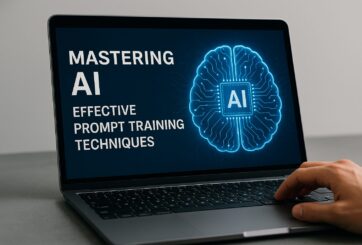
Research from Carnegie Mellon’s School of Computer Science suggests prompt engineering could be as important as coding Today’s generative artificial intelligence models can create everything from images to computer applications, but the quality of their output depends largely on the prompt a human user provides. Carnegie Mellon University researchers have proposed a new approach for teaching everyday users how to create these prompts and improving their interactions with generative artificial intelligence models. The method, called Requirement-Oriented Prompt Engineering (ROPE), shifts…
A new quantum random number generator is almost 1000 times faster than other generators and much smaller, promising to change data management and cybersecurity in several industries including health, finance, and defense A joint team of researchers led by scientists at King Abdullah University of Science and Technology (KAUST) and King Abdulaziz City for Science and Technology (KACST) has reported the fastest quantum random number generator (QRNG) to date based on international benchmarks. The QRNG, which passed the required randomness…

Very secure and highly efficient: encryption and decryption with luminescent perovskites To guarantee high data security, encryption must be unbreakable while the data remains rapidly and easily readable. A novel strategy for optical encryption/decryption of information has now been introduced in the journal Angewandte Chemie by a Chinese research team. It is based on compounds with carefully modulated luminescent properties that change in response to external stimuli. The compounds are hybrid two-dimensional organic-inorganic metal-halide perovskites, whose structure consists of inorganic…

Researchers at the University of Utah’s Department of Psychiatry and Huntsman Mental Health Institute today published a paper introducing RiskPath, an open source software toolkit that uses Explainable Artificial Intelligence (XAI) to predict whether individuals will develop progressive and chronic diseases years before symptoms appear, potentially transforming how preventive healthcare is delivered. XAI is an artificial intelligence system that can explain complex decisions in ways humans can understand. The new technology represents a significant advancement in disease prediction and prevention…
 Feedback
