



Feeding 9 Billion: Innovations in Agricultural Modeling
When Tim Berners-Lee invented the World Wide Web 15 years ago, he always intended that it should be easy for people to write to it, not just read from it. But if websites are opened up to anyone, they often get vandalised by people with axes to grind. Now, a researcher from Manchester has brought together two of computing’s current buzzwords – the Grid, and Wikis – to overcome this problem.
A Wiki is a web site where users can easily add and edit its content. Although some Wikis ask contributors to pick a username and password, people running the sites have no idea who their users really are, and the better known Wikis have to be constantly on the look out for offensive or just irrelevant additions. The new open source software, GridSiteWiki, combines the functions of a Wiki with user authentication based on security tools developed for Grid computing. Dr Andrew McNab of Manchester University, who developed the new software, will be speaking on Grid security at the UK e-Science All Hands Conference in Nottingham on Thursday.
Dr McNab explains, “Wikis have been plagued with problems of trust and identity: how do you deal with internet vandals using fake accounts? Now we’re able to tie in with the security being rolled out for the Grid, we can finally make a Web where you can visit a website for the first time and start contributing straight away, without the administrators having to worry about anonymous vandals with fake identities.”
‘Grid computing’ harnesses the power of computers worldwide to tackle complex problems. Scientists who want to use the Grid need to have a ‘digital certificate’ – like an online ID card, which they can only get by showing up in person with their passport. So once someone has a digital certificate, the Grid knows who they are and that they can be trusted. GridSiteWiki extends this so that Wikis can use digital certificates to identify their contributors. As Dr McNab points out, some Wikis are deliberately open to anyone. But others are set up for a particular community, whether a science experiment, company employees or members of a cycling club, and need to identify their users.
Dr McNab works at Manchester University on the GridPP project. Funded by PPARC, GridPP is building a UK computing Grid to analyse the huge amounts of data expected from the next generation of particle physics experiments. The particle physics computing Grid allows scientists to obtain particle physics data and then have it analysed on one or more of 13,000 computers at nearly 200 sites globally, from Budapest to Illinois, without ever needing to know where the data comes from or where it is processed.
The new Wiki tool builds on the GridSite software developed previously by Dr McNab, which allows users to identify themselves to websites using a digital certificate. For users with a certificate, this means they don’t have to remember user names and passwords to log onto a website or Wiki, they’re automatically logged on using their Grid certificate. GridSiteWiki also automatically extracts the users’ identity from their digital certificate and uses this to ‘sign’ their articles on the Wiki, so that other readers know who wrote or edited the article.
There are Wikis about nearly everything, from renewable energy to Romanian guitar chords. Probably the most famous Wiki is WikiPedia, a web-based encyclopedia written collaboratively by volunteers and with more than 2.3 million articles. GridSiteWiki is a version of MediaWiki – the same software used by WikiPedia.
So far, GridSiteWiki is used to provide the informal documentation area on the GridSite website, and for the Wikis running on the GridPP website (www.gridpp.ac.uk). It is open source, so GridSiteWiki is free for anyone to use. The source code is available under the same terms (the GNU GPL) as MediaWiki itself.



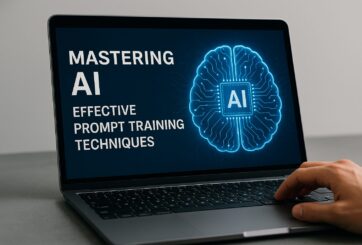
Research from Carnegie Mellon’s School of Computer Science suggests prompt engineering could be as important as coding Today’s generative artificial intelligence models can create everything from images to computer applications, but the quality of their output depends largely on the prompt a human user provides. Carnegie Mellon University researchers have proposed a new approach for teaching everyday users how to create these prompts and improving their interactions with generative artificial intelligence models. The method, called Requirement-Oriented Prompt Engineering (ROPE), shifts…

A new quantum random number generator is almost 1000 times faster than other generators and much smaller, promising to change data management and cybersecurity in several industries including health, finance, and defense A joint team of researchers led by scientists at King Abdullah University of Science and Technology (KAUST) and King Abdulaziz City for Science and Technology (KACST) has reported the fastest quantum random number generator (QRNG) to date based on international benchmarks. The QRNG, which passed the required randomness…

Very secure and highly efficient: encryption and decryption with luminescent perovskites To guarantee high data security, encryption must be unbreakable while the data remains rapidly and easily readable. A novel strategy for optical encryption/decryption of information has now been introduced in the journal Angewandte Chemie by a Chinese research team. It is based on compounds with carefully modulated luminescent properties that change in response to external stimuli. The compounds are hybrid two-dimensional organic-inorganic metal-halide perovskites, whose structure consists of inorganic…

Researchers at the University of Utah’s Department of Psychiatry and Huntsman Mental Health Institute today published a paper introducing RiskPath, an open source software toolkit that uses Explainable Artificial Intelligence (XAI) to predict whether individuals will develop progressive and chronic diseases years before symptoms appear, potentially transforming how preventive healthcare is delivered. XAI is an artificial intelligence system that can explain complex decisions in ways humans can understand. The new technology represents a significant advancement in disease prediction and prevention…
 Feedback
