



Feeding 9 Billion: Innovations in Agricultural Modeling
Many accidents, especially at night, are caused by motorists having to take their eye off the road as they look down to see the car instruments. Head-up displays would be a solution, were they not so expensive and bulky. OEDIBUS has an innovative solution.
Driving at night is dangerous. Research shows that, although less than one third of all driving is done at night, over 50 per cent of the fatalities occur during this period. For pedestrians, 60 per cent of fatalities occur during the hours of darkness. Part of the reason is that drivers have to change the focus of their eyes and the direction of their gaze every time they look down at the instrument panel.
A head-up display (HUD) can improve the situation, by projecting a virtual image of the instruments along a direction closer to the driver’s gaze when looking ahead and at a focal point far away from the driver.
“Conventional HUDs project the image onto the car windscreen,” says Piermario Repetto of Centro Richerce Fiat and OEDIBUS coordinator. “The problem with conventional displays is that they are expensive and occupy an unacceptably large volume, typically in a range from 3 to 5 litres, which is impractical for most car instrument clusters.”
Part of the problem with the volume is that the windscreen projection system needs an optical chain, the size of which is difficult to reduce. “The OEDIBUS display chain is very small, and the whole system occupies less than 0.5 litres,” adds Repetto. “We use holographic technology to couple the light into and out of the HUD combiner. Light propagates through the material of the combiner and a set of holographic diffraction gratings is used to relay the image from a state-of-the-art microdisplay to the driver’s eye.”
“This HUD concept is a real breakthrough,” Repetto says. “It’s a completely new way of making HUDs. It’s very comfortable for drivers, too; there are only limited restrictions on their viewing position. And because it produces a virtual image, drivers don’t have to change their focus when they look at the display panel mounted on top of the instrument cluster.”
The HUD will be exhibited at the forthcoming IST 2004 conference, and plans are in place for putting the system into production. “Expect to have HUDs installed in cars from 2008 onwards,” says Repetto.



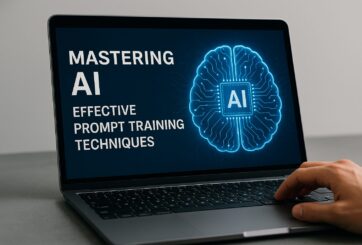
Research from Carnegie Mellon’s School of Computer Science suggests prompt engineering could be as important as coding Today’s generative artificial intelligence models can create everything from images to computer applications, but the quality of their output depends largely on the prompt a human user provides. Carnegie Mellon University researchers have proposed a new approach for teaching everyday users how to create these prompts and improving their interactions with generative artificial intelligence models. The method, called Requirement-Oriented Prompt Engineering (ROPE), shifts…

A new quantum random number generator is almost 1000 times faster than other generators and much smaller, promising to change data management and cybersecurity in several industries including health, finance, and defense A joint team of researchers led by scientists at King Abdullah University of Science and Technology (KAUST) and King Abdulaziz City for Science and Technology (KACST) has reported the fastest quantum random number generator (QRNG) to date based on international benchmarks. The QRNG, which passed the required randomness…

Very secure and highly efficient: encryption and decryption with luminescent perovskites To guarantee high data security, encryption must be unbreakable while the data remains rapidly and easily readable. A novel strategy for optical encryption/decryption of information has now been introduced in the journal Angewandte Chemie by a Chinese research team. It is based on compounds with carefully modulated luminescent properties that change in response to external stimuli. The compounds are hybrid two-dimensional organic-inorganic metal-halide perovskites, whose structure consists of inorganic…

Researchers at the University of Utah’s Department of Psychiatry and Huntsman Mental Health Institute today published a paper introducing RiskPath, an open source software toolkit that uses Explainable Artificial Intelligence (XAI) to predict whether individuals will develop progressive and chronic diseases years before symptoms appear, potentially transforming how preventive healthcare is delivered. XAI is an artificial intelligence system that can explain complex decisions in ways humans can understand. The new technology represents a significant advancement in disease prediction and prevention…
 Feedback
