



Feeding 9 Billion: Innovations in Agricultural Modeling
Last week in Washington, David Brailer — the national health information technology coordinator– told a conference of over 1,000 attendees that the United States Department of Health and Human Services will form a technology leadership panel to explore what immediate steps the public and private sectors should take to spur the federal government’s plan to advance health information technology. Over two months ago, President Bush announced the plan, which includes helping the private sector organize to reduce the risks of investing in electronic health records and stimulating community-based collaborations among providers using IT products certified as having a base level of desirable features.
Brailer said the government will give special attention to promoting health IT in rural and other underserved areas, for example, adapting the Defense Department’s battlefield experience with remote operations to the needs of rural providers.
The Geisinger Health System – which provides healthcare services to approximately two million people over 38 primarily rural counties of Pennsylvania – already has been doing that with “MyGeisinger.” The optional Internet application for patients enables them to have secure web-based access to portions of their electronic medical records – also allowing them a secure communications channel with medical staff for non-urgent messages. This service, which was profiled in The Wall Street Journal and Modern Healthcare, is available to patients over age 17 at 42 Geisinger physicians’ offices.
Geisinger recently spent $70 million on its Electronic Medical Record, and has twice been named one of the nation’s 100 Most Wired hospital and health systems. It was also cited by authors of a paper titled “External Incentives, Information Technology, and Organized Processes to Improve Quality: Results of the First National Survey of Physician Organizations,” that was published in the January 21, 2003 issue of The Journal of the American Medical Association (JAMA) as one of the five to 10 organizations that “performed well in terms of using care management processes.”
“We need better systems to manage the vast amount of clinical knowledge generated each year, to make information available when and where it’s needed by providers, to perform the necessary safety checks without fail, and to measure treatment efficacy,” says Frank Richards, chief information officer at Geisinger.
He believes that funding for these systems continues to be a major obstacle. The $100 million proposed by President Bush is a good start, according to Richards, but still inadequate to have a substantial impact. “Funding for these systems should ultimately be through quality incentives, tied to outcomes,” he says.
Dr. James Walker, chief medical information officer at Geisinger, attended last week’s Washington conference.



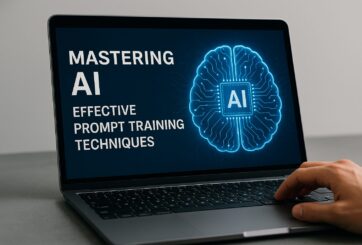
Research from Carnegie Mellon’s School of Computer Science suggests prompt engineering could be as important as coding Today’s generative artificial intelligence models can create everything from images to computer applications, but the quality of their output depends largely on the prompt a human user provides. Carnegie Mellon University researchers have proposed a new approach for teaching everyday users how to create these prompts and improving their interactions with generative artificial intelligence models. The method, called Requirement-Oriented Prompt Engineering (ROPE), shifts…

A new quantum random number generator is almost 1000 times faster than other generators and much smaller, promising to change data management and cybersecurity in several industries including health, finance, and defense A joint team of researchers led by scientists at King Abdullah University of Science and Technology (KAUST) and King Abdulaziz City for Science and Technology (KACST) has reported the fastest quantum random number generator (QRNG) to date based on international benchmarks. The QRNG, which passed the required randomness…

Very secure and highly efficient: encryption and decryption with luminescent perovskites To guarantee high data security, encryption must be unbreakable while the data remains rapidly and easily readable. A novel strategy for optical encryption/decryption of information has now been introduced in the journal Angewandte Chemie by a Chinese research team. It is based on compounds with carefully modulated luminescent properties that change in response to external stimuli. The compounds are hybrid two-dimensional organic-inorganic metal-halide perovskites, whose structure consists of inorganic…

Researchers at the University of Utah’s Department of Psychiatry and Huntsman Mental Health Institute today published a paper introducing RiskPath, an open source software toolkit that uses Explainable Artificial Intelligence (XAI) to predict whether individuals will develop progressive and chronic diseases years before symptoms appear, potentially transforming how preventive healthcare is delivered. XAI is an artificial intelligence system that can explain complex decisions in ways humans can understand. The new technology represents a significant advancement in disease prediction and prevention…
 Feedback
