



Feeding 9 Billion: Innovations in Agricultural Modeling
How would it feel to pick up a Boeing 777 while standing on an asteroid? Or to play with a yo-yo on Mars? Or even to explore a box that is larger on the inside than on the outside? All these things are now possible as scientists at the University of Reading are developing technology which allows computer users to touch, grip and even manipulate ‘impossible objects’.
The methods are still in their infancy, but the new technology has a variety of potential applications, including training simulations for highly-skilled tasks such as surgery, or aircraft maintenance.
Dr William Harwin, and his team in the Department of Cybernetics, has been working on producing sophisticated ‘haptic interfaces’, a new way of interacting with computers. These haptic interfaces allow the users to feel as well as see virtual objects on a computer, and so can give an illusion of touching surfaces, shaping virtual clay or moving objects around.
As virtual models can be created of practically anything – including impossible objects – users can ‘physically’ feel their way around something which could not exist in reality as it does not conform to known physical natural laws.
The team has already developed the world’s first true Klein bottle and a virtual drumkit. In this virtual world the drummer can play on either side of the skin: one side could be a bongo, the other a bass. Drums and other percussion instruments can be positioned where it is convenient to play them, and there is no limit to their ‘physical’ size.
“The ability to provide computer synthesised illusions of touch sensations has been very limited prior to the development of haptic interfaces,” says Dr Harwin. “Until now, the technology has been limited to simulations of single point or probe contact, whereas tactile exploration is often multi-fingered and relies heavily on vision to support the perception.
“Our latest project has seen significant steps toward creating the hardware, software and control foundations for a high-fidelity, multi-finger haptic interface device. This gives a high degree of realism, and because we can model free-floating three-dimensional objects the user can explore all sides – top, bottom, front and back.”
Dr Harwin’s team are now exploring the limits of this technology’s capabilities, but it has a variety of possible applications. For example, it could improve medical training, by allowing surgeons to practice procedures in a virtual environment where mistakes have no terrible consequences.
“It could also be used for better human/machine interfaces and to help designers and artists create models without using real materials,” says Dr Harwin. “The possibilities of this technology are endless – anything that can be modelled in a virtual environment could be touched and moved.”



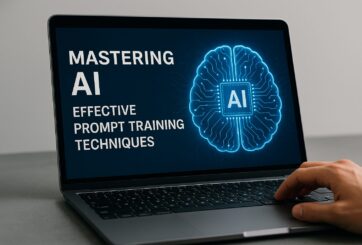
Research from Carnegie Mellon’s School of Computer Science suggests prompt engineering could be as important as coding Today’s generative artificial intelligence models can create everything from images to computer applications, but the quality of their output depends largely on the prompt a human user provides. Carnegie Mellon University researchers have proposed a new approach for teaching everyday users how to create these prompts and improving their interactions with generative artificial intelligence models. The method, called Requirement-Oriented Prompt Engineering (ROPE), shifts…

A new quantum random number generator is almost 1000 times faster than other generators and much smaller, promising to change data management and cybersecurity in several industries including health, finance, and defense A joint team of researchers led by scientists at King Abdullah University of Science and Technology (KAUST) and King Abdulaziz City for Science and Technology (KACST) has reported the fastest quantum random number generator (QRNG) to date based on international benchmarks. The QRNG, which passed the required randomness…

Very secure and highly efficient: encryption and decryption with luminescent perovskites To guarantee high data security, encryption must be unbreakable while the data remains rapidly and easily readable. A novel strategy for optical encryption/decryption of information has now been introduced in the journal Angewandte Chemie by a Chinese research team. It is based on compounds with carefully modulated luminescent properties that change in response to external stimuli. The compounds are hybrid two-dimensional organic-inorganic metal-halide perovskites, whose structure consists of inorganic…

Researchers at the University of Utah’s Department of Psychiatry and Huntsman Mental Health Institute today published a paper introducing RiskPath, an open source software toolkit that uses Explainable Artificial Intelligence (XAI) to predict whether individuals will develop progressive and chronic diseases years before symptoms appear, potentially transforming how preventive healthcare is delivered. XAI is an artificial intelligence system that can explain complex decisions in ways humans can understand. The new technology represents a significant advancement in disease prediction and prevention…
 Feedback
